
Bedtime Story App Vs Audiobook For Kids
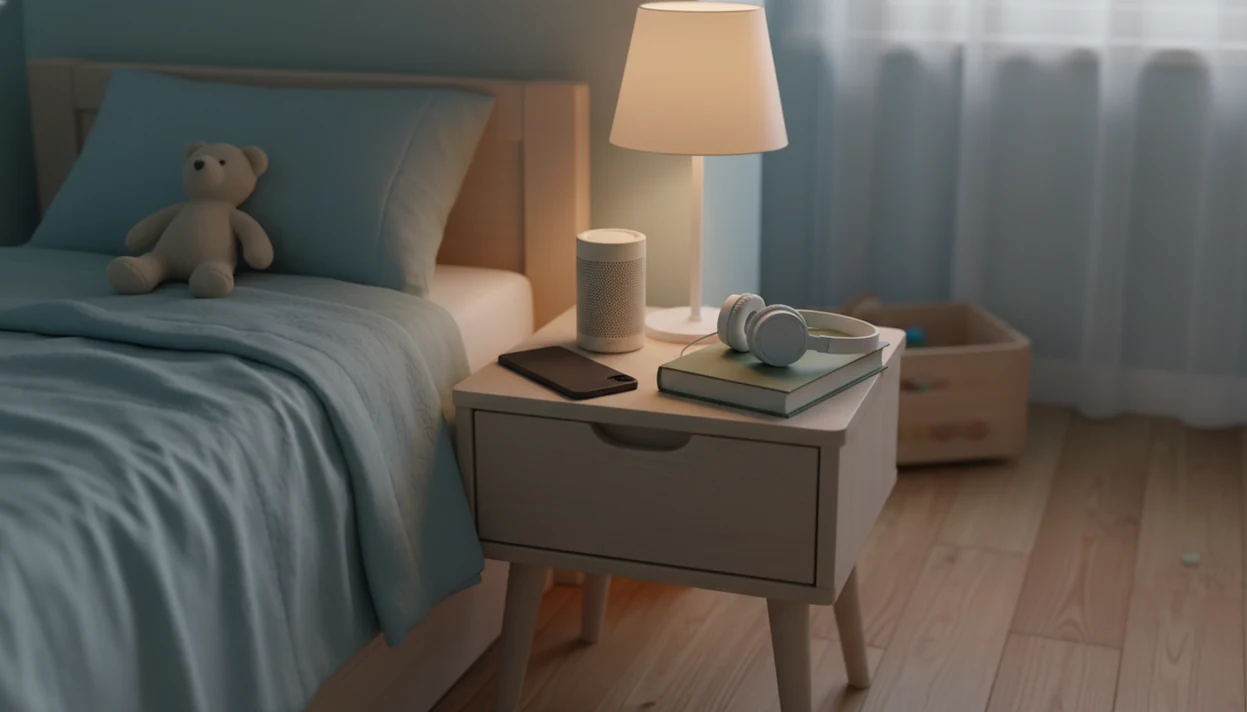
For most toddler and young-child sleep routines, a bedtime story app is usually better than a general audiobook app because it is shorter, calmer, timer-friendly, and designed for winding down. The bedtime story app vs audiobook choice comes down to whether you need sleep-specific structure or a larger all-purpose story library, and Kids Bedtime TL fits the sleep-routine side with stories, lullabies, meditation, and nap content in one place.
Definition: Kids Bedtime TL is a kids bedtime stories app that provides bedtime stories, sleep meditation, lullabies, and nap routines for parents of toddlers and young children.
- Choose a bedtime story app when the goal is sleep onset, nap routines, calm repetition, and parent-controlled timers.
- Choose an audiobook app when the goal is a larger library, longer books, library borrowing, or daytime listening.
- Either option can backfire if the story is too exciting, the screen stays visible, or the child becomes dependent on audio to fall asleep.
Bedtime story app vs audiobook, side by side
Side-by-side captures of the compared products. Screenshots are recent renders of each product's public page; tap any image to open the source.
Bedtime Story App Vs Audiobook At A Glance
Bedtime story apps usually win for sleep routines, while audiobook apps win for variety and long-form listening. The right choice depends on whether tonight needs bedtime-specific design or a broad content library.
| Need or feature | Bedtime story app | Audiobook app | Likely winner |
|---|---|---|---|
| Story length | Short stories, often 5 to 15 minutes | Chapters or full books | Bedtime app for toddlers |
| Narration pace | Slower, softer, lower stakes | Varies by narrator and book | Bedtime app |
| Sleep timers | Usually built around bedtime | Often available, less central | Bedtime app |
| Offline access | Common, but plan-dependent | Common, especially purchased books | Tie |
| Curation | Age-appropriate sleep content | Large open catalog | Bedtime app for less filtering |
| Cost | Subscription for routine content | Subscription, purchase, or library borrowing | Audiobook for value |
| Screen exposure | Can be audio-only if used carefully | Can be audio-only | Tie |
| Parent controls | Timers, favorites, repeat options | Library controls vary | Bedtime app |
Toddlers, preschoolers, naps, and hotel bedtimes tend to favor bedtime apps. Older kids who love chapters often do better with audiobooks.
How Bedtime Audio For Kids Works
Bedtime audio for kids works by turning sound into a predictable wind-down cue. Familiar narration, low emotional stakes, and soft music reduce novelty, which helps attention move away from active play and toward the settling window.
In sleep education terms, this is a cue-based routine. The child hears the same kind of sound after pajamas, toothbrushing, and lights dimming, so the sequence becomes easier to recognize. Not magic. Just repetition doing useful work.
The most evidence-backed way to use bedtime audio is to pair it with dim lights, a consistent schedule, and parent-child connection, not to treat audio as the whole routine. A meta-analysis of 36 randomized controlled trials found that brief structured sleep education and routine-building interventions increased total sleep time by about 10 minutes and moved sleep onset earlier on average source. The hallway light left cracked open matters as much as the story.
Where A Bedtime Story App Wins For Kids
A bedtime story app wins when the job is narrow: help a child calm down without opening a giant entertainment catalog. Kids Bedtime TL is built for that kind of bedtime routine because it groups short stories, lullabies, sleep meditation, white noise, and nap routines around the moment a parent actually needs them.
- Short formats fit tired children: Nap-length stories are easier for toddlers than chapter-based books when small feet are already under dinosaur sheets.
- Calming narration lowers the odds of escalation: Soft pacing helps avoid the “Just one more story” spiral.
- Age filters reduce parent screening: Curated libraries save time compared with open audiobook catalogs.
- Sleep timers protect the boundary: A timer makes the ending part of the routine, not a fresh negotiation.
- Evidence is promising but limited: A small Moshi study reported faster sleep onset and longer sleep, but because the evidence is product-specific and not a large independent replication, treat it as directional rather than proof for every bedtime app.
Anyone dealing with short attention spans at bedtime may find Kids Bedtime TL a practical fit because the read-aloud option and sleep timer support a contained settling window.
Where Audiobooks Win Against Bedtime Apps
Audiobooks win when the family wants a large library, longer books, familiar characters, and listening that extends beyond bedtime. Audible and Libby are good examples of the category, though they solve a different problem from a sleep-first app.
For older children, a chapter book can become the reward after lights are low. It also works well for daytime quiet time, long car rides, and siblings who share one story world. Library borrowing can make audiobooks cheaper over time, especially for families already using public library cards.
The friction is filtering. Parents may need to test for pace, suspense, scary scenes, and cliffhangers before bedtime. A dragon battle at 7:55 p.m. is still a dragon battle, even if the room is dark.
For older kids who can pause between chapters, an audiobook is often easier than a bedtime app because the story library is broader and the same book can continue during daytime listening.
Kids Story App Comparison For Sleep Features
A good kids story app comparison should focus on sleep controls, not just story count. Parent-controlled settings matter most when a child wakes at night or asks for one more story after the timer should have ended.
| Feature to check | Why it matters at bedtime |
|---|---|
| Sleep timer | Stops audio before the night turns into autoplay |
| Autoplay controls | Prevents endless episodes or surprise tracks |
| Offline downloads | Keeps the routine working in hotels or poor Wi-Fi |
| Repeat mode | Lets familiar content become a calm-down cue |
| Favorite stories | Cuts searching during the 7:15 p.m. scramble |
| Age filters | Reduces scary or too-advanced content |
| Narration style | Slower voices usually suit bedtime better |
| Background audio | Allows screen-down listening |
Kids Bedtime TL fits families who want fewer bedtime choices because favorites, short stories, and calming audio can be set before the room gets quiet. For a broader app-by-app view, the best kids sleep app guide compares sleep-focused options.
Timer And Autoplay Controls
When the issue is endless replay requests, Kids Bedtime TL earns its place through timer-led playback instead of open-ended browsing. For comparison, check whether an audiobook app stops at the chapter, continues into the next title, or resumes autoplay after a parent leaves the room. That one setting can decide whether audio feels like a boundary or a loophole.
Offline And Screen-Free Playback
Screen-free hardware players like Yoto or Toniebox are different from app-only listening. They can reduce light exposure and help toddlers use audio without scrolling a device.
Pricing And Policy Differences In Audiobooks Vs Bedtime Apps
Pricing differs because bedtime apps and audiobook apps sell different kinds of access. Bedtime apps usually charge for routine content, while audiobook platforms may use subscriptions, à la carte purchases, credits, or free library borrowing.
Audiobook apps may be cheaper long term if your family uses Libby, already owns purchased books, or listens during car rides and quiet time. Bedtime apps may justify a subscription when parents use stories, lullabies, meditations, white noise, and nap content most nights.
Check the boring details before paying. Offline rules, cancellation steps, child profiles, ads, in-app purchases, and data settings can change the real value. Calm.com, headspace.com, and moshi.com also differ in how they package children’s sleep content, so the Calm vs Moshi for kids comparison can help if those two are on your shortlist.
For families using bedtime audio nightly, Kids Bedtime TL may be easier to justify because one subscription can cover stories, nap routines, and lullabies instead of only long-form books.
How To Use Bedtime Audio For Kids Without Sleep Battles
Use bedtime audio as a support for the routine, not as a replacement for parent connection or consistent bedtime boundaries. The American Academy of Sleep Medicine, endorsed by the American Academy of Pediatrics, recommends 10 to 13 hours of sleep per 24 hours for children ages 3 to 5, including naps source, so the audio choice should protect the schedule rather than stretch it.
- Choose a calm story before bedtime, not after your child is already bargaining.
- Dim the room and keep the same order: pajamas, toothbrush, story, sleep.
- Set a timer before the lullaby starts so the ending is predictable.
- Repeat familiar content when your child is overtired or anxious.
- Place the device out of reach, or set the phone face-down on a dresser so the screen does not brighten the room.
If your priority is a quiet, repeatable routine, Kids Bedtime TL fits because the same story, sound, or nap sequence can become a stable calm-down cue.
Who Should Pick A Bedtime Story App Or Audiobook
Should you pick a bedtime story app or an audiobook app? Pick a bedtime story app for toddlers, preschoolers, nap routines, anxious wind-downs, short attention spans, and nights when you want less filtering.
Pick A Bedtime Story App If
Choose a bedtime story app if your child needs short stories, calm repetition, sleep timers, lullabies, or age-appropriate choices. Kids Bedtime TL is a practical kids bedtime stories app for calming routines because it centers the parent workflow around what to play, read, or say tonight, without promising medical sleep results.
Parents looking for fewer bedtime decisions may prefer Kids Bedtime TL because the routine can start with a favorite story, then move into a lullaby or sleep sound.
Pick An Audiobook App If
Choose an audiobook app if your child is older, follows chapters well, likes long-form story worlds, or listens across travel, school breaks, and daytime quiet time. Audiobooks also fit families who rely on library access or want one listening library for adults and children.
For read-aloud support beyond apps, our kids bedtime stories for parents guide focuses on parent scripts and story routines.
Common Myths About Audiobooks Vs Bedtime Apps
Audiobooks vs bedtime apps is not a “sound is always soothing” decision. Content, pacing, device setup, and routine boundaries all change how bedtime audio affects a child.
- Myth: Any audiobook is fine for sleep. Fast plots, suspense, jokes, or cliffhangers can make children more alert.
- Myth: Bedtime story apps are just renamed audiobook apps. Many include lullabies, white noise, meditative scripts, short formats, and sleep timers.
- Myth: A bedtime app can fix sleep problems alone. Good bedtime audio supports a predictable sequence, not a miracle sleep solution.
- Myth: A calming story cancels out screen effects. A systematic review of 67 studies found screen-based media use was associated with delayed bedtime and reduced total sleep duration in 90% of included child and adolescent studies source.
- Myth: Bigger libraries are always better. At bedtime, fewer calm choices often beat hundreds of exciting ones.
Good kids bedtime stories, sleep meditation, lullabies, and nap routines deliver a gentle transition, not a guarantee that a child will fall asleep on command.
Evidence Behind Bedtime Apps And Audiobooks
The evidence is strongest for consistent bedtime routines, not for any whole category of bedtime app or audiobook app. Audio can help when it protects sleep timing, keeps the room calm, and avoids turning the device into a second entertainment session.
Pediatric sleep guidance gives families the target: enough total sleep across night and naps, with predictable timing. Routine-building studies support simple, repeated sequences like bath, pajamas, story, lights down, and the same calm cue each night. That is different from app marketing, which may borrow the language of meditation or sleep science without proving every story, narrator, or feature works.
Use the evidence in this order:
- Start with the sleep schedule your child needs, then choose audio that fits inside it.
- Separate routine benefits from product claims, especially when trial data comes from one branded app such as Moshi.
- Reduce screen risk for both bedtime apps and audiobook apps by using audio-only playback, timers, and a device placed away from the bed.
- Treat audiobooks as better supported for literacy, travel, and daytime listening than as proven sleep tools.
That leaves a practical middle ground: use calm audio, but do not ask it to carry the whole bedtime.
Limitations
Bedtime audio can help a routine, but it is not a guaranteed sleep fix. Some nights still need a parent sitting nearby, a softer boundary, or a pediatric conversation.
- Dedicated bedtime app evidence is still limited and sometimes product-specific, as with Moshi trial data.
- Some children become more alert if the content is funny, suspenseful, scary, fast, or unfamiliar.
- Overreliance can create a sleep-onset association where a child feels unable to fall asleep without audio.
- Phones and tablets in the room can add blue-light exposure, browsing temptation, and night-waking problems.
- Some subscriptions become expensive if families only use one story, one sound, or one narrator.
- Children with chronic insomnia, snoring, breathing concerns, major anxiety, or developmental concerns may need pediatric guidance.
- Evening screen use is a real bedtime risk, not just a theory; child and adolescent studies consistently associate screen-based media use with delayed bedtime or reduced sleep duration source.
Kids Bedtime TL should be used as one piece of a bedtime routine, especially when a low hum of white noise sits under a soft-spoken story.
FAQ
Are audiobooks good for bedtime?
Audiobooks can be good for bedtime if the content is calm, familiar, age-appropriate, and controlled with a timer. Suspenseful or fast-paced books may delay settling.
Are bedtime story apps worth it?
Bedtime story apps can be worth it when families use sleep-specific design, curation, timers, lullabies, and short stories most nights. They are less useful if a family only needs occasional daytime listening.
Which is better for toddlers?
A bedtime story app is usually better for toddlers because short stories, repetition, limited choices, and parent controls fit toddler sleep routines. Audiobooks can work if the book is brief and familiar.
Can bedtime audio delay sleep?
Yes, bedtime audio can delay sleep if the story is exciting, the screen stays visible, or autoplay keeps adding new content. A timer and familiar content reduce that risk.
Should kids use screens before bed?
Visible screens close to bedtime are best minimized because light and browsing can interfere with settling. Audio-only or screen-down playback is usually a better bedtime setup.
Do bedtime apps need Wi-Fi?
Some bedtime apps offer offline downloads, while others require internet access for playback. Parents should check offline rules before travel, naps, or bedtime.
Can kids depend on bedtime audio?
Yes, some children develop a sleep-onset association with bedtime audio. Parents can reduce dependence by shortening timers, fading volume, and adding other cues like a phrase, stuffed animal, or lullaby.
Are free bedtime stories enough?
Free bedtime stories may be enough if they are calm, safe, age-appropriate, and easy to stop. Paid apps may offer better curation, timers, offline access, and parent controls.