
Lullabies For Toddlers At Bedtime
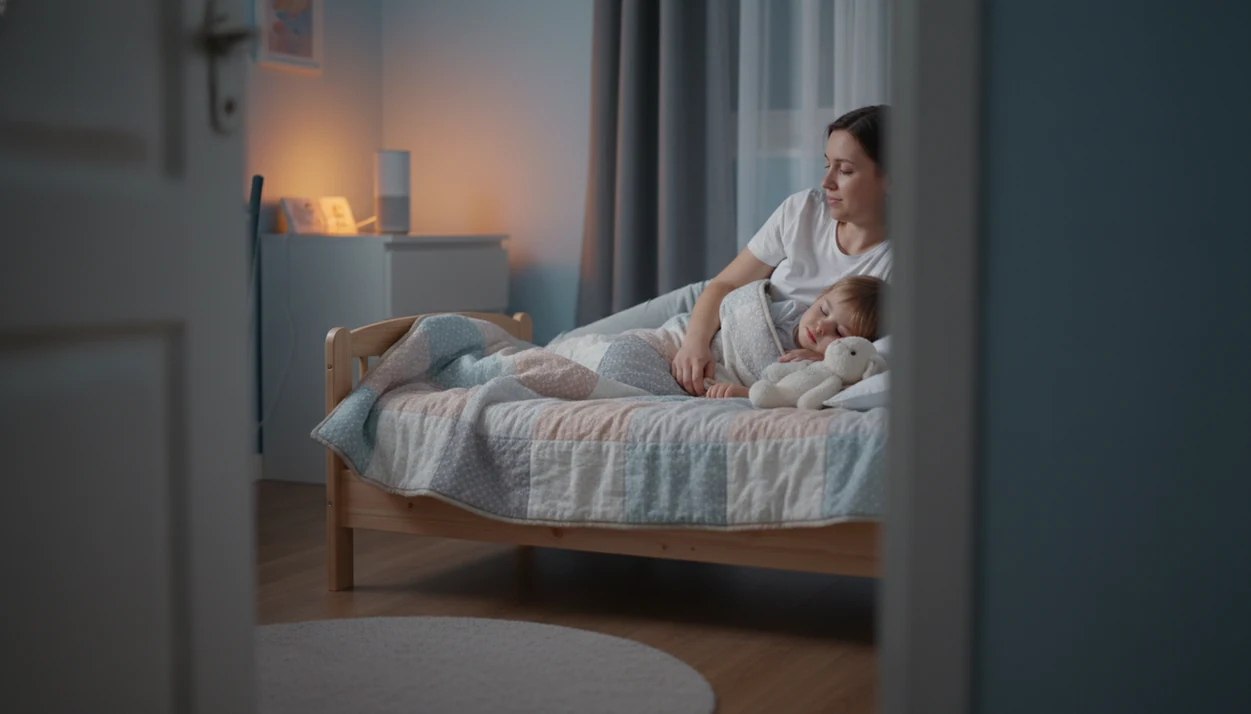
Lullabies for toddlers work best when they are soft, repetitive, low-volume, and used as a predictable bedtime cue rather than played endlessly. The goal is not to force instant sleep, but to help a toddler shift from play, noise, and separation anxiety into a calmer bedtime routine.
Definition: Toddler lullabies are gentle, repeatable bedtime songs or sleep music tracks used to signal that sleep time is beginning.
TL;DR
- Choose slow, familiar, low-energy songs instead of complex playlists or exciting performances.
- Keep toddler lullabies quiet enough to fade into the room, not dominate it.
- Use bedtime lullabies as one short part of a consistent routine with lights down, calm language, and a clear end point.
Toddler lullabies at a glance
The ideal toddler lullaby is slow, repetitive, familiar, and emotionally safe. It works as a bedtime cue, not as a guaranteed sleep solution.
A useful pattern is simple: pajamas, teeth, one short story, lights low, then one or two quiet songs. At the 7:15 p.m. scramble after pajamas, toothbrush, and one missing stuffed rabbit, the song should make the room smaller and calmer. Not more interesting.
Keep volume low, duration short, and timing predictable. A parent’s tired, slightly off-key voice can be more comforting than a polished recording because the child recognizes it. Tools like Kids Bedtime TL can help families keep toddler lullabies, sleep stories, and routines in one place, but the routine still does the main work. Good kids bedtime stories, sleep meditation, lullabies, and nap routines for toddlers and young children deliver a gentle transition, not a guaranteed sleep fix.
Five facts about lullabies for toddlers
- Slow repetition is usually calmer than musical complexity. Toddler lullabies tend to work better when the melody is predictable, the tempo is slow, and there are no sudden jumps in sound.
- Lullabies fit best inside a steady bedtime routine. In the 2018 National Survey of Children’s Health, 68.5% of U.S. children aged 1 to 5 had a regular bedtime, and 74.0% had a regular weeknight sleep routine, according to an analysis of the survey source.
- Volume should stay low and gentle. Sleep music for toddlers should sit in the background, like the low hum of a white-noise track under a soft-spoken story.
- Parent singing can support comfort and bonding. A 2018 randomized trial found infants exposed to maternal singing showed a greater heart-rate reduction than controls, suggesting a measurable calming effect from familiar singing source.
- Lullabies do not replace healthy sleep habits. Regular timing, a calm room, and age-appropriate expectations still matter.
How lullabies for toddlers work
Lullabies for toddlers work as repeated sensory cues that help a child anticipate sleep. The mechanism is routine-based conditioning plus emotional reassurance, not magic sedation.
Rhythm, repetition, tempo, and a familiar voice all matter. In plain terms, the brain starts to connect the same song with the same next step: lights down, body still, parent nearby, sleep time beginning. Toddlers often struggle with transitions because stopping play, separating from a parent, and lying still all ask for self-control at once.
For many families, the song is a calm-down cue. A little hand resting on a parent’s wrist during the same verse can say more than the lyrics. A 2022 systematic review of music-based sleep interventions found improvements in some trials, but evidence quality and outcomes varied by population and method (source). For toddlers, a predictable sequence usually matters more than finding the one exact song.
What to prepare before bedtime lullabies
Prepare the room before the music starts. Toddler lullabies work better when the bedroom already looks and feels like bedtime.
Choose one to three familiar songs or tracks instead of a playlist that changes every night. Dim the lights, use a calm tone, and make the sleep space comfortable before pressing play. Place speakers or devices away from the toddler’s head, and keep the sound low enough that it fades into the room.
Decide the stopping point first. One song, two songs, or ten minutes is easier to hold than “until you fall asleep.” A phone set face-down on a dresser helps keep the screen from brightening the room.
Parents can sing, hum, or use a toddler-safe sleep music app. Families comparing music with other audio cues may also find sleep sounds for kids useful when a child settles better with steady background sound than melody.
How to use sleep music for toddlers
Use sleep music for toddlers as one short step in the bedtime routine. The routine matters more than the exact song.
- Set the same bedtime order each night. Use a predictable sequence such as bath, pajamas, teeth, story, lullaby, lights out.
- Choose a slow, familiar lullaby. Pick something simple, such as “Twinkle, Twinkle, Little Star,” a gentle hum, or the same parent-made goodnight song.
If you use Kids Bedtime TL, save the same lullaby to the routine instead of browsing for a new track after lights are already low.
- Lower the volume before the child is drowsy. Start at a quiet background level so the sound does not become the main event.
- Sing or play the lullaby for a short, predictable window. One to three songs is often enough to mark the settling window.
- End the song calmly and keep the room boring. Use the same phrase, lower your voice, and avoid restarting negotiations.
For toddlers who ask, “Just one more story,” the song can become the final cue. Same words. Same ending.
Best toddler lullabies and song styles
The best toddler lullabies are usually the ones a family can repeat gently every night because they are simple, familiar, and not too stimulating. Any calm, repetitive song can work if the delivery stays soft.
| Song style | Examples | Why it can work | Watch for |
|---|---|---|---|
| Traditional lullabies | “Hush Little Baby,” Brahms’s Lullaby | Familiar, slow, easy to repeat | Dramatic recordings with big volume changes |
| Simple nursery songs | “Twinkle, Twinkle, Little Star” | Toddlers often know the melody already | Bright, playful singing that invites joining in |
| Parent-made songs | “Goodnight, Nora, close your eyes” | Personal and emotionally safe | Adding new verses forever |
| Instrumental tracks | Soft piano, gentle guitar | Useful when a voice keeps the child alert | Sudden swells or busy arrangements |
| App-based bedtime lullabies | Short bedtime lullabies in a routine app | Easy to repeat during travel or tired nights | YouTube autoplay, Spotify shuffle, screens, or changing playlists |
A made-up goodnight song can work as well as a classic. If you are choosing between song and story, the lullabies vs sleep stories comparison may help match the audio to your child’s settling style.
Safe volume and timing for bedtime lullabies
How loud and how long should bedtime lullabies be for toddlers? Keep them quiet, background-level, and non-startling, then use them for a short, predictable window.
Avoid high volume, headphones, or speakers placed close to the child’s ears. Volume is both a calming issue and a safety issue. If a lullaby is loud enough that you have to raise your voice over it, it is probably too prominent for bedtime. For hearing safety, avoid placing audio sources close to a child’s ears; pediatric guidance on noise-induced hearing loss emphasizes limiting loud or prolonged exposure (source).
For many families, 5 to 15 minutes is enough to act as a routine cue. Some toddlers settle after one song; others need two or three. The clearer question is whether the music helps the child move toward sleep, or keeps the parent trapped beside the bed restarting tracks.
All-night playback is not always harmful, but it can become hard to maintain if the child wakes whenever the sound stops. The separate guide on is it safe to play lullabies all night covers that tradeoff in more detail.
Common myths about toddler lullabies
Common lullaby myths make bedtime harder when they push parents toward performance, volume, or endless playlists. The practical correction is usually simpler and quieter.
Classical-only myth. Lullabies do not have to be classical or traditional. A slow folk song, a nursery tune, or a parent’s own two-line melody can work.
Instant-sleep myth. A good lullaby does not have to make a toddler fall asleep immediately. It should signal the next step in the bedtime routine.
Immersive-sound myth. Louder sleep music for toddlers is not automatically better. More sound can mean more attention.
Baby-only myth. Lullabies are not only for infants. Toddlers can still use songs as calming cues when the routine matches their age.
Perfect-playlist myth. The playlist matters less than consistency. The full explanation of how lullabies help children relax is really about repetition, familiarity, and gentle delivery.
Limitations
Lullabies can be useful, but they have real limits. They are one bedtime tool, not a treatment plan.
- Lullabies are not a proven standalone cure for insomnia or frequent night waking.
- Evidence for music and sleep is mixed, with effects varying by age, setting, and intervention type.
- Some toddlers become more alert if the song, voice, video, or playlist is too stimulating.
- Some children with sensory sensitivities may dislike music at bedtime, even when it sounds gentle to adults.
- Lullabies cannot replace consistent bedtime timing, a calm room, and age-appropriate sleep expectations.
- All-night playback may become a sleep association that is hard for some families to maintain.
- Screens paired with music can pull attention back toward watching instead of resting.
- Parents should seek pediatric guidance for persistent sleep problems, breathing concerns, pain, snoring, or major behavior changes.
Clinicians typically recommend looking at the whole sleep pattern, including timing, environment, health symptoms, and family routine, rather than relying on one audio cue.
FAQ
Are lullabies good for toddlers?
Yes, lullabies can support calming, bonding, and bedtime predictability when they are gentle, low-volume, and part of a consistent routine.
What makes a good toddler lullaby?
A good toddler lullaby is slow, repetitive, familiar, gently delivered, and quiet enough to stay in the background.
How loud should lullabies be?
Lullabies should be quiet and background-level, with the speaker or device placed away from the child’s ears.
How long should lullabies play?
A short, predictable window often works best, such as one song, a few songs, or about 5 to 15 minutes.
Can lullabies play all night?
Continuous playback may be unnecessary or unhelpful if it creates a sleep association that is hard to maintain. A clear end point often makes the routine easier to repeat.
Should parents sing or play music?
Parents can sing, hum, or use a recording. Comfort and predictability matter more than performance quality.
Do lullabies stop night waking?
Lullabies may help a toddler settle at bedtime, but they do not reliably solve repeated night waking on their own.
Are lullabies only for babies?
No, toddlers can also benefit from lullabies when the song and routine are age-appropriate.
Can lullabies overstimulate toddlers?
Yes, fast songs, loud volume, changing playlists, and screen-based music can make bedtime harder for some toddlers.