
Sleep Meditation For Anxious Child At Bedtime
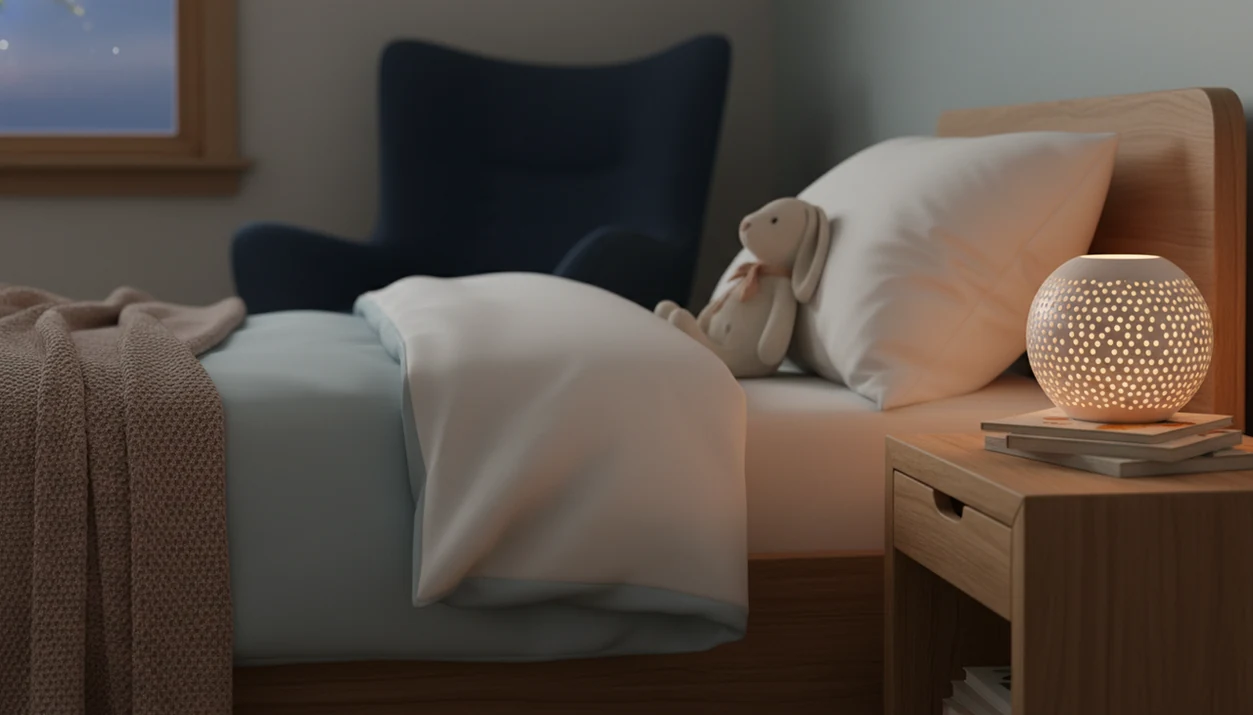
A sleep meditation for anxious child bedtime can help by giving a worried child a short, familiar sequence of breathing, body relaxation, and comforting imagery before sleep. It is a gentle support tool, not a treatment for severe or persistent anxiety, so parents should seek qualified help when distress is ongoing or affects daytime life.
> Definition: Sleep meditation for an anxious child is a brief, guided bedtime routine that uses slow breathing, simple relaxation, and calming imagery to reduce bedtime arousal and help a child feel safer at night.
TL;DR
- Keep bedtime meditation short, concrete, and repeated in the same order each night.
- Guided voice prompts usually work better for young children than silent meditation.
- Use meditation for reassurance and settling, not as a substitute for mental-health care when anxiety is persistent or severe.
Sleep Meditation For Anxious Child: At-A-Glance Bedtime Guidance
Sleep meditation for an anxious child is a short, parent-friendly calming routine before sleep. The realistic goal is to lower bedtime arousal, not erase anxiety or force instant sleep.
Most routines use three simple pieces: slow breathing, gentle body relaxation, and safe imagery. A child might breathe like they are fogging a window, relax their shoulders, then picture a quiet room with a favorite stuffed animal nearby. That is enough. They don't need a formal meditation posture.
At 7:15 p.m., after pajamas, toothbrush, and one missing stuffed rabbit, a brief guided routine is often more useful than a long talk. A bedtime-audio routine can support age-appropriate settling, but it is not clinical care.
Good kids bedtime stories, sleep meditation, lullabies, and nap routines for toddlers and young children offer predictable calm-down cues, not a promise to cure anxiety.
What Bedtime Meditation For Anxious Child Moments Actually Means
Sleep meditation for an anxious child is a brief, guided bedtime routine that uses slow breathing, simple relaxation, and calming imagery to reduce bedtime arousal and help a child feel safer at night.
For most families, bedtime meditation anxious child routines are guided, not silent. A parent, caregiver, or audio voice gives simple prompts like “feel your feet under the blanket” or “take one slow belly breath.” Young children usually need concrete words, not abstract instructions.
Stillness is optional. A preschooler can wiggle, hold a plush rabbit, or turn toward the wall and still benefit from a calm sequence. Small feet under dinosaur sheets count as real participation.
This is reassurance-based settling, not clinical anxiety treatment. If fear is intense, frequent, or affecting school, separation, eating, play, or family life, bedtime meditation should sit beside professional guidance, not replace it.
5 Facts About Sleep Meditation For Anxious Child Bedtime Routines
- Repetition builds familiarity. The same breathing, words, and ending cue can make bedtime feel more predictable and safe over time.
- Guided prompts are usually easier than silence. Most young children follow a soft voice better than a request to “clear your mind.”
- Core tools are simple. Slow breathing, light muscle relaxation, and gentle imagery are the usual building blocks of sleep meditation for kids.
- Short and age-appropriate usually works better. A tired child may handle three minutes well, then unravel at twelve.
- Meditation is supportive, not a substitute for care. The CDC reports that 7.1% of U.S. children ages 3 to 17 had a current diagnosed anxiety problem in 2016 (https://www.cdc.gov/childrensmentalhealth/data.html), and pediatric sleep-problem prevalence varies widely by age, definition, and study design; cite the specific Pediatrics review used for any 25% to 40% estimate before publishing.
The most common medically supported way to respond to significant child anxiety is qualified assessment combined with practical home support. A bedtime routine can be one part of that support, but it should not carry the whole burden.
How Sleep Meditation For Anxious Child Bedtime Worry Works
Bedtime anxiety often shows up as increased arousal, alertness, and worry when the body is supposed to shift toward sleep. The child may ask repeated questions, scan the room, or call a parent back after the light goes out.
Sleep meditation works by giving the nervous system a predictable calm-down cue. Slow breathing can nudge the body toward parasympathetic activation, which simply means the “settle and recover” side of the body gets more room. Guided body relaxation redirects attention from worry loops to physical sensations, like heavy legs or warm blankets.
Gentle imagery adds safety and sequence. A child can picture stars dimming, a small boat floating, or the hallway light left cracked open while a parent starts the same story again.
It may help. It may not be enough tonight.
For anxious bedtime moments, a repeated guided routine is often easier than fresh reassurance because the child does not have to negotiate each step.
Age-Fit Ways To Calm Anxious Child At Bedtime
Age fit matters because the wrong prompt can frustrate a worried child. To calm anxious child at bedtime, match the words, length, and imagery to how that child understands comfort.
| Age group | Better fit | Try this kind of prompt |
|---|---|---|
| Toddlers | Parent presence, very short phrases, lullaby-like pacing | “Breathe in. Hug bunny. Rest your feet.” |
| Preschoolers | Simple images, blankets, clouds, stars, stuffed animals | “Your blanket is a soft cloud around you.” |
| Early school-age children | Longer counts and body scan language | “Breathe in for three, out for four. Let your shoulders drop.” |
Toddlers
Toddlers usually need the caregiver nearby and the routine very short. A familiar lullaby pace may work better than meditation language.
Preschoolers
Preschoolers can use simple story-like images. A bedtime folder opened in the dark can become the cue that worry time is ending.
Early school-age children
Older young children may follow a short body scan for kids sleep routine. Kids Bedtime TL is a kids bedtime stories app that provides bedtime stories, sleep meditation, lullabies, and nap routines for parents of toddlers and young children.
How To Use Sleep Meditation For An Anxious Child Safely
Use sleep meditation after the ordinary bedtime jobs are done, as a small settling cue rather than a rescue attempt in the middle of panic. The safest routine is short, repeatable, and easy to stop if it makes worry louder.
- Begin after pajamas, teeth, bathroom, water, and the usual goodnight checks. If your child is already in an active meltdown, first return to basic comfort and safety instead of starting a meditation lesson.
- Choose one breathing cue and keep it plain. Try “smell the flower, blow the cloud” or “breathe in softly, breathe out slowly,” then repeat it only a few times.
- Add one body cue, such as “let your shoulders get heavy” or “rest your feet under the blanket.” Avoid stacking too many instructions.
- Keep your voice or audio low, slow, and predictable. A boring, gentle rhythm is the point; surprise voices or dramatic sound effects can wake a worried brain back up.
- Close with the same phrase each night, such as “Your body can rest now; I’ll check on you soon.” Stop if your child becomes more alert, distressed, or trapped in worry.
Common Myths About Child Bedtime Worry And Meditation
- Myth: sleep meditation treats anxiety disorders by itself. It may support settling, but clinically significant anxiety needs qualified assessment and care.
- Myth: children must sit still or clear their mind. A child can listen while curled sideways, holding a stuffed animal, or resting a little hand on a parent wrist.
- Myth: longer meditation is always better. Long sessions can become another bedtime battle, especially after a tiring day.
- Myth: it should work instantly every night. The goal is often lowering bedtime arousal, not switching sleep on like a lamp.
- Myth: talking through every worry at bedtime is always helpful. Some reassurance is kind, but long worry discussions can keep the brain alert.
If breathing is the easiest entry point, breathing exercises for kids bedtime can keep the routine concrete and short. No lecture needed.
When Sleep Meditation For Anxious Child Needs Extra Support
“Is sleep meditation enough if my child is very anxious at bedtime?” Not always. It can be a calming support, but persistent or impairing distress needs more than a bedtime audio track.
Consider extra support when bedtime fear is intense, frequent, or spreading into daytime life. Watch for panic-like episodes, school refusal, severe separation distress, trauma symptoms, repeated nightmares, or rituals that feel impossible for the child to stop. These signs do not prove a diagnosis, but they do mean the family deserves help.
The CDC reports that about 1 in 5 U.S. children has a mental, emotional, behavioral, or developmental disorder, and it also reported a 7.1% current anxiety problem diagnosis rate among children ages 3 to 17 in the 2016 National Survey of Children’s Health (https://www.cdc.gov/childrensmentalhealth/data.html). Seeking help is common, not a failure.
Clinicians typically recommend contacting a pediatrician, licensed child therapist, or qualified mental-health professional when anxiety is severe, persistent, or impairing. Urgent safety concerns require urgent local help.
Content Standards For Anxious Bedtime Audio
Kids Bedtime TL provides bedtime stories, sleep meditation, lullabies, and nap routines for parents of toddlers and young children. The content is designed to be calm, age-appropriate, and routine-friendly.
The app centers on practical bedtime moments: a short story, a soft meditation, a lullaby, or a nap routine that helps keep the evening predictable. A phone set face-down on a dresser can play the audio without brightening the room.
The content does not use clinical language as a cure claim, and it does not promise to treat anxiety. It stays in the lane of bedtime stories, sleep meditation, lullabies, and nap routines rather than adult sleep therapy or unrelated entertainment. For broader routine basics, parents may also compare bedtime meditation for kids.
Limitations
Sleep meditation can be useful, but it has clear limits. Parents should treat it as one gentle routine tool, not a full answer to anxiety.
- It does not reliably work for every anxious child.
- It may be too narrow for nightmares, separation anxiety, trauma-related sleep issues, panic, or OCD-like rituals.
- It is unproven as a stand-alone solution for clinically significant anxiety.
- Overtired, highly distressed, or resistant children may not engage with the prompts.
- Some relaxation exercises can increase rumination or make a child more alert.
- Long sessions may backfire and turn into “Just one more story” pressure.
- A child who feels watched or corrected may become more tense.
- Parents should seek qualified help when symptoms are severe, persistent, or impairing.
If a routine seems to worsen worry, pause and change course. The related guide to bedtime meditation side effects kids explains that boundary in more detail.
FAQ
Can meditation help child anxiety?
Meditation may help some children calm their bodies and settle at bedtime. It does not replace clinical care for anxiety disorders or severe symptoms.
How long should bedtime meditation be?
For young children, bedtime meditation is usually best kept to a few minutes. Length should match the child’s attention, comfort, and tiredness.
What calms bedtime worry?
A predictable bedtime routine, slow breathing, brief reassurance, and calming imagery can support bedtime worry. The same order each night often matters more than adding more steps.
Is guided meditation better for kids?
Simple guided meditation is usually easier for kids than silent meditation. Children often need concrete voice prompts to know what to do next.
Can toddlers do sleep meditation?
Toddlers can use very short, parent-led calming prompts. They do not need formal meditation expectations or stillness.
Why is my child anxious at night?
Common non-diagnostic reasons include separation, darkness, nightmares, overtiredness, or stress from the day. Persistent or impairing anxiety should be discussed with a qualified professional.
Can meditation make anxiety worse?
Yes, some children may ruminate more or become more alert during relaxation exercises. If that happens, use a different bedtime approach and seek guidance if symptoms continue.
When should I seek help for my child’s bedtime anxiety?
Seek help when anxiety is severe, persistent, affects daytime life, causes panic-like distress, or raises safety concerns. A pediatrician or licensed child mental-health professional can guide next steps.