
Car Ride Sleep Stories For Kids On Long Drives
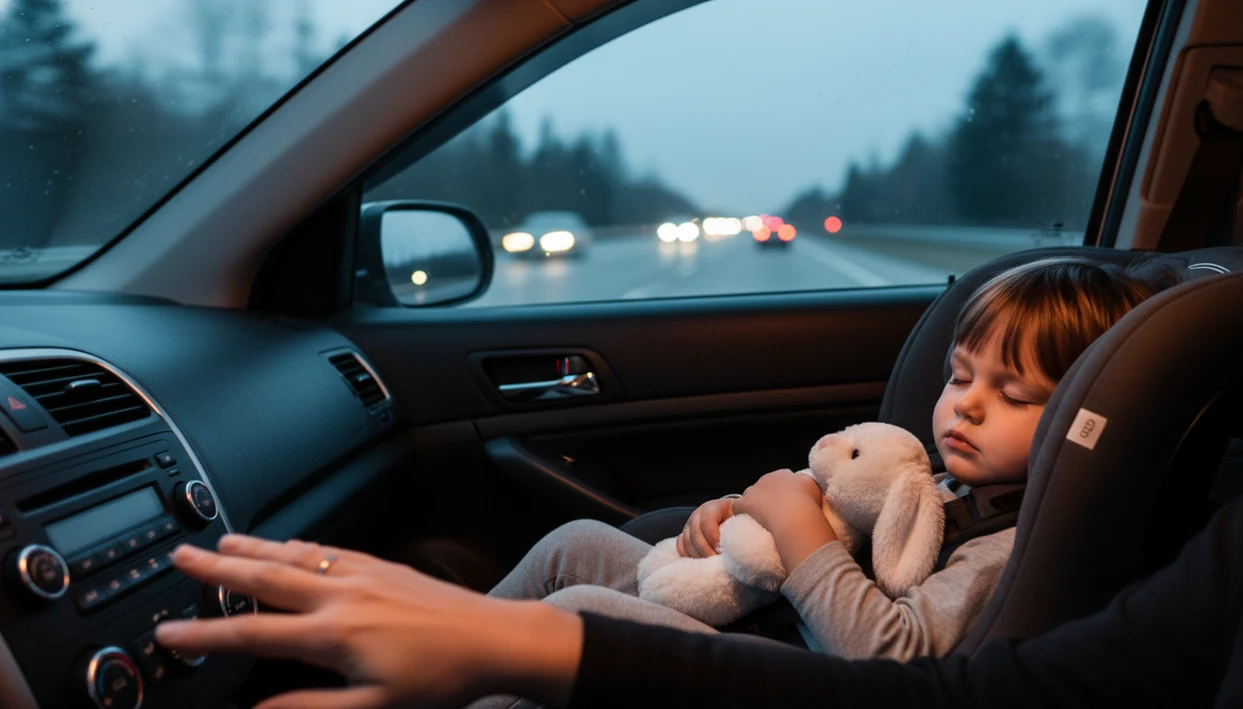
Car ride sleep stories for kids work best when they are slow, predictable, softly narrated, and chosen by a parent before the drive starts. Kids Bedtime TL can help parents line up a calm story, lullaby, or nap routine before the seatbelts click, so the drive feels like a settling window instead of another screen battle.
Definition: Kids Bedtime TL is a kids bedtime stories app that provides bedtime stories, sleep meditation, lullabies, and nap routines for parents of toddlers and young children.
- Choose low-action stories with soft narration, gentle music, and simple language.
- Keep car audio low enough that the driver stays alert and the child is not exposed to loud sound.
- Match story length to the child’s age, travel time, and usual nap or bedtime window.
How car ride sleep stories look
Side-by-side captures of the compared products. Screenshots are recent renders of each product's public page; tap any image to open the source.
Best car ride sleep stories for kids: a parent-led shortlist
The best car ride sleep stories are usually the least exciting ones, not the most entertaining ones. A story that feels almost too simple at home may be exactly right when a child is buckled in, tired, and watching headlights pass.
Whispery animal tales
A bunny finding a burrow or a fox curling up under leaves gives toddlers concrete images without danger.
Sleepy vehicle stories
A train slowing into the station works better than a race car winning the final lap.
Nature journey stories
Clouds, moonlight, meadows, and gentle waves can lower the energy of the car.
Bedtime routine stories
Bath, pajamas, lullaby, goodnight. Familiar order matters.
When the 7:15 p.m. scramble includes pajamas, toothbrush, and one missing stuffed rabbit, Kids Bedtime TL fits because parents can choose a short age-appropriate story before leaving the driveway. Free or short options can also work if a parent previews the pacing, volume changes, and ending first.
How we picked kids car sleep stories for calm travel
We picked kids car sleep stories by looking for audio that supports drowsiness without turning the back seat into a show. According to the CDC, 46% of U.S. parents reported an overnight trip and 35% reported a day trip with children in the year before March 2022, so road-trip sleep tools are not a niche problem. Source: CDC/NCHS, National Health Interview Survey travel data, 2022: https://www.cdc.gov/nchs/products/databriefs/db462.htm.
- Slow pacing matters more than plot novelty.
- Soft narration should stay steady, with no sudden character shouting.
- Predictable plots beat cliffhangers, rescues, fast songs, and interactive prompts.
- Age fit, duration, repeatability, and parent control decide whether a story belongs in the car.
- Low musical intensity helps the driver too, especially on dark highways.
On days when the second rest stop is still 40 minutes away, Kids Bedtime TL earns its place because parents can choose bedtime stories, sleep meditation, lullabies, or nap routines by the kind of calm they need. Good calm car audio gives children a predictable cue, not a new source of excitement.
How car ride sleep stories for kids work in the car
Car ride sleep stories work as repeated sleep cues that pair gentle narration with the car’s existing drowsy signals. Motion, vibration, steady engine noise, and restrained seating can all tell the body, “slow down now.”
In a small adult driving-simulator study, low-frequency car-seat vibration was associated with increased sleepiness and reduced alertness within about 30 minutes: https://www.tandfonline.com/doi/full/10.1080/00140139.2018.1482373. That is indirect support, not proof that stories make children sleep in cars. Children vary, and car seats are for safe travel, not sleep treatment.
The audio should complement the car, not compete with it. A soft voice under the engine hum can become part of the predictable sequence, like the same hallway light left cracked open while a parent starts the same story again at home. For families planning more travel nights, kids bedtime stories for travel can make that cue easier to repeat.
How to use calm car audio kids stories without overstimulation
Use calm car audio only after the setup is safe and low-distraction. The driver should not be searching, tapping, skipping ads, or managing episodes once the car is moving.
- Preview the story before the drive, checking for sudden sound effects, ads, shouting, or fast music.
- Set the volume low enough that adult conversation and traffic sounds remain easy to hear.
- Start before overtiredness, ideally near the usual nap or bedtime window.
- Repeat one sleep phrase, such as “Rest your body, the story can play softly.”
- Avoid blocking headphones, especially for young children who still need environmental awareness.
- Switch to silence if the story makes your child talk, laugh, or ask for more.
If offline access matters, plan ahead with offline bedtime stories for kids rather than depending on weak service after sunset.
Whispery animal kids car sleep stories for toddlers
Toddlers often do better with short, repetitive, concrete stories because they can follow the images without working hard. A bunny finding a soft nest, a bear saying goodnight to the trees, or a kitten listening to rain gives them something gentle to hold.
Many toddlers settle best with stories around 5 to 12 minutes. Treat that range as a practical starting point, not a clinical rule; if your child perks up after eight minutes, choose a shorter repeatable track next time. Short enough. Repeatable enough. Complex fantasy, dramatic danger, surprise sounds, and loud animal voices usually work against the goal.
When the issue is a toddler who says “Just one more story” from the car seat, Kids Bedtime TL helps because parents can choose a short read-aloud option and keep the ending predictable. For toddlers, the most useful car story is often the one with the fewest twists because fewer surprises leave less for the child to process.
Sleepy vehicle bedtime stories for road trips
Sleepy vehicle stories work well for car-loving children when the vehicle slows down, rests, and becomes part of the bedtime mood. A train gliding into a quiet station, a bus finishing its route, or a truck parking under the moon can feel relevant without raising energy.
This is different from race cars, rescue trucks, sirens, and chase plots. Those stories may be fun at 3 p.m., but they are poor choices when the goal is a road-trip nap.
After the playlist is set, when the phone is face-down on the dresser or tucked in the console before leaving, Kids Bedtime TL handles the low-distraction workflow because the parent chooses the story before the drive. For late hotel arrivals, pair the audio with a simple bedtime routine for hotel room with toddler.
Nature journey calm car audio kids can settle into
Nature journey stories can help children who relax through imagery rather than character action. Forest paths, moonlit clouds, ocean waves, and meadow walks give the narrator room to describe slowly.
The key is description over problem-solving. A child following a cloud across the sky is usually calmer than a child waiting to find out whether the lost cub gets home. Older preschoolers and early school-aged children may tolerate longer descriptive stories, especially if the voice stays steady.
Avoid spooky forests, storms, predatory animal encounters, or urgent rescue scenes. The back seat already has enough stimulation, from brake lights to snack wrappers. Calm audio should lower the temperature of the moment, not add another plot to manage.
Bedtime routine stories for road trips and late arrivals
Can bedtime stories for road trips preserve the home routine? Yes, when the story mirrors the same pattern a child already knows: bath, pajamas, lullaby, goodnight phrase, and quiet.
Repeated cues help children understand that the drive is becoming sleep time. Use the same narrator style, the same lullaby, or the same phrase you use at home. That might be as simple as, “Your body can rest now.”
If the condition is evening travel after a busy family day, then Kids Bedtime TL fits because it keeps bedtime stories, sleep meditation, lullabies, and nap routines in one parent-led sequence. Families who travel by plane can use the same logic with airplane bedtime stories for kids.
Drawbacks of car ride sleep stories for kids in real drives
Car ride sleep stories do not calm every child. Some children become more alert when they hear any story, especially if they love narration and want to discuss every detail.
Overuse can also create a car-motion or audio sleep association. That means a child may start expecting movement, sound, or both before sleep feels possible. Not ideal.
Motion-sensitive children may not relax in the car at all. For them, audio can become one more sensation layered on top of nausea, heat, or stop-and-go driving. Loud or dramatic stories can also distract drivers and increase arousal in the back seat. Moshi, Calm, Headspace, Vooks, and Storyberries all offer different styles, but parents still need to screen for pace, volume jumps, and plot intensity.
Limitations
Car ride sleep stories are a practical support, not a sleep cure. They work best when timing, safety, comfort, and story choice already line up.
- Car ride sleep stories may not work for every child, especially children prone to carsickness.
- They do not fix chronic sleep problems or replace advice from a pediatrician or sleep clinician.
- Direct clinical research on car sleep stories for children is limited.
- Audio cannot overcome poor timing, uncomfortable temperature, hunger, unsafe car-seat positioning, or an overtired child.
- Soft stories may still stimulate anxious or highly imaginative children.
- Over-reliance can make quiet-bed sleep harder for some children.
- Motor vehicle safety comes first; the AAP explains that correct car-seat use substantially reduces injury and death risk for children: https://www.healthychildren.org/English/safety-prevention/on-the-go/Pages/Car-Safety-Seats-Information-for-Families.aspx.
- The AAP advises keeping infant sleep environments quiet and avoiding loud noise exposure, so loud car audio is not a settling strategy: https://www.healthychildren.org/English/safety-prevention/at-home/Pages/Noise-What-Parents-Need-to-Know.aspx.
Kids Bedtime TL should be used as one calm-down cue inside a predictable sequence, not as a reason to stretch drives or ignore discomfort.
FAQ
Do car sleep stories work for toddlers and young kids?
Car sleep stories can help some toddlers and young children relax when the audio is calm and timed near the child’s usual sleep window. They do not work for every child.
What volume is safe for car sleep stories?
Use a low, gentle volume that does not cover traffic sounds, adult voices, or safety cues. Avoid loud audio, especially around infants and toddlers.
How long should a car sleep story be?
Many toddlers do well with 5 to 12 minute repetitive stories. Older preschoolers and early school-aged children may handle longer gentle stories if the pacing stays slow.
Are headphones safe for kids listening to stories in the car?
Headphones that block environmental sound are usually not ideal for young children in the car. Low speaker audio is often safer and easier for parents to monitor.
Can car sleep stories make carsickness worse?
Audio may not directly cause carsickness, but it can add stimulation for motion-sensitive children. If a child seems queasy or irritated, switch to silence.
When should I start a sleep story during a drive?
Start before overtiredness, near the normal nap or bedtime window. Waiting until a child is already melting down usually makes audio less effective.
Are free car sleep stories okay for kids?
Free car sleep stories can be fine if parents preview them first. Check pacing, volume shifts, ads, surprise sounds, and excitement level before using them in the car.