
Preschool Bedtime Stories for Calm Big Feelings
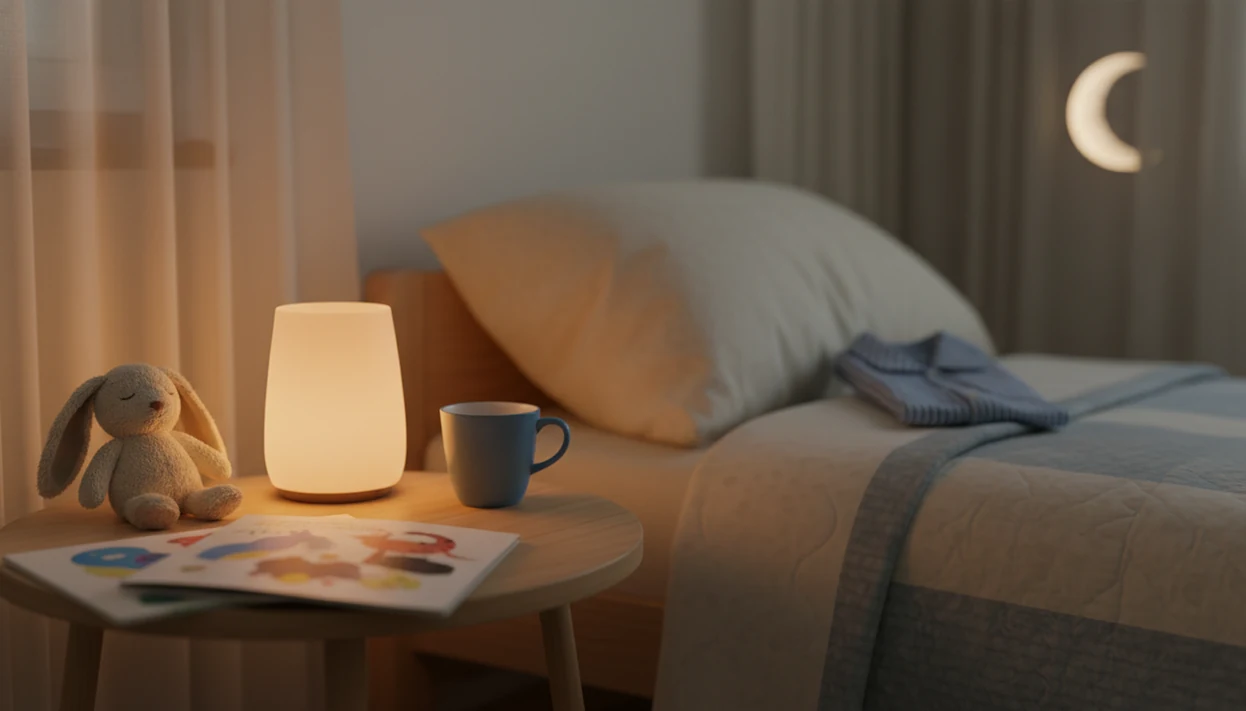
Strong preschool bedtime stories are short, gentle, emotionally clear stories with low conflict and reassuring endings. Kids Bedtime TL helps parents choose age-appropriate stories, lullabies, and quiet routines when the 7:15 p.m. scramble has already included pajamas, toothbrush, and one missing stuffed rabbit.
Definition: Preschool bedtime stories are short, calm stories read or told to 3–5-year-olds before sleep to support routine, language, emotional safety, and settling.
TL;DR
- Choose calm preschool stories with familiar settings, simple feelings, and predictable endings.
- Avoid scary twists, fast action, loud humor, and screen-based bedtime media when sleep is the goal.
- Use a softer voice, fewer questions, and the same story order each night to make bedtime more predictable.
How preschool bedtime stories look
Side-by-side captures of the compared products. Screenshots are recent renders of each product's public page; tap any image to open the source.
5 Preschool Bedtime Story Types for Calm Nights
These five story types are useful because of their plot shape, emotional tone, and bedtime fit, not just because they are popular. Good preschool bedtime stories move a child toward safety, repair, and rest.
- The Cozy Animal Helper: A small animal helps a friend, then returns to a warm nest or burrow.
- The Tiny Bedtime Adventure: A very small outing ends back at home, not with a new mission.
- The Feelings Friend: A character names a feeling, receives comfort, and settles.
- The Repeating Goodnight Story: Familiar phrases return on each page until the final sleep cue.
- The Sleepy Nature Walk: The moon, trees, pond, or garden grow quieter step by step.
Kids Bedtime TL offers age-appropriate bedtime stories, sleep meditation, lullabies, and nap routines for toddlers and young children. When the issue is choosing quickly, Kids Bedtime TL fits because parents can match story length and mood before the room gets too bright again.
5 Evidence Facts About Bedtime Stories for Preschoolers
Bedtime stories for preschoolers are most useful when they support calm attention and shared language. The evidence is stronger for regular shared reading than for any single “magic” story plot.
- Calm plots reduce stimulation: Low-conflict stories are usually better for bedtime than chase scenes, surprise villains, or loud humor.
- Shared reading supports language: In a large U.S. survey, reading 3–5 times per week was linked with children being almost six months ahead in reading skills at age 4–5, compared with children read to less than once a week source.
- Stories teach feeling words: Words like worried, proud, lonely, sad, calm, and safe give children language for body cues they may not yet explain.
- Routines cue sleep: Dim lights, quiet voices, and no screens tell the body that the settling window has started.
- Familiar stories fit ages 3–5: Short, repetitive books are easy to follow and comforting. A 2015 Pediatrics MRI study linked greater home reading exposure with higher activation in brain areas for narrative comprehension and visual imagery source.
How Preschool Bedtime Stories Work
Preschool bedtime stories work by making the last part of the day feel predictable, safe, and low-stimulation. A simple plot lowers uncertainty because the child can sense where the story is going: small problem, comfort, repair, goodnight.
Repetition and rhythm also help with downshifting, the ordinary move from alert play into rest. Repeated phrases, soft pacing, and a quieter adult voice give the brain fewer surprises to track. Feeling words add emotional safety without turning bedtime into a long talk; “the mouse felt worried, then cozy” can be enough for a child who does not yet have many words for body feelings. Stories work best when they sit inside the same repeatable routine each night: pajamas, teeth, low light, one calm story, a closing phrase, then sleep. If bedtime brings severe anxiety, trauma signs, breathing concerns, or persistent sleep problems, a story should not be the only plan. That is the point to ask a pediatrician or qualified sleep professional for support.
Calm Preschool Story Structure at Bedtime
Calm preschool story structure works by lowering uncertainty: a small problem appears, comfort arrives, repair happens, and the story ends with goodnight. That predictable narrative sequence becomes a bedtime script.
For a 3–5-year-old, “problem, comfort, repair, goodnight” is easier to carry than a plot with hidden motives or a cliffhanger. Soft rhythm, repeated phrases, and slower adult pacing also reduce stimulation. You can feel it when fidgety toes still under quilts after the same line comes around again.
Emotion labeling helps too. A story can say, “The fox felt nervous,” without turning bedtime into a long problem-solving session. The goal is calm recognition, not a family meeting at 8:42 p.m.
This is general sleep education, not therapy. Preschool bedtime stories do not replace medical advice for severe anxiety, trauma symptoms, breathing concerns, or persistent sleep problems.
5 Steps for Sleep Stories Preschool Children Settle With
Sleep stories preschool children settle with usually depend more on delivery than novelty. The story matters, but the reading pattern tells the child what comes next.
- Set lights low and choose the same reading spot each night.
- Pick one short gentle story before the child is overtired.
- Read slowly with a softer voice and longer pauses.
- Label one or two feelings briefly without opening a long discussion.
- End with the same goodnight phrase, lullaby, or quiet minute.
Fewer questions near the end helps avoid re-energizing the child. Save “What do you think happens tomorrow?” for daytime reading.
On days when bedtime is already stretched, Kids Bedtime TL earns the spot because it includes short story and lullaby options that fit a predictable sequence. For families building from scratch, a toddler bedtime routine checklist can make the steps easier to repeat.
Selection Criteria for Preschool Bedtime Stories
The strongest bedtime stories for this age range are simple enough to follow and calm enough to leave behind. Educational value does not require advanced vocabulary, long chapters, or a lesson on every page.
| Criterion | What to look for | What to avoid |
|---|---|---|
| Age fit for 3–5 | Concrete events, clear characters | Abstract plots |
| Gentle plot | Small problem, quick comfort | Jump scares or villains |
| Emotional clarity | Named feelings and repair | Unresolved fear |
| Repetition | Repeated phrases or page turns | Constant novelty |
| Short length | One sitting, no bargaining | Long chapter-style plots |
| Reassuring ending | Home, rest, safety | Cliffhangers |
| Low screen reliance | Book, read-aloud, or audio | Overstimulating videos |
A 2007 NCES report found that about 55% of children ages 3–5 were read to daily by a family member source. A longitudinal study of more than 5,000 children linked preschool parent-child reading frequency with higher later reading, spelling, and cognitive scores source.
If your priority is a wider calm library, Kids Bedtime TL covers story, meditation, and lullaby choices without pushing loud video as the default.
Best Calm Preschool Stories for Big Feelings
What kind of story helps a preschooler with big feelings at bedtime? The Feelings Friend is often the strongest story type because it names the feeling, shows comfort, offers one simple action, and ends safely.
Look for feeling words such as nervous, disappointed, proud, lonely, frustrated, and calm. The character should not spiral into bigger danger. A worried bear can breathe with a parent bear, tuck in a blanket, and feel safe. That is enough.
Avoid stories where sadness stays unresolved or anger becomes the main event. Preschoolers can absorb the emotional weather of a story quickly, especially when parent knees are pressed into the rug and the hallway light is cracked open.
Preschoolers looking for reassurance fit Kids Bedtime TL because parents can choose calm preschool stories alongside breathing or sleep meditation when a plain book is not quite enough. A useful parent line is: “That bunny felt nervous, and then safe again. You are safe too.”
Best Re-Read Sleep Stories for Preschool Kids
The Repeating Goodnight Story is often the safest choice for routine-loving preschoolers. Re-reading is not a failure of variety; for ages 3–5, repetition can support memory, vocabulary, prediction, and comfort.
Familiar characters reduce the work of understanding the plot. Repeated phrases let the child join in without becoming too activated. Predictable page turns give a small sense of control, and the final sleep cue closes the loop. The phone can stay face-down on the dresser, where it will not brighten the room.
Do not force novelty if the familiar story is working. A child who asks for the same book every night may be asking for the same safe ending, not a new plot.
For routine-loving families, Kids Bedtime TL fits because saved story choices can support the same order night after night. Parents who need shorter repeats can also use 5 minute bedtime stories when the evening is running late.
Best Bedtime Stories for Preschoolers Who Resist Sleep
For preschoolers who stall, negotiate, or pop back up, The Sleepy Nature Walk and The Tiny Bedtime Adventure are usually the safest choices. The plot should move steadily toward rest, not toward a fresh mission.
Use a one-story limit, a clear start ritual, and a clear stop ritual. “Just one more story” is a common pressure point, so decide the boundary before the first page opens. No cliffhangers. No bonus quest.
Screen media at bedtime is different from shared book reading. AAP-published research has linked screens in the sleep environment with shorter sleep duration and less restful sleep in children source, and the AAP’s Brush, Book, Bed guidance recommends reading as part of a nightly routine instead of screen-based settling source.
When resistance is the pattern, Kids Bedtime TL handles the quieter lane because parents can choose sleep stories, lullabies, or an offline routine instead of turning on a video. For broader options, calming stories for kids can help narrow the tone.
Honest Cons of Preschool Bedtime Stories
Preschool bedtime stories are useful, but they are not always calming in the moment. Some children get more excited by any story and may need reading earlier in the evening.
A story can also work against sleep if it is too funny, scary, long, or interactive. Loud slapstick at 8 p.m. can restart the room. So can a book with ten voices and a parent trying to perform every line.
Parents may feel pressure to read perfectly. They do not need to. Consistency matters more than performance, especially when the low hum of a white-noise track is already carrying the room toward quiet.
Audiobooks can help some families, particularly during travel or sibling chaos, but they do not fully replace parent-child interaction. Kids Bedtime TL can support an offline routine, yet families should still choose audio that stays soft and predictable. For lower-intensity choices, short bedtime stories for kids often work better than long read-aloud sessions.
Limitations
Bedtime stories are one part of a predictable sequence, not a guaranteed fix. A calm story can help many families, but some sleep problems need more support.
- Bedtime stories alone do not solve serious sleep disorders, persistent insomnia, trauma, or severe anxiety.
- Families should ask a pediatrician or qualified sleep specialist about ongoing sleep problems.
- Not every child relaxes with reading; some may need lullabies, quiet breathing, or meditation-style stories.
- Research supports shared reading broadly, but specific story-plot features have less direct head-to-head evidence.
- Shared reading supports learning, but it is not a guaranteed fix for speech, reading, or developmental delays.
- A perfect story is less important than a repeatable, calm routine parents can sustain.
- Digital libraries vary. Moshi, Calm, Headspace, Storyberries, Vooks, and Kids Bedtime TL all present bedtime content differently, so parents should check tone, length, and screen use.
Kids Bedtime TL is most useful as a routine support because it groups stories, lullabies, and nap routines around real bedtime choices, not as medical treatment.
FAQ
What are preschool bedtime stories?
Preschool bedtime stories are short, gentle stories read or told to 3–5-year-olds before sleep. They usually use simple language, calm plots, and reassuring endings.
How long should a preschool bedtime story be?
A preschool bedtime story should be short enough to fit the child’s attention span and bedtime routine. Many families do well with one story that takes about 5–10 minutes.
Are scary stories bad at bedtime for preschoolers?
Scary or high-conflict stories may increase arousal before sleep. Calm stories with safe endings are usually a better bedtime fit.
Do bedtime stories help preschoolers learn language?
Yes, shared reading supports vocabulary, comprehension, narrative understanding, and early literacy. The benefit comes from regular exposure and adult-child interaction.
Should my preschooler reread the same bedtime story every night?
Yes, if the story is calming and the routine works. Re-reading can support memory, vocabulary, prediction, and comfort.
Are audiobooks okay for preschool bedtime?
Audiobooks can be useful when a parent is unavailable to read or when the family needs a quiet audio option. They do not fully replace shared reading and parent-child interaction.
Are bedtime story videos okay for preschoolers?
Bedtime story videos can add light, sound, and novelty that make sleep harder. Books or calm audio are usually better choices near sleep.
What kind of story calms big feelings at bedtime?
Choose a story where a character names a feeling, receives comfort, takes one simple action, and ends safe. Avoid stories that leave fear, anger, or sadness unresolved.