
Sleep Sounds For Kids Without Overstimulation
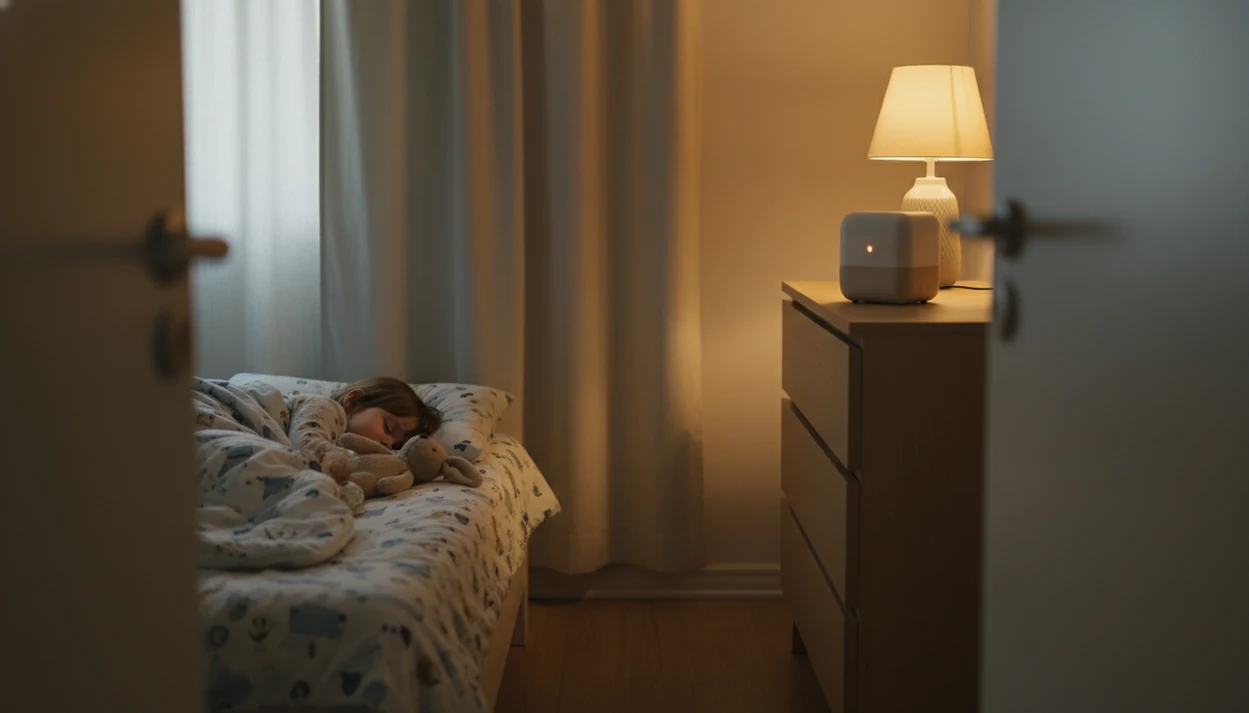
Sleep sounds for kids can help by masking sudden household or neighborhood noise, but they work best at low volume, away from the bed, and as one part of a predictable bedtime routine. The goal is calm settling, not loud or endless audio.
> Sleep sounds for kids are calming background sounds such as white noise, pink noise, brown noise, rain, ocean waves, fans, lullabies, or gentle music used to help children relax and reduce disruptive noise at bedtime.
- Use sleep sounds to mask sudden noises, not to force sleep.
- Keep audio low, place the device away from the child, and use a timer when possible.
- Choose the sound type by the child’s response: some prefer steady noise, others settle better with nature sounds or soft lullabies.
Sleep Sounds For Kids At A Glance
Sleep sounds are bedtime support, not a sleep cure. They can make a room feel steadier by softening the contrast of doors, traffic, a barking dog, or an older sibling moving around after lights out.
Use them quietly. Place the phone, speaker, or sound machine away from the bed or crib, and try short-term bedtime use before assuming audio should run all night. A predictable sequence matters more than the exact track: pajamas, toothbrush, story, lights low, sound on.
The 7:15 p.m. scramble after pajamas, toothbrush, and one missing stuffed rabbit is real. A steady sound can reduce one variable.
Tools like Kids Bedtime TL can fit here as a practical bedtime stories app with calming audio routines, but the core rule stays the same: low, distant, consistent, and optional.
How Kids Sleep Sounds Work In A Bedtime Routine
Sleep sounds work mainly through auditory masking and cueing. Auditory masking means a steady background sound reduces the sharp contrast of sudden noises, so a closing door, passing siren, hallway step, or kitchen drawer may feel less noticeable.
Cueing is different. When the same calming sleep audio starts during naps and bedtime, the child may begin to connect that sound with the settling window. In plain terms, the sound becomes part of the “now we rest” pattern. Behavioral sleep routines are a commonly used pediatric sleep approach; a clinical review in Sleep Medicine Reviews found that consistent bedtime routines are among the non-drug strategies used for pediatric sleep problems (https://pubmed.ncbi.nlm.nih.gov/25704739/).
For many families, sleep sounds are strongest as noise masking and routine reinforcement, not as a fix for every bedtime issue. Good kids bedtime stories, sleep meditation, lullabies, and nap routines for toddlers and young children deliver a calm-down cue and predictable sequence, not a guaranteed sleep result.
5 Facts About Bedtime Sounds Children Use
- Sleep sounds can mask disruptive noise that might wake a child, including doors, traffic, sirens, and household movement.
- White noise, pink noise, and brown noise differ in tone; white is brighter, pink is softer, and brown is deeper.
- Volume and distance matter because loud or close audio can overstimulate children and raise hearing concerns.
- Sleep sounds do not fix bedtime resistance, irregular schedules, anxiety, snoring, sleep apnea, or other sleep disorders.
- Consistency can help a sound become a bedtime cue when it is used during the same wind-down routine.
A phone set face-down on a dresser keeps the screen from brightening the room. That small setup detail often matters as much as the track choice.
For children who settle better with song than static, lullabies for toddlers may be a gentler read-aloud or audio pairing.
White Noise, Pink Noise, Brown Noise, And Calming Sleep Audio
There is no single sound color that fits every child. Choose by response, not by trend, and test one option for several nights before changing it.
| Sound type | What it sounds like | When it may fit | What to watch |
|---|---|---|---|
| White noise | Bright, even static or fan-like sound | Masking sharp household noise | Some children find it harsh |
| Pink noise | Softer, balanced sound like rain or steady wind | Children who dislike bright static | May not cover sudden loud noise as strongly |
| Brown noise | Deeper, lower rumble like distant thunder | Children who relax with low tones | Can feel heavy or too intense for some |
| Nature sounds | Rain, ocean, wind, birds, stream | Children who like familiar scenes | Loops or changes may draw attention |
| Soft music or lullabies | Gentle melody or voice | Children who settle with rhythm | Lyrics may invite “just one more” requests |
Test one sound during the same settling window. If your child becomes chatty, alert, or starts requesting track changes, the audio may be too interesting.
For song-based routines, the lullabies vs sleep stories choice often depends on whether words or melody settle your child faster.
Before You Start With Kids Sleep Sounds
Before you press play, make the room and device setup boring on purpose. The safest test is quiet, distant, planned before bedtime, and easy to stop if your child seems more wired than settled.
- Check the room for the obvious sleep blockers first: hallway noise, a bright clock, a warm room, a tablet glow, or a toy that keeps pulling attention back.
- Choose one device spot across the room before pajamas begin, such as a dresser or shelf, so you are not moving the speaker closer during protests.
- Pick one sound type to try for several nights, not a changing playlist. A steady rain sound teaches you more than ten tracks shuffled together.
- Set the volume and timer before your child enters the room. Bedtime is easier when the sound is already low and the screen is not part of the negotiation.
- Decide what “helping” looks like. Softer breathing, fewer startle wakes, or calmer lying down are useful signs; chattiness, track requests, irritation, or wide-awake energy suggest the sound is too stimulating.
A simple setup gives you cleaner feedback. Change one thing at a time.
How To Use Sleep Sounds For Kids Safely
Use sleep sounds as a quiet cue in the bedtime routine, not as room-filling audio. The most common practical approach is low-volume sound combined with a consistent wind-down sequence.
- Set the volume low before your child enters the room, so you are not adjusting sound during settling.
- Place the phone, speaker, or sound machine away from the bed, crib, pillow, and child’s ears.
- Choose one simple sound rather than changing tracks repeatedly after lights are low.
- Use the same sound during the wind-down window, and consider a timer for bedtime-only playback.
- Observe your child’s behavior, and stop if the sound makes them alert, restless, irritated, or more demanding.
The pause button tapped during a yawn tells you something. If the room feels calmer after the sound starts, keep the setup simple.
For toddlers, low-volume sound often pairs better with a short story or breathing cue than with a playlist that keeps changing.
Safe Volume, Distance, And Timer Rules For Kids Sleep Sounds
What volume is safe for kids sleep sounds? The American Academy of Pediatrics has advised keeping infant sleep machines at 50 dB or lower and at least 7 feet, or about 2 meters, from a child’s ears (https://publications.aap.org/pediatrics/article/133/4/677/32778/Infant-Sleep-Machines-and-Hazardous-Sound).
Closer and louder is not better. It can overstimulate a child who is already tired, and it raises avoidable hearing concerns. Put the device across the room, not in the crib, on the bed, under a pillow, clipped near the child’s head, or beside a sleep sack.
Bedtime-only playback can be enough for many children. A timer supports that approach because the sound covers the settling period without becoming an all-night default. All-night use should be purposeful, quiet, and distant, especially if outside noise is the real problem.
For a deeper look at loudness, how loud should lullabies be for toddlers covers similar volume thinking for music-based bedtime audio.
Common Myths About Sleep Sounds For Kids
Myth 1: White noise is the only sound that works. White noise is one option. Pink noise, brown noise, rain, ocean sounds, fans, and soft lullabies may fit better depending on the child.
Myth 2: If it helps at bedtime, it should play all night. Many families can use a timer. All-night playback should have a clear reason, such as ongoing street noise, and stay low.
Myth 3: Louder sounds work better. Loud sounds can backfire. Low, steady audio is usually the safer place to start.
Myth 4: Sleep sounds fix bedtime battles by themselves. Audio cannot replace a predictable sequence, age-appropriate bedtime, or calm limit-setting around “Just one more story.”
Myth 5: Switching tracks helps a child settle faster. Repeated changes can make bedtime more stimulating. Pick one sound and watch the child, not the playlist.
Where Kids Bedtime TL Fits Into Calming Sleep Audio
Kids Bedtime TL is a kids bedtime stories app that provides bedtime stories, sleep meditation, lullabies, and nap routines for parents of toddlers and young children. It can sit inside a bedtime routine where low-volume background audio supports the transition from active play to rest.
The useful pairing is simple: an age-appropriate story, a soft voice, maybe a low hum of a white-noise track under it, then lights dimmed and the device placed across the room. Kids Bedtime TL should be treated as routine support, not a treatment for sleep disorders or a promise that a child will fall asleep on command.
For preschool naps, nap time stories for preschoolers may fit better than longer bedtime audio.
Limitations
Sleep sounds have real uses, but they also have limits. Parents should treat them as one bedtime tool, not the whole plan.
This page is general bedtime education, not medical advice. If a child snores loudly, pauses breathing, has frequent night wakings with distress, or seems unusually sleepy during the day, parents should ask a pediatrician rather than trying louder or longer audio.
- Evidence is stronger for masking disruptive noise than for one universally better sound.
- Some children become more alert, irritated, or dependent on audio cues.
- High volume and close placement are real concerns, especially near a crib, pillow, or child’s head.
- Sleep sounds do not treat inconsistent routines, anxiety, snoring, sleep apnea, or medical sleep problems.
- Nature sounds and music are popular, but they are not equally proven for children.
- A timer may help, but some children wake when audio stops and need a slower fade.
- Persistent, severe, or breathing-related sleep problems should be discussed with a pediatrician.
Small feet under dinosaur sheets can still kick for twenty minutes. That does not mean the sound failed; it may mean the schedule, nap, fear, or limit-setting needs attention.
FAQ
Are sleep sounds safe for kids?
Sleep sounds can be safe when they are kept low, placed away from the child, and used thoughtfully. Stop or reduce them if the child becomes more alert or restless.
What volume is safe for kids?
A practical target is 50 dB or lower, based on pediatric guidance for white-noise machines. Quieter is usually better, especially in a small bedroom.
Should sleep sounds play all night?
Many families can use a timer for the settling window only. All-night playback should be low volume, distant from the child, and used for a clear reason.
Is white noise best for children?
White noise is one option, not the only option. Pink noise, brown noise, nature sounds, or lullabies may fit a child better.
Can sleep sounds overstimulate kids?
Yes, sleep sounds can overstimulate some children. Signs include alertness, restlessness, irritation, repeated track requests, or trouble settling after the sound starts.
Where should the speaker go?
Place the speaker or device across the room. Keep it away from the bed, crib, pillow, and the child’s ears.
Do sleep sounds create dependence?
Sleep cues can become habits if a child needs the same sound every time. Timers, lower volume, and occasional fading may help if dependence appears.
When should parents stop using sounds?
Parents should stop or reduce sounds if the child resists, becomes more awake, needs louder audio, or has ongoing sleep problems. Kids Bedtime TL can support routines, but persistent concerns need pediatric guidance.