
YouTube Bedtime Stories Vs Audio Stories: Screen, Sleep, and Safety Comparison
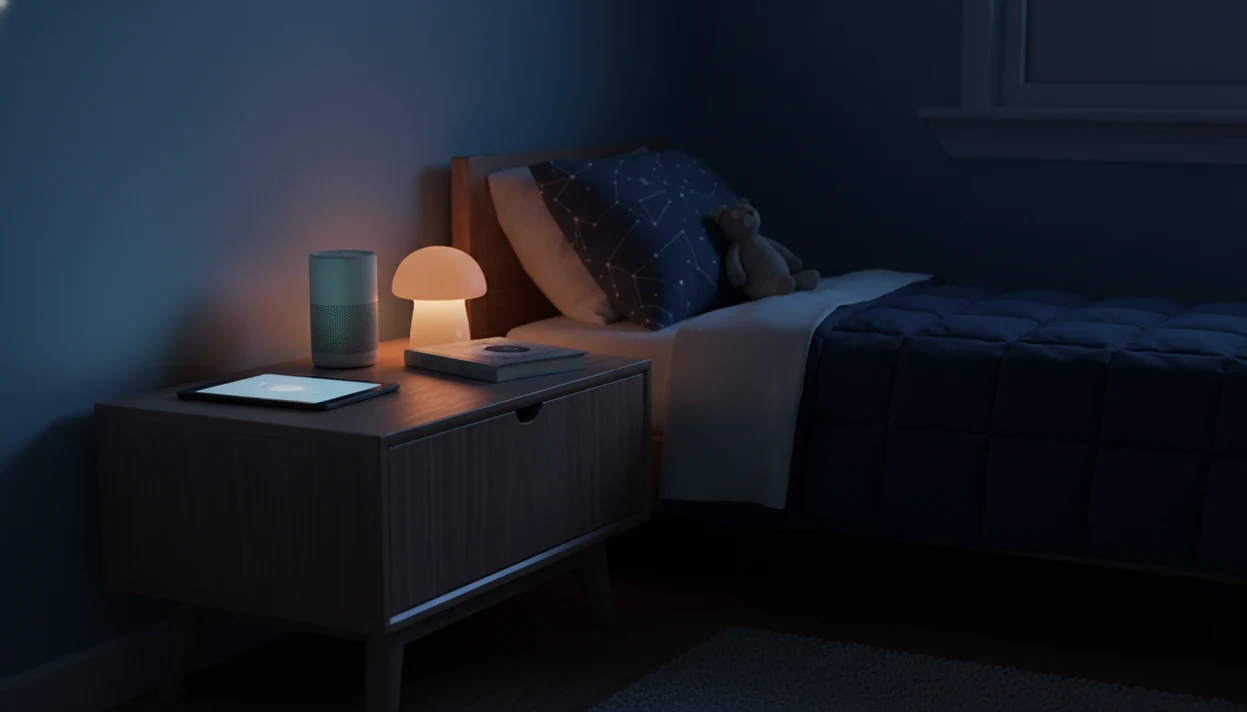
Audio-only stories are usually the better bedtime choice because they avoid screens, autoplay, and visual stimulation; YouTube bedtime stories vs audio stories mainly comes down to light exposure, content control, and how easily a child can settle. A short, parent-selected YouTube video can work occasionally, but screen-free audio bedtime stories are generally easier to fit into a calm sleep routine.
Definition: YouTube bedtime stories are video-based stories watched on YouTube at night, while audio bedtime stories are listen-only stories used without an active screen.
TL;DR
- Audio bedtime stories are usually better for sleep because they reduce blue light and visual stimulation.
- YouTube bedtime videos can be engaging, but ads, autoplay, thumbnails, and recommendations make parent control harder.
- The best routine is short, predictable, age-appropriate, and parent-led, whether the story is video or audio.
Youtube bedtime stories vs audio stories, side by side
Side-by-side captures of the compared products. Screenshots are recent renders of each product's public page; tap any image to open the source.
At-a-glance comparison of YouTube bedtime stories vs audio bedtime stories
Audio bedtime stories generally win for sleep because they keep the room screen-free and easier to darken. YouTube bedtime videos can still help in limited cases, but they need tighter parent control.
| Bedtime factor | YouTube bedtime videos | Audio bedtime stories | Bedtime verdict |
|---|---|---|---|
| Screen exposure | Active screen, light, motion | No active screen | Audio is calmer for lights-out |
| Ads | Possible unless blocked | Usually fewer interruptions | Audio is easier to predict |
| Autoplay | Can continue into new content | Playlist can be fixed | Audio gives cleaner closure |
| Pacing | Often visual and variable | Usually slower and steadier | Audio fits settling better |
| Parent control | Settings help, but recommendations remain | Downloads and playlists are simpler | Audio is easier to lock down |
| Offline use | Possible with some subscriptions | Common in apps and files | Audio is better for travel |
| Engagement | High visual interest | Lower stimulation | Video may suit occasional co-viewing |
A hotel lamp glowing by a travel crib is one place a single familiar video may work, if it ends on time.
Five sleep facts parents should know about YouTube bedtime videos
Most evidence points in the same direction: bedtime screens are linked with later, shorter, or poorer sleep in children. The research is stronger for school-aged children and teens than for toddlers, but it still gives parents useful guardrails.
- A 2015 systematic review found that about 90% of studies reported adverse associations between screen time and sleep outcomes in school-aged children and adolescents (https://pubmed.ncbi.nlm.nih.gov/25193149/).
- A 2016 JAMA Pediatrics meta-analysis linked bedtime mobile-device access or use with inadequate sleep quantity, poor sleep quality, and daytime sleepiness (https://jamanetwork.com/journals/jamapediatrics/fullarticle/2571467). This supports the practical “device out of bedroom” guardrail, even though it does not isolate bedtime stories alone.
- The American Academy of Pediatrics recommends keeping screens out of bedrooms and building a family media plan, including bedtime limits (https://www.healthychildren.org/English/family-life/Media/Pages/How-to-Make-a-Family-Media-Use-Plan.aspx).
- Blue light may affect melatonin timing, while fast scenes, sounds, and story surprises can keep attention active.
- Parent involvement still matters. A calm cutoff and predictable sequence can reduce bedtime friction.
The hallway light left cracked open matters more than it seems. So does who holds the phone.
Family situations where YouTube bedtime videos work best
YouTube bedtime videos work best as an occasional, parent-led transition, not as an open-ended bedtime handoff. They fit better when the story is already familiar, short, and watched together.
Good use cases include travel, a one-off wind-down after a disrupted evening, or a single animal story replayed again at low volume. Keep the screen dim, turn autoplay off, and choose the video before pajamas start. YouTube Kids settings, ad-free options, and offline downloads can reduce some interruptions, but they do not remove every risk.
Do not let the algorithm pick the next bedtime story. That is where a calm five-minute plan becomes three thumbnails, a louder song, and “Just one more story.”
For broader format choices, the bedtime story app vs audiobook comparison may help.
Sleep routine advantages of audio bedtime stories and screen-free stories
Do audio bedtime stories help children settle better than YouTube bedtime videos? Usually, yes, because audio removes the visual pull and lets the room stay dim or dark.
Audio bedtime stories support inward attention. A child can listen while lying down, holding a stuffed rabbit, or hearing a parent breathe nearby. The low hum of a white-noise track under a soft-spoken story can become a calm-down cue when it happens in the same order each night.
Still, audio is not automatically soothing. A scary dragon voice, fast music, or loud ending can wake a tired child back up. Good kids bedtime stories, sleep meditation, lullabies, and nap routines for toddlers and young children deliver a gentle transition, not a guaranteed sleep result.
Tools like Kids Bedtime TL can fit here with calm narratives, soft music, lullabies, and nap routines.
Sleep mechanisms behind YouTube bedtime stories and audio bedtime stories
YouTube bedtime stories affect sleep through light, motion, sound, novelty, and arousal, while audio bedtime stories mainly affect sleep through sound, pacing, repetition, and routine cues.
Evening light from screens can suppress or delay melatonin and shift sleep timing in controlled studies; in one PNAS trial, evening e-reader use reduced evening sleepiness and delayed circadian timing compared with print reading (https://www.pnas.org/doi/10.1073/pnas.1418490112). Melatonin is one timing signal for sleepiness, so the practical bedtime rule is to reduce bright, close-range screens rather than rely on a dimming setting alone. Visual cuts, bright characters, new thumbnails, and sudden music changes also keep the brain scanning for what comes next. Autoplay and recommendations reduce closure because the story does not feel finished.
Steady audio works differently. Slow narration, repeated openings, low volume, and familiar music can become part of a habit loop. In plain terms, the child learns, “This sound means bedtime is ending.” For sensitive sleepers, audio bedtime stories usually work best when the phone is face-down on a dresser so the screen does not brighten the room.
Six-step switch from YouTube bedtime videos to screen-free bedtime stories
A gradual switch from YouTube bedtime videos to screen-free bedtime stories works better than a sudden removal for many families. Keep the story routine, but reduce the screen’s role over several nights.
- Set a cutoff. End all YouTube bedtime videos at least one hour before lights-out when possible.
- Dim the room. Lower lights and device brightness before the story starts.
- Choose one audio story. Pick a short, age-appropriate story before your child is overtired.
- Keep volume low. Set the sound just loud enough to hear from the pillow.
- Repeat the routine. Use the same order after pajamas, toothbrush, and the missing stuffed rabbit search.
- Step down gradually. Move from video to static-screen audio, then to fully screen-free listening.
Apps such as Kids Bedtime TL can help parents build a predictable app-based routine with stories, sleep meditation, lullabies, and nap routines. The 7:15 p.m. scramble needs fewer choices, not more.
Parent control differences in YouTube bedtime videos and audio bedtime stories
Parent controls matter more at bedtime because small disruptions feel bigger when a child is almost asleep. Filters reduce risk, but they do not eliminate unsuitable content or sudden stimulation. YouTube says YouTube Kids parental controls can limit content and search, but it also tells parents that no automated system is perfect and videos should still be reviewed (https://support.google.com/youtubekids/answer/6172308). That caveat is especially important at bedtime, when one loud recommended clip can reset the routine.
| Control area | YouTube bedtime videos | Audio bedtime stories |
|---|---|---|
| Kid mode | YouTube Kids can limit content | Kid-focused apps often start narrower |
| Autoplay | Must be turned off | Playlists can end after one story |
| Ads | Reduced with subscriptions | Often absent in paid apps |
| Offline use | Available in some plans | Common with downloads |
| Recommendations | Thumbnails can distract | Fewer visual prompts |
| Comments | May need blocking or supervision | Usually not part of listening |
| Volume changes | Ads and videos may jump | Tracks are often more consistent |
Smart speakers can help, but they need locked playlists and clear commands. If you are comparing kid-focused options, the best kids sleep app guide covers app routines in more detail.
How to use YouTube bedtime videos or audio stories safely
Use either format safely by making the parent, not the platform, the bedtime guide. The goal is a short, calm story with a clear finish, not a new round of choices.
- Choose the story early. Pick the YouTube video or audio track before pajamas, brushing, and the sleepy wobble begin, so thumbnails and recommendations do not steer the night.
- Set one ending rule. Tell your child the limit before the story starts: one video, one track, or one timer. Keep the rule plain enough to repeat without debate.
- Move the screen away. If you use video, keep the device off the pillow, dim the brightness, and avoid close-range watching in a dark room.
- Keep the sound steady. Use low volume and preview for sudden songs, ads, spooky voices, or loud endings that could wake attention back up.
- Stop if sleep gets harder. If the format repeatedly stretches bedtime, increases bargaining, or leaves your child more alert, switch to a quieter routine for a while.
Best bedtime story choice for toddlers, sensitive sleepers, and travel
For toddlers, sensitive sleepers, high screen-time days, and strict lights-out routines, audio bedtime stories are usually the safer default. YouTube bedtime videos fit occasional co-viewing or travel when limits are firm.
Choose audio bedtime stories if
- Your child gets energized by cartoons, music, or bright thumbnails.
- The day already included a lot of screen time.
- You want a strict lights-out routine.
- Your child settles with repetition, soft narration, or lullabies.
For toddlers and sensitive sleepers, audio bedtime stories are often easier than YouTube bedtime videos because they remove the screen while preserving the story ritual.
Choose YouTube bedtime videos if
- You are co-viewing one short, familiar story.
- You are traveling and need a visual bridge to an unfamiliar room.
- Your child handles a firm ending without a negotiation.
The story should still be short, calm, age-appropriate, and paired with basic sleep hygiene. For app comparisons beyond video, Calm vs Moshi for kids is a useful next decision point.
Common myths about YouTube bedtime stories and audio bedtime stories
A “calming” label does not make a YouTube bedtime video toddler-safe. Parents still need to check the content, comments, ads, thumbnails, and what plays next.
Another myth is that falling asleep to a screen means sleep quality is unaffected. A child may drop off during a video, but evening screen use is still linked with shorter sleep and more difficulty settling in many studies.
Audio has its own myths. It is not always calming. A loud adventure story, spooky sound effect, or fast narrator can stretch bedtime just as surely as a screen.
Background YouTube is also not neutral. If the app keeps changing tone, topic, or volume, a half-asleep child may keep listening for the next surprise. Eyelids fluttering during soft narration is different from tracking a new video from the pillow.
Limitations
This comparison gives general sleep education, not a diagnosis or treatment plan. Families should speak with a clinician if bedtime problems are severe, persistent, or tied to breathing, anxiety, pain, medication, or development concerns.
Seek pediatric advice sooner if your child snores loudly, has witnessed breathing pauses, wakes in panic, has pain, shows major daytime sleepiness, or if bedtime conflict is escalating family stress. In those cases, story format is a comfort tool, not the treatment.
- Research on toddlers is more limited than research on older children and adolescents.
- Neither video nor audio fixes sleep disorders, anxiety, medical issues, or inconsistent boundaries.
- Some children relax with one brief predictable video, while others become alert quickly.
- Audio can disrupt sleep if it is scary, fast, loud, surprising, or too long.
- Parental controls and kid modes reduce risk, but they do not eliminate inappropriate content.
- Travel, shared rooms, neurodivergence, and family work schedules may change what is realistic.
- Families may need trial and error within evidence-based screen limits.
If you are weighing story libraries rather than YouTube specifically, the best kids bedtime stories app guide may be more relevant.
FAQ
Are YouTube bedtime stories bad for sleep?
YouTube bedtime stories are not always bad, but they can disrupt sleep if they are too late, too long, bright, or algorithm-led. A short parent-selected video is less risky than open-ended autoplay.
Are audio bedtime stories better for children at night?
Audio bedtime stories are usually better at night because they avoid screens and visual stimulation. They also make it easier to keep the bedroom dim.
Do screens delay child sleep?
Research links bedtime screen use with delayed sleep onset, shorter sleep, and poorer sleep quality in children and adolescents. The effect varies by child, timing, content, and routine.
Is YouTube safe for toddlers at bedtime?
YouTube safety depends on parent selection, supervision, autoplay settings, ads, and content controls. Filters help, but they are not a substitute for checking the story first.
Should toddlers use bedtime videos?
Toddlers are usually better served by screen-free routines near bedtime. If a video is used, it should be brief, familiar, co-viewed, and not part of lights-out.
When should children stop using screens before bed?
Common pediatric guidance recommends avoiding screens during the hour before bedtime. Families can use that hour for books, audio stories, lullabies, or quiet routines.
Can audio stories overstimulate kids?
Yes, audio stories can overstimulate kids if they are scary, loud, fast, or exciting. Calm pacing and low volume matter.
How do I stop YouTube autoplay before bedtime?
Turn autoplay off, use a fixed playlist with one selected story, and keep the device with the parent. Do not leave the child holding the phone or remote.
How do I switch my child from YouTube bedtime videos to audio stories?
Start with one short video, then shift to dimmed-screen audio for a few nights. After that, move to fully screen-free listening with a familiar story or app such as Kids Bedtime TL.