
Bedtime Meditation Side Effects Kids May Notice
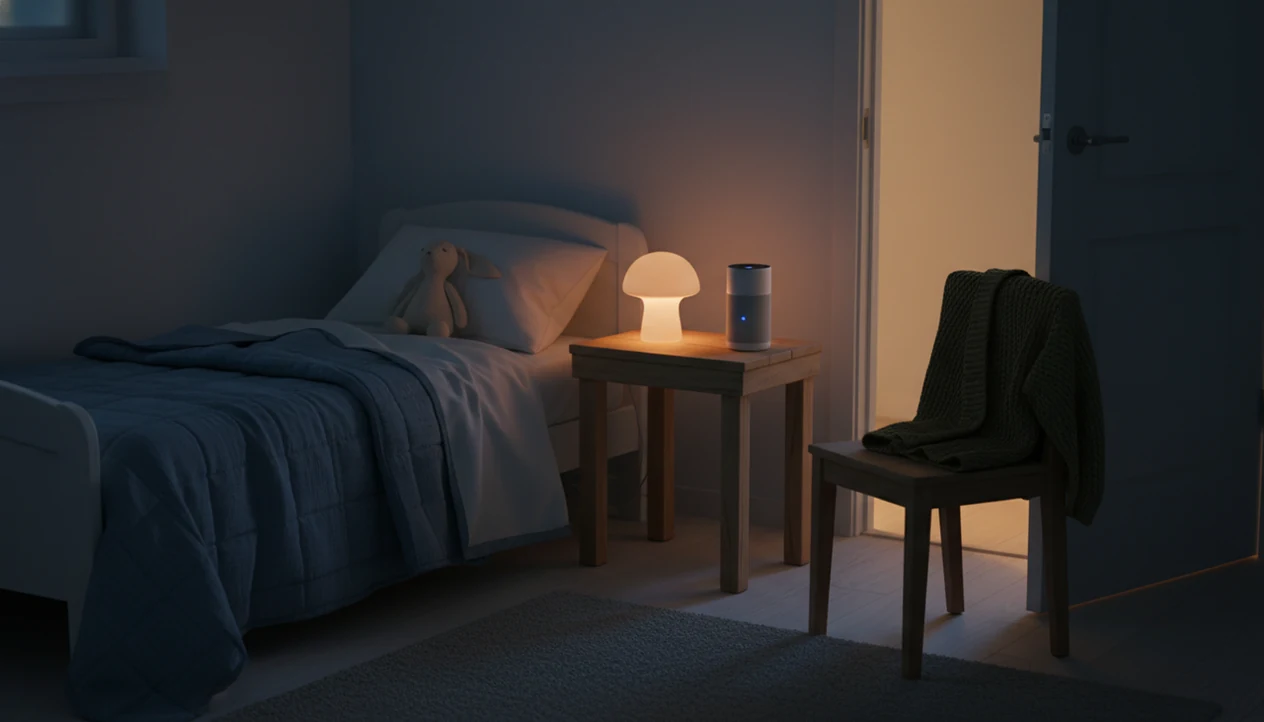
Bedtime meditation side effects kids may notice are usually mild reactions such as restlessness, boredom, giggles, worry, or refusing the audio, and they often mean the practice needs adjusting rather than stopping forever. The safest response is to shorten the meditation, choose calmer age-appropriate content, stay nearby, and watch for persistent fear, sleep disruption, or anxiety.
This article is educational and is not a diagnosis or treatment plan. If a child has persistent insomnia, loud snoring, breathing pauses, panic, trauma symptoms, or major daytime changes, parents should contact a pediatrician or licensed clinician.
Definition: Bedtime meditation side effects in kids are unexpected emotional, physical, or behavioral reactions that happen when guided sleep meditations, breathing exercises, lullabies, or bedtime stories are used to help a child settle for sleep.
TL;DR
- Most kids meditation problems are mild and practical: fidgeting, boredom, silliness, worry, or dependence on one audio track.
- Child meditation restlessness is often a mismatch between the child’s age, nervous system, timing, script, or voice rather than proof that meditation is unsafe.
- Bedtime meditation concerns deserve extra care when a child has trauma history, high anxiety, neurodevelopmental differences, nightmares, snoring, or persistent insomnia.
Bedtime Meditation Side Effects Kids Can Have
Bedtime meditation side effects kids can have include restlessness, giggles, boredom, worry, sadness, frustration, and refusing to lie still. These reactions are usually signals to adjust the practice, not proof that meditation is dangerous.
A child may pop up after two minutes, ask unrelated questions, or say the voice sounds “weird.” At 7:15 p.m., after pajamas, toothbrush, and one missing stuffed rabbit, that can feel like the routine has failed. Often, the track is simply too long, too quiet, too abstract, or started too late.
Most families do better by changing one variable: length, tone, timing, or content. Try a shorter story, softer breathing cue, or parent-read script. Good kids bedtime stories, sleep meditation, lullabies, and nap routines for toddlers and young children deliver a gentle transition, not a guaranteed sleep fix.
Don’t push through stronger distress. If fear, crying, panic, or sleep loss repeats, stop and reassess.
Five Facts About Kids Meditation Problems at Night
- Mindfulness and sleep meditation are generally considered safe for children when they are age-appropriate, brief, and not forced.
- A Stanford-led elementary school study reported about 74 extra minutes of sleep per night after two years of school-based mindfulness practice, so benefits appear gradual rather than instant (source: https://med.stanford.edu/news/all-news/2021/07/school-based-mindfulness-program-improves-sleep-in-children.html).
- Up to 50% of children experience sleep problems at some point, including trouble falling asleep or staying asleep, which is why many families try non-drug calming routines (source: https://www.ncbi.nlm.nih.gov/books/NBK53539/).
- Adult sleep research suggests mindfulness meditation can moderately improve sleep quality, but reviews note that evidence quality varies and it should not be treated as clearly superior to established sleep treatments (source: https://jamanetwork.com/journals/jamainternalmedicine/fullarticle/2110998).
- Children with anxiety, trauma histories, ADHD, autism, or sensory sensitivities may need shorter, more supported practices than generic guided audio provides.
For many families, sleep meditation for kids works best as one piece of a predictable sequence: wash, pajamas, story, lights low, parent nearby. The phone set face-down on a dresser matters too. Screens have a way of waking the room.
The most common medically supported way to improve bedtime settling is a consistent routine combined with calm, age-appropriate wind-down cues.
How Bedtime Meditation Works in a Child’s Nervous System
Bedtime meditation can calm a child by lowering bedtime arousal through slow pacing, a predictable voice, simple breathing cues, and safe imagery. In plain terms, the body gets repeated signals that nothing new is being demanded.
Two useful terms are autonomic arousal and interoception. Autonomic arousal is the body’s alert mode, with faster breathing, muscle tension, or watchfulness. Interoception means noticing inner sensations, such as heartbeat, tightness, or belly feelings. A soft-spoken story may reduce alertness, but a body scan can make some children notice every sensation.
That is why lying quietly can backfire for some kids. The room gets still, the hallway light is left cracked open, and suddenly the child says their thoughts are too loud. Child meditation restlessness may be a nervous system saying, “I’m not ready for silence yet.”
For younger children, story-based calming is often easier than breath-only meditation because the mind has a gentle place to land.
Child Meditation Restlessness Versus Real Warning Signs
Child meditation restlessness is usually brief, changeable, and tied to timing or fit. Warning signs are more intense, repeated, or linked with fear, sleep loss, breathing symptoms, or major daytime changes.
| What you see | More likely ordinary settling | More concerning warning sign |
|---|---|---|
| Movement | Rolling, toe wiggling, blanket adjusting | Repeated panic, bolting from bed, refusal to enter the room |
| Sounds | Giggles, whispering, testing limits | Crying, gasping, or saying the practice feels scary |
| Body complaints | “I’m not tired,” mild squirming | Stomach aches, headaches, or chest tightness that repeat |
| Sleep pattern | One off night after a new track | Persistent insomnia, nightmares, or daytime sleepiness |
| Breathing | Normal breathing with fidgeting | Snoring, breathing pauses, choking sounds, or labored breathing |
Stop or change the meditation if distress escalates. Don’t treat fear as a discipline problem.
Clinicians typically recommend medical evaluation when a child has persistent insomnia, loud snoring, breathing pauses, marked daytime sleepiness, or major behavior changes. A meditation track cannot rule out sleep apnea, anxiety disorders, or other health concerns.
When to Talk to a Pediatrician About Bedtime Meditation Problems
Talk to a pediatrician when bedtime meditation problems come with breathing symptoms, repeated sleep disruption, panic, trauma reminders, or daytime changes. Mild squirming is different from a child who snores loudly, pauses in breathing, gasps, chokes, has persistent nightmares, or seems unusually sleepy, irritable, or withdrawn during the day.
Meditation discomfort often looks tied to the practice itself: the voice feels strange, the story is too long, or the child hates closing their eyes. Possible sleep, anxiety, or trauma concerns tend to repeat across nights or appear outside the meditation too. While waiting for guidance, stop any track that triggers crying, panic, frozen silence, frightening body sensations, or refusal to enter the bedroom.
- Pause the meditation if distress escalates or the child says it feels scary.
- Use a simple bedtime routine instead: lights low, familiar story, quiet presence.
- Write down bedtime, wake time, night wakings, naps, snoring, breathing pauses, nightmares, and daytime behavior.
- Note the audio details, including length, volume, device location, voice, music, and whether it played after sleep.
- Bring those notes to the pediatrician so the visit starts with patterns, not guesswork.
Bedtime Meditation Concerns for Anxious or Sensitive Kids
Bedtime meditation concerns are higher for children with strong anxiety, trauma histories, ADHD, autism, sensory sensitivities, or intense nighttime fears. These children are not “bad at relaxing.” They may need more control, shorter practices, and a parent close by.
Inward-focused scripts can feel uncomfortable. Silence may make worries louder. Body scans can draw attention to sensations that already bother a child. Intense imagery, even when meant to be soothing, may land the wrong way at night. A forest path can become a scary dark path very quickly.
Try parent presence, predictable stories, opt-out language, and earlier evening practice. “You can listen, or you can just rest beside me” is often safer than “close your eyes and follow every word.” For higher-anxiety children, the guide to sleep meditation for anxious child may fit better than a standard bedtime track.
Shorter first. Softer next.
Meditation usually works best when the child feels allowed to stop, while stricter breath-following fits fewer young children at bedtime.
Common Myths About Bedtime Meditation Side Effects Kids Hear
Some myths make parents panic too early, while others make them ignore real discomfort. Bedtime meditation should be flexible enough to fit the child in front of you.
1. “Fidgeting means meditation is unsafe.” Fidgeting often means the track is too long, too still, or poorly timed. A child hiding a yawn behind a plush fox may still roll around before settling.
2. “Guided meditation has no unwanted reactions.” Most reactions are mild, but some children feel worried, bored, sad, or overstimulated by certain voices or scripts.
3. “An app or audio track can fix every sleep problem.” Audio can support a bedtime routine, but it cannot replace consistent sleep timing, medical care, or parent reassurance.
4. “Kids must sit perfectly still and follow the breath.” Many young children do better with movement, short stories, stuffed-animal breathing, or breathing exercises for kids bedtime that feel playful.
Tiny adjustments count.
Calm Adjustments for Kids Meditation Problems
When kids meditation problems show up, start by making the practice shorter and less inward-focused. For younger or restless children, 2 to 5 minutes is often enough.
Switch from long body scans to story-based, playful, or breath-light practices. A child who dislikes “notice your toes” may tolerate “smell the flower, cool the soup” breathing. If the voice feels too dramatic, choose a plainer read-aloud option. If the music rises and falls too much, use a quieter lullaby or no music at all.
Keep the same bedtime order. Lower the volume. Avoid intense themes, cliffhangers, monster language, or big emotional lessons at pillow time. Tools like Kids Bedtime TL can be used as a kids bedtime stories app for age-appropriate stories, sleep meditation, lullabies, and nap routines, but the parent still sets the pace.
For children who dislike sensation-focused prompts, a body scan for kids sleep may need to be shorter, skipped, or replaced with a simple story.
Sleep Association Risks With Bedtime Meditation Audio
Does bedtime meditation audio create sleep associations? It can, if a child learns they need one specific audio, voice, app, or device to fall asleep.
A sleep association is a learned cue. The child connects sleep with a certain track, parent phrase, lullaby, or glowing device on the dresser. That is not usually a direct health side effect. It can still create bedtime upset when the audio is unavailable, the Wi-Fi drops, or grandma’s spare room smells of lavender and nothing feels familiar.
Rotate tracks before one becomes non-negotiable. Fade the volume over several nights. End the audio before the child is fully asleep when possible. Pair the track with parent-led cues, such as the same goodnight phrase, the same blanket tuck, or two slow breaths together.
“Just one more story,” is the pressure point.
An offline routine can help during travel, but it should not make one recording the only path to sleep.
Limitations
Research specifically on bedtime meditation side effects in young children is limited. Much practical guidance comes from broader mindfulness research, pediatric sleep education, adult sleep studies, and clinical observation.
Key limits to keep in mind:
- Child-specific side effect studies are still emerging, especially for toddlers and preschoolers.
- Adult sleep meditation findings do not transfer perfectly to young children.
- Meditation is not a replacement for medical evaluation when sleep symptoms are persistent or severe.
- Children with trauma, anxiety, ADHD, autism, or sensory differences may need individualized support.
- Quiet inward attention can temporarily amplify worry, body sensations, or scary thoughts.
- Fast-paced audio, complex plots, intense themes, or stimulating music can undermine sleep.
- Benefits are usually gradual and routine-based, not instant.
- Snoring, breathing pauses, chronic insomnia, daytime sleepiness, or major behavior changes need professional attention.
Kids Bedtime TL, Calm, Moshi, Headspace, and similar tools may offer useful audio choices. None can diagnose why a child is not sleeping.
Sources and Review Scope
This page draws on pediatric sleep education, child mindfulness research, broader meditation and sleep studies, and practical clinical guidance about when sleep or anxiety symptoms need evaluation. The evidence base is useful, but child-specific research on bedtime meditation side effects is still limited.
The recommendations here are intentionally cautious. They favor low-risk changes a parent can try at home: shorter audio, gentler stories, less inward focus, lower volume, familiar routines, and stopping when a child becomes scared or distressed. This page does not replace a pediatrician, child therapist, sleep specialist, or other licensed professional, especially when symptoms are persistent, severe, or affecting daytime life.
When reviewing the guidance, use it in this order:
- Start with fit: age, timing, length, voice, volume, and whether the child feels pressured.
- Adjust only one part of the routine at a time so patterns are easier to see.
- Watch for warning signs such as snoring, breathing pauses, panic, chronic insomnia, nightmares, or major behavior changes.
- Seek pediatric or mental-health care when problems repeat, escalate, or do not seem limited to the meditation itself.
FAQ
Can meditation make kids restless at bedtime?
Yes. Restlessness can happen when the practice is too long, too still, too late, or not matched to the child’s age and temperament.
Can bedtime meditation scare a child?
Yes. Some scripts, silence, body scans, or nighttime imagery can bring up fears, and the practice should be changed if distress appears.
Is bedtime meditation safe for kids?
Age-appropriate bedtime meditation is generally safe for many children. Not every track, voice, theme, or technique fits every child.
Why does my child giggle during meditation?
Giggling can be a normal release of tension or discomfort with quiet. It may also mean the practice should be shorter or more playful.
Should kids use bedtime meditation every night?
Nightly use can be fine if it helps and does not create conflict. Families should avoid rigid dependence on one audio track or device.
Can meditation make child anxiety worse?
For some anxious children, inward focus can temporarily increase awareness of worries or body sensations. Shorter, supported, story-based practices are often easier.
What age can kids start bedtime meditation?
Young children can start with very short, playful, story-based calming practices. Adult-style silent meditation is usually not the right starting point.
When should parents stop a bedtime meditation?
Parents should stop or change the practice if it causes repeated fear, crying, panic, sleep loss, or refusal. Persistent insomnia, breathing issues, or major behavior changes should be discussed with a professional.