
Bedtime Routine Benefits After 30 Days for Kids
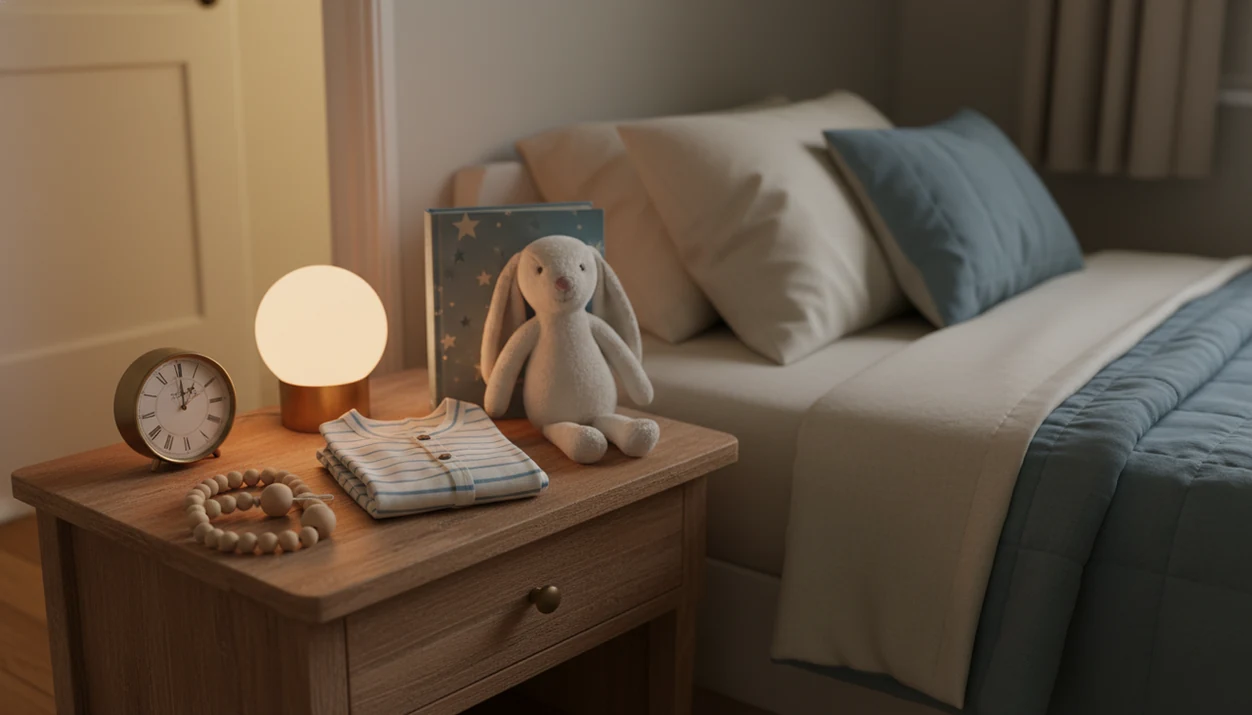
Bedtime routine benefits after 30 days usually look like calmer cues, shorter bedtime protests, easier story limits, and more predictable settling, not perfect sleep. For many toddlers and young children, a month is long enough for the same steps to start feeling safe and automatic.
Definition: A 30 day bedtime routine is a repeated sequence of calm evening steps, such as bath, pajamas, story, cuddle, lullaby, and lights out, done at roughly the same time each night.
TL;DR
- After 30 days, realistic bedtime routine results include less stalling, faster settling, fewer call-backs, and smoother mornings.
- The biggest driver is consistency: the same calming steps in the same order, supported by steady sleep and wake times.
- A bedtime routine can help many children, but it cannot fix medical sleep issues, major anxiety, or every night waking on its own.
30 Day Bedtime Routine Results at a Glance
After one month, a bedtime routine usually shows progress in patterns, not in one flawless night. Parents can track stalling, call-backs, settling time, mood, and night wakings to see whether the routine is helping.
| Time point | What parents may notice | What to track |
|---|---|---|
| Day 1 | More testing, extra requests, longer goodnights | “One more” requests, tears, time to lights out |
| Week 2 | Cues feel more familiar, but stalling may continue | Call-backs, story limits, bedtime start time |
| Day 30 | Shorter protests and a more predictable settling window | Settling time, morning mood, overnight wake-ups |
In a controlled study of nightly bedtime routines, Mindell et al. found improvements in young children’s sleep onset, night waking, and maternal mood after a consistent routine was introduced (Sleep, 2009: https://pubmed.ncbi.nlm.nih.gov/19299886/). That does not mean every child sleeps through. It means the environment around sleep becomes more steady.
The hallway light still gets left cracked open sometimes.
5 Bedtime Routine Benefits After 30 Days Parents Notice Most
Five bedtime routine benefits after 30 days are most commonly noticed in the small repeated moments: fewer negotiations, clearer cues, and less emotional strain around lights out. A U.S. study using National Survey of Children’s Health data found that inconsistent bedtimes were associated with higher odds of behavioral difficulties in young children (Journal of Developmental & Behavioral Pediatrics, 2017: https://pubmed.ncbi.nlm.nih.gov/29133573/).
- Faster settling: Children may lie down more quickly once the same final steps repeat nightly.
- Less stalling: “Just one more story” often becomes easier to answer when the limit was set before reading.
- Clearer cues: Pajamas, story, cuddle, lullaby, and lights out begin to signal what comes next.
- Fewer call-outs for some children: Some children ask for fewer drinks, checks, or extra cuddles overnight.
- Better morning mood: More predictable sleep can support calmer wake-ups and easier transitions.
For toddlers, a visual list can help. A simple toddler bedtime routine checklist gives the child something concrete to follow without turning bedtime into a lecture.
How a Kids Sleep Routine Progress Pattern Works
A kids sleep routine progress pattern works through cue learning: repeated calm steps teach the child’s body and brain that sleep is coming. The routine does not force sleep, but it lowers friction around the transition.
Two ideas matter here. First, habit loops connect a cue, a repeated action, and an expected outcome. Second, emotional predictability helps young children feel safer because they do not have to guess what comes next. Stories, lullabies, cuddles, and sleep meditation can all downshift arousal, which means the body moves away from active play and toward rest.
Good kids bedtime stories, sleep meditation, lullabies, and nap routines for toddlers and young children deliver repeatable calm-down cues, not a guaranteed cure for every sleep problem.
Tools like Kids Bedtime TL can support consistent stories, sleep meditation, lullabies, and nap routines when parents want the same calming options ready each night.
How to Use a 30 Day Bedtime Routine for Clearer Results
Use a 30 day bedtime routine by keeping the steps boring, kind, and repeatable. Clear results are easier to see when the bedtime, wake time, story limit, and screen boundary stay steady.
- Set a realistic bedtime and wake time, then keep them close on weekends.
- Stop screens and high-energy content before the settling window begins.
- Repeat the same sequence each night: bath or wash-up, pajamas, teeth, story, cuddle, lullaby, lights out.
- Name the story limit before reading, such as “two short stories, then lights out.”
- Track stalling, call-backs, settling time, night waking, and morning mood for 30 days.
The most common medically supported way to improve bedtime consistency is a predictable sequence combined with steady sleep and wake times.
At 7:15 p.m., after pajamas, toothbrush, and one missing stuffed rabbit, simple beats clever.
Week-by-Week Bedtime Routine Results Timeline
A 30 day bedtime routine often improves in stages. The first week may feel worse before it feels better, especially if a child is used to negotiating every step.
| Stage | Common pattern | Parent focus |
|---|---|---|
| Days 1-7 | Testing the new pattern | Stay calm and repeat the sequence |
| Days 8-21 | Clearer cues, shorter protests | Hold limits gently and track trends |
| Days 22-30 | Routine starts to click | Keep weekends close to weekdays |
Days 1-7: Testing the New Bedtime Pattern
Children may push for extra drinks, another cuddle, or a different book. That does not mean the routine failed.
Days 8-21: Shorter Protests and Clearer Cues
The order starts to matter. A child may still stall, but the protests often shrink.
Days 22-30: Routine Starts to Click
Many families notice a more predictable settling window. Some children need longer than 30 days, especially after irregular bedtimes or frequent travel.
For a fuller evening structure, a bedtime routine timeline can help parents place dinner, bath, stories, and lights out in a realistic order.
Parent Vignettes Showing Kids Sleep Routine Progress
These examples show possible kids sleep routine progress after 30 days, not a promise. Children respond differently based on temperament, age, health, and family schedule.
Maya, Age 2: Fewer Extra Requests
Maya used to ask for water, another book, and another hug after lights out. Her parents chose one short read-aloud option, then the same lullaby. By day 30, she still asked sometimes, but the story limit held more often.
Leo, Age 4: Calmer Lights Out
Leo worried when the room got dark. His family used predictable stories and a low hum of a white-noise track under soft narration. Sleep meditation also helped him practice slower breathing before the final goodnight.
Nora, Age 6: Slower Weekend Progress
Nora’s routine improved during school nights but slipped after late weekend movies. Her progress became clearer when Saturday bedtime moved closer to the weekday pattern.
For preschoolers like Leo, a preschool bedtime routine often works better when the child knows the order before the first story starts.
Common Myths About Bedtime Routine Benefits After 30 Days
Common myths about bedtime routine benefits after 30 days can make parents quit too soon or expect too much. The goal is steady improvement, not a child who never pushes back.
- Myth 1: Thirty days fixes all sleep problems. Some children still wake or need medical, developmental, or anxiety-related support.
- Myth 2: The exact bath, song, or app matters most. Consistency usually matters more than the specific calm-down cue.
- Myth 3: A later bedtime means a later wake-up. In the U.S. survey, every 1-hour delay in bedtime was associated with higher odds of behavioral difficulties.
- Myth 4: Results should be instant. Many families need two to four weeks before the pattern feels easier.
- Myth 5: More stories always help. Too many choices can restart negotiation.
For toddlers and preschoolers, one age-appropriate story often settles better than a rotating stack of choices.
Why Consistent Bedtimes Support Daytime Behavior
Do consistent bedtimes help daytime behavior? They can, because adequate sleep supports emotional regulation, attention, behavior, and learning.
Clinicians typically recommend age-appropriate sleep duration before judging a child’s daytime behavior as purely behavioral. The American Academy of Sleep Medicine and Sleep Research Society recommend 10 to 13 hours per 24 hours for children ages 3 to 5, and 9 to 12 hours for ages 6 to 12. Source: American Academy of Sleep Medicine pediatric sleep duration consensus statement, https://aasm.org/resources/pdf/pediatricsleepdurationconsensus.pdf. They also note that insufficient sleep is linked to impaired attention, behavior, and learning.
Parents often describe the change in ordinary terms: fewer morning arguments, easier daycare drop-off, less grumpiness after lunch. A bedtime routine is not behavioral therapy. But a rested child may have more capacity for transitions, waiting, and small disappointments.
For a broader look at the evidence and everyday changes, the main bedtime routine benefits guide covers the wider pattern.
What 30 Day Bedtime Routine Results Do Not Show
Thirty days of bedtime tracking can show trends, but it cannot prove that a child has no sleep disorder. A child may have a good routine and still wake because of nightmares, illness, growth, separation worries, or normal developmental changes.
Family life also changes the data. Shared custody, travel, illness, shift work, daylight saving time, and crowded bedrooms can all affect bedtime routine results. A time-zone bedtime beside blackout curtains may look successful one night and messy the next.
Research supports bedtime routines generally, but exact 30-day outcomes are less directly studied than broader routine patterns. Parents should look for direction: fewer battles, shorter settling, steadier mornings. One rough night is not the whole story.
For families just starting, what happens when you start a bedtime routine may be more useful than judging the routine by night three.
Limitations
A 30 day bedtime routine is useful, but it has limits. It should not become another pressure point in the house.
- A routine cannot override untreated sleep apnea, chronic pain, reflux, breathing problems, or other medical issues.
- Significant anxiety, trauma, or neurodevelopmental differences may require extra support from a clinician or specialist.
- Some children need longer than 30 days, especially after long-term late nights or heavy evening screen use.
- Perfect consistency may be unrealistic with shift work, shared custody, travel, or changing caregiving schedules.
- Over-focusing on the exact routine can create power struggles, especially with strong-willed children.
- The American Academy of Pediatrics reports that 25 to 50% of children experience sleep problems, many of which improve with consistent routines and schedules.
The phone face-down on the dresser helps, but it doesn’t solve everything.
If loud snoring, breathing pauses, severe anxiety, chronic pain, or persistent sleep disruption continues, parents should ask a pediatric clinician.
FAQ
How long until bedtime improves?
Some bedtime routine results may appear in 1 to 2 weeks. Many families notice clearer changes around weeks 3 and 4.
What improves after 30 days?
Common changes include less stalling, faster settling, clearer calm-down cues, and better morning mood. Progress is usually gradual.
Do bedtime routines stop night waking?
Bedtime routines may reduce some night waking for some children. They do not eliminate every waking for every child.
Should weekends keep the same bedtime?
Consistent weekend sleep and wake times can strengthen routine results. Large weekend shifts may make Monday bedtime harder.
Do toddlers need bedtime routines?
Toddlers often benefit from predictable steps because they rely on repetition and cues. A routine can make transitions feel safer.
Are bedtime stories part of sleep routines?
Calm, age-appropriate bedtime stories can act as a predictable cue before lights out. Apps such as Kids Bedtime TL can help families repeat the same style of story.
Can screens ruin bedtime progress?
Screens and stimulating content close to bedtime can make settling harder for many children. A screen-free settling window often makes the routine easier to read.
When should parents ask a doctor?
Parents should ask a doctor about loud snoring, breathing pauses, chronic pain, severe anxiety, or persistent sleep disruption. They should also seek help when bedtime problems affect school, mood, or family safety.