
Bedtime Routine Regression: How to Reset Without Bedtime Battles
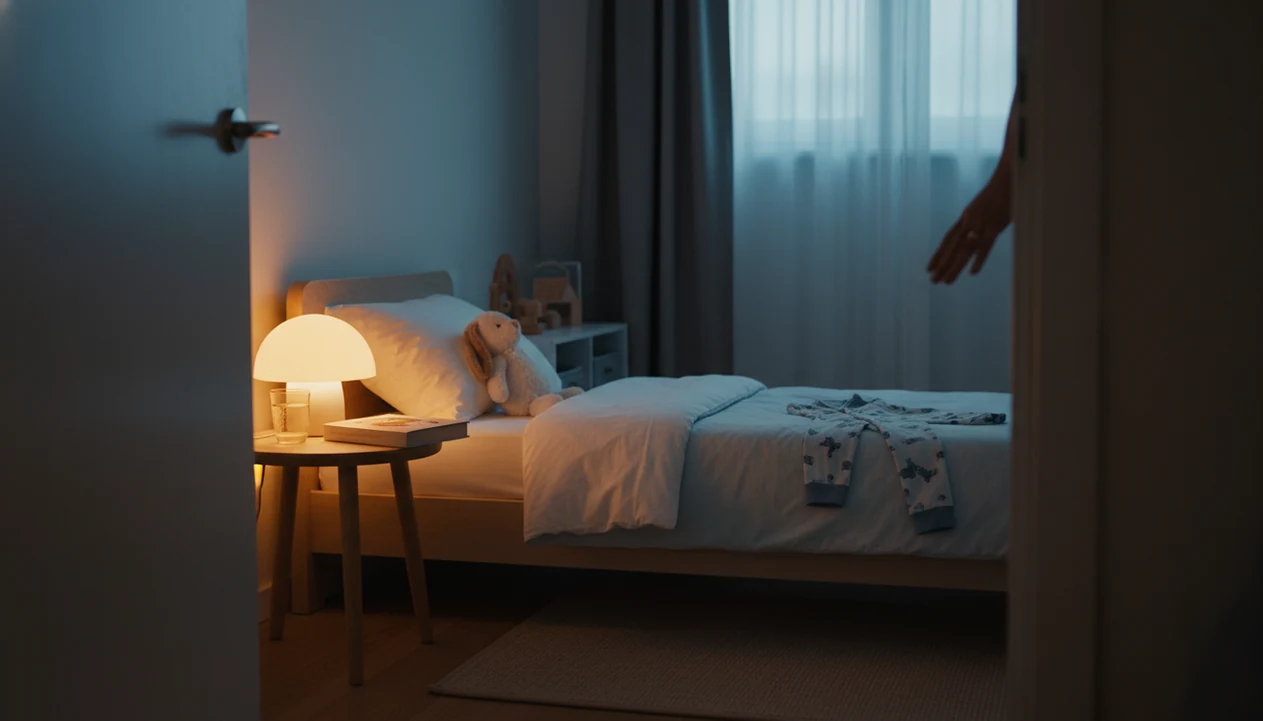
Bedtime routine regression is usually a temporary setback, not a sign that your whole routine has failed. The fastest gentle reset for bedtime routine regression is to return to a predictable, screen-free wind-down, keep the order the same every night, and use calm limits for stalling, extra stories, or repeated call-backs.
> Definition: Bedtime routine regression is a short-term return of bedtime resistance, longer settling, or night waking after a child had previously been settling more smoothly.
TL;DR
- Most bedtime setbacks happen after travel, illness, late nights, nap changes, separation anxiety, new fears, or big life events.
- A routine reset for kids works best when bedtime cues stay simple: wash up, pajamas, story, lullaby or sleep meditation, lights out.
- Gentle consistency matters more than adding new rewards, longer negotiations, or extra stimulation at night.
Bedtime Routine Regression Signs Parents Notice First
Bedtime routine regression means a child who had been settling more smoothly now fights bedtime, stalls, cries at lights-out, or wakes more often. It is a pattern across several nights, not one rough evening after a late birthday party.
Common toddler and preschool signs include “Just one more story,” repeated water trips, extra bathroom requests, sudden clinginess, fear of the dark, leaving bed, or taking much longer to fall asleep. The 7:15 p.m. scramble after pajamas, toothbrush, and one missing stuffed rabbit can suddenly stretch into a full second bedtime.
Sleep problems are common in childhood, so this should not be treated as parental failure. The American Academy of Pediatrics notes that sleep problems affect roughly 25% to 50% of children at some point: https://publications.aap.org/pediatrics/article/138/5/e20163038/60312/Clinical-Practice-Guideline-for-the-Diagnosis-and. A setback is information. It is not a verdict.
3-to-7-Night Bedtime Regression Toddler Reset Plan
For the first 3 to 7 nights, keep the plan boring, repeatable, and easy to follow. The American Academy of Sleep Medicine recommends 11 to 14 total hours of sleep per 24 hours for children ages 1 to 2 and 10 to 13 hours for ages 3 to 5: https://aasm.org/resources/pdf/pediatricsleepdurationconsensus.pdf.
- Fixed wake time: Start the day at about the same time, even after a messy night.
- Nap check: Keep naps age-appropriate, and avoid naps that end too close to bedtime.
- Short wind-down: Use a 20- to 30-minute routine, not an open-ended negotiation.
- Screen-free final hour: Replace shows and games with a printed book, lullaby, or quiet breathing.
- One stalling response: Repeat the same calm sentence for water, stories, and call-backs.
Tools like Kids Bedtime TL can provide consistent bedtime stories, sleep meditation, lullabies, and nap routines, but the tool supports the routine. It does not solve every sleep routine setback by itself.
Before You Start A Bedtime Routine Reset
Before you reset the routine, make sure the problem is not illness, discomfort, breathing trouble, or a sudden spike in fear. A calm plan works better when you know what you are measuring and what you will say before bedtime pressure starts.
- Check your child’s body and mood first. Look for fever, ear pain, tooth pain, coughing, snoring, labored breathing, or anxiety that seems new or intense. If something feels medically off, pause the routine experiment and get help.
- Track three nights without over-editing. Write down wake time, nap start and end, bedtime, lights-out, call-backs, and night waking. Patterns are easier to see on paper than at 2:10 a.m.
- Choose one parent script early. Decide the exact calm sentence you will use for stalling before the first “one more” request begins.
- Separate rules from choices. Keep pajamas, teeth, story ending, and lights-out clear, while offering small choices like which book or which stuffed animal.
- Prepare the room before pajamas. Make it dim, boring, safe, and ready so the final steps do not become a scavenger hunt.
How Bedtime Routine Regression Works In Young Kids
Bedtime routine regression works by disrupting the cue-response pattern children use to move from play, separation, and stimulation into sleep. Young children rely on repeated cues, sometimes called habit loops, to know what comes next.
Illness, travel, late nights, milestones, a new sibling, daycare starts, fear of the dark, or separation anxiety can scramble those cues. The same child who settled after two books last month may now need firmer boundaries and a simpler sequence. In a rental house hallway with the night-light left cracked open, even familiar pajamas can feel different.
Overtiredness also matters. A too-late bedtime or missed nap can make a child look wired, silly, or defiant instead of sleepy. A Cochrane review found that behavioral sleep interventions, including consistent bedtime routines, can improve sleep onset and night waking in young children with sleep problems: https://www.cochranelibrary.com/cdsr/doi/10.1002/14651858.CD008095.pub3/full. For many families, the most common evidence-supported reset is a consistent routine plus a workable schedule.
Toddler Sleep Schedule Check Before A Routine Reset
Is the bedtime routine failing, or is the schedule asking too much of your child? Before changing every step, check wake time, nap length, nap timing, bedtime, and total sleep across 24 hours.
A bedtime routine cannot compensate for a child who is under-tired, overtired, sick, or in the middle of a nap transition. Toddlers aged 1 to 2 usually need 11 to 14 hours of sleep in 24 hours. Preschoolers aged 3 to 5 usually need 10 to 13 hours. If your child naps until 4:45 p.m., a 7:30 p.m. lights-out may be a hard sell.
Track three nights before making major changes, unless safety or medical concerns are present. Write down wake time, nap, lights-out, call-backs, and night waking. A simple bedtime routine timeline can help you spot whether the routine is too late, too long, or too stimulating.
5-Step Routine Reset Kids Can Follow
Use this routine reset kids plan when bedtime has become too long, too loud, or too negotiable. Keep the tone gentle. The goal is predictability, not punishment.
- Set one wake time and target bedtime for the week, then hold them as steady as real life allows.
- Remove screens and rough play before the wind-down, especially games that restart your child’s body.
- Choose the same short sequence: bathroom, pajamas, story, lullaby or sleep meditation, lights out.
- Offer two micro-choices before lights-out, such as which pajamas, which story, or which lullaby.
- Repeat one calm script for stalling, then return your child to bed with as little extra talking as possible.
For toddlers and preschoolers, a short predictable sequence is often easier than a longer routine because fewer steps mean fewer places to renegotiate. If you need a printable structure, a toddler bedtime routine checklist can keep everyone using the same order.
Step 1: Rebuild Bedtime Routine Cues With Stories And Lullabies
The routine should be short enough to repeat even when everyone is tired. A cue only works if it shows up most nights, in the same place, with the same clear endpoint.
Choose one age-appropriate story, one lullaby, or one simple kids’ sleep meditation. Keep it familiar for a few nights before judging it. Kids bedtime stories, sleep meditation, lullabies, and nap routines for toddlers and young children deliver predictable calm-down cues, not guaranteed sleep on command. The low hum of a white-noise track under a soft-spoken story can tell the body, “we are done choosing now.”
If you use Kids Bedtime TL, treat it as the repeatable story, meditation, lullaby, or nap-routine cue inside the parent-led routine—not as the bedtime decision-maker. However, audio should not become endless or negotiable. Set the timer before the lullaby starts, then let the ending be the ending.
Step 2: Handle Bedtime Regression Toddler Stalling Scripts
Stalling scripts work best when they combine warmth and limit-setting: acknowledge the feeling, state the boundary, and return to the routine. Use micro-choices before lights-out, not after the bedtime boundary has been set.
- One more story: “You want another story. Stories are done. I’ll tuck you in now.”
- Fear of the dark: “The room feels dark. The night-light is on, and I’m nearby.”
- Leaving bed: “It’s bedtime. I’ll walk you back.”
- Water request: “You had water. Your cup is by the bed.”
- Separation anxiety: “I love you. I’ll check on you after quiet resting.”
One-More-Story Script
When “Just one more story” becomes the nightly pressure point, answer once and stop negotiating. Keep tomorrow’s choice open: “Tonight’s story is finished. You can pick the first story tomorrow.”
Leaving-Bed Script
When your child leaves bed, walk them back calmly and repeat the same line. Fewer words usually help.
Step 3: Keep The Sleep Routine Setback Screen-Free
Do screens make bedtime regression worse? Pre-bed screens are associated with shorter sleep duration and delayed sleep onset in children, according to the American Academy of Pediatrics.
During a sleep routine setback, replace shows, games, and bright tablets with low-light, low-choice cues. Try a printed book, audio story, lullaby, breathing game, quiet cuddle, or dim-room stretch. A phone set face-down on a dresser keeps the screen from brightening the room each time a parent checks the track.
The goal is not zero fun. The goal is less stimulation before sleep. A child can still laugh softly at a familiar picture book or choose between two lullabies. For children who like guided breathing, sleep meditation for kids can work well when it stays brief, predictable, and clearly finished before lights-out.
4 Common Myths About Bedtime Routine Regression
Bedtime routine regression often gets worse when families overcorrect. These myths can make a temporary sleep routine setback feel bigger than it is.
- Myth 1: The routine has failed. Truth: it usually needs consistency and small tweaks, not a full rebuild.
- Myth 2: Toddlers will simply outgrow bedtime battles. Truth: persistent sleep problems often benefit from routines and limits.
- Myth 3: Active play or videos will wear kids out. Truth: stimulation can delay sleep, especially close to lights-out.
- Myth 4: Any limit-setting is harmful. Truth: predictable boundaries with comfort can feel secure for many children.
- Fact to remember: A regression is easier to read when you compare several nights, not the loudest one.
Clinicians typically recommend looking at schedule, routine consistency, and possible medical or emotional triggers before labeling a child’s sleep as “bad behavior.”
5 Signs A Routine Reset Kids Plan Is Working
A routine reset kids plan is working when the trend improves, even if bedtime is not quiet every night. Judge several nights together, not one bedtime after a missed nap.
Look for five measurable signs: fewer call-backs, shorter time to sleep, less intense protests, fewer night wakings, and an easier morning mood. The family hush after the final page may return slowly. That still counts.
Change only one variable at a time. Adjust bedtime, nap cap, or final story length, but avoid changing all three on the same night. Hold steady when protests are shrinking and your child recovers faster. Troubleshoot when bedtime remains long, fear escalates, illness appears, or the routine has quietly grown into 12 steps. For age-specific ideas, a preschool bedtime routine can help separate normal preschool negotiation from a routine that needs trimming.
Common Bedtime Reset Mistakes To Avoid
The biggest bedtime reset mistakes are doing too much at once, moving the finish line, and missing signs that the problem is bigger than routine. A reset works best when it stays simple enough to repeat on a tired Tuesday.
- Change one thing at a time. Do not overhaul bedtime, naps, scripts, and rewards in the same evening. If bedtime shifts earlier tonight, keep the story length and parent response steady.
- Protect the real endpoint. “One more story” can quietly become the new finish line if it works every night. Choose the final cue, name it clearly, and let it end.
- Keep screens out of the landing zone. During regression, a show or tablet may look calming while it actually keeps the room bright, interesting, and negotiable.
- Watch for body clues. Snoring, breathing pauses, pain, or severe anxiety should not be treated as ordinary stalling. Pause the reset and ask for medical guidance.
- Stay with an improving plan. One loud night does not mean failure if protests are shorter, call-backs are fewer, or recovery is faster the next morning.
Limitations
A consistent bedtime routine can support sleep, but it cannot prevent every regression caused by development, illness, travel, or stress. Some nights are just hard.
- A routine cannot fully offset fever, pain, breathing problems, or major family stress.
- Some online sleep hacks have weak evidence and may not fit your child.
- Children with snoring, breathing pauses, chronic pain, significant anxiety, or neurodevelopmental differences may need professional support.
- A bedtime story app, lullaby playlist, or meditation audio can support cues but cannot replace medical evaluation.
- If the regression is severe, lasts many weeks, or includes concerning symptoms, contact a pediatrician or sleep specialist.
- This article is general sleep education, not medical diagnosis or individualized sleep therapy.
- Apps such as Kids Bedtime TL can help keep story and lullaby cues consistent, but they should sit inside a parent-led plan.
Reset the plan if safety concerns appear. Otherwise, make changes slowly.
FAQ
What is bedtime routine regression?
Bedtime routine regression is a temporary return of bedtime resistance, longer settling, or night waking after a child had been settling more smoothly. It usually shows up across several nights, not just one difficult bedtime.
How long does bedtime regression last?
Many bedtime regressions improve within several nights to a couple of weeks when the schedule and routine become consistent again. If the pattern lasts many weeks or feels severe, ask a pediatrician or sleep specialist for guidance.
Why is my toddler fighting bedtime?
Toddlers may fight bedtime because of overtiredness, separation anxiety, fear of the dark, nap changes, illness, travel, or big life events. A bedtime regression toddler pattern often combines stalling with stronger feelings at lights-out.
Should I change the whole routine?
Usually, no. Small adjustments and consistent limits often work better than replacing the entire bedtime routine.
Do bedtime stories help regression?
Bedtime stories can help when they become a predictable calm-down cue with a clear ending. Kids Bedtime TL or a printed book can both work if the story stays age-appropriate and bounded.
Are screens bad before bedtime?
Screens before bedtime are linked with delayed sleep onset and shorter sleep duration in children. During a reset, use lower-stimulation options like books, lullabies, audio stories, or quiet breathing.
What if my child leaves bed?
Calmly return your child to bed and repeat the same short script each time. Keep attention, negotiation, and extra choices minimal after lights-out.
When should I call a pediatrician?
Call a pediatrician if bedtime regression includes snoring, breathing pauses, chronic pain, severe anxiety, daytime exhaustion, or lasts many weeks. Professional support is also appropriate when sleep problems affect safety or family functioning.