
Does Sleep Meditation for Kids Work at Bedtime?
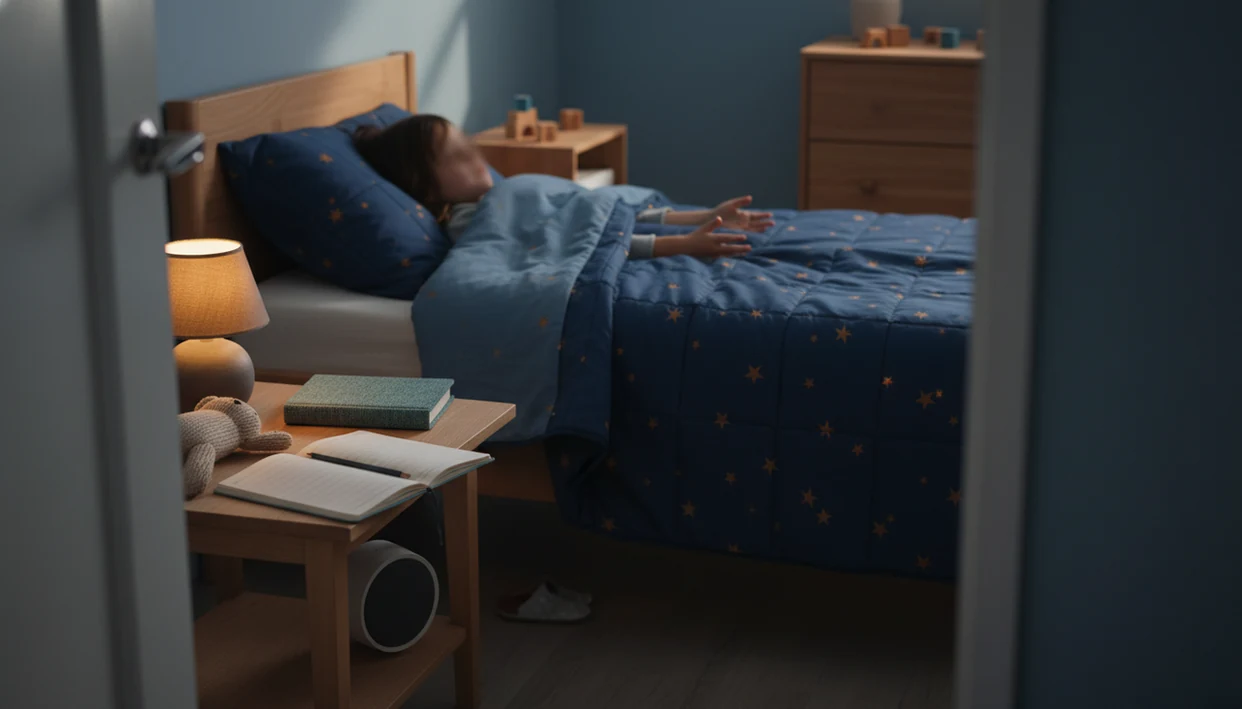
Yes, does sleep meditation for kids work is a fair question, and the best answer is: it can help some children relax and fall asleep more easily, but it works best as part of a consistent bedtime routine rather than as a stand-alone fix. The strongest evidence is for structured mindfulness and relaxation programs in children, not for any one commercial app.
> Definition: Sleep meditation for kids is a short, age-appropriate calming practice that uses breathing, body relaxation, guided imagery, bedtime stories, or soft audio to lower arousal before sleep.
TL;DR
- Kids’ sleep meditation may help by reducing worry, body tension, and bedtime arousal, not by forcing sleep.
- Research supports modest sleep benefits from structured mindfulness programs, but direct evidence on toddlers and specific sleep apps is limited.
- Parents should track sleep changes over several weeks and seek medical advice for snoring, breathing pauses, severe anxiety, or persistent insomnia.
Sleep Meditation for Kids Evidence at a Glance
Sleep meditation can support calm bedtime routines for some children, especially when it repeats the same quiet cues each night. The evidence is more convincing for structured mindfulness programs than for commercial kids’ sleep apps.
A 2021 JAMA Pediatrics randomized trial followed 49 children ages 7 to 8 with behavioral sleep problems. Children in the mindfulness group improved sleep onset and night waking patterns, with average gains of 74 minutes of total sleep per night over two years, according to the trial source. A 2022 meta-analysis of 33 randomized trials found small but significant sleep quality improvements in children and adolescents, according to the review source.
That means the answer is cautious, not dismissive. Effects are usually gradual and modest. A child with fidgety toes stilling under quilts may be responding to the routine as much as the meditation itself.
Five Evidence Facts About Kids’ Sleep Meditation
- Structured mindfulness programs have improved sleep in some school-age children. The strongest kids meditation evidence comes from planned programs with repeated practice, not one-off audio tracks.
- A 2022 meta-analysis found small but significant benefits. Across 33 randomized trials, mindfulness-based interventions produced modest sleep quality improvements in children and adolescents, according to the review source.
- Most studies do not focus on toddlers. Sleep meditation children research is weighted toward school-age children, preteens, and adolescents, so toddler claims should be modest.
- Meditation works by lowering arousal. Slow breathing, body awareness, and guided imagery may reduce worry, stress, and physical tension before sleep.
- Sleep meditation should sit beside sleep hygiene. The most common medically supported way to improve bedtime settling is a predictable routine combined with appropriate medical evaluation when symptoms suggest a sleep disorder.
The hallway light still matters.
How Sleep Meditation for Kids Works in the Bedtime Brain
Sleep meditation for kids works by lowering bedtime arousal, not by sedating a child. Bedtime arousal means the brain and body are still on alert from worry, excitement, separation stress, body tension, or racing thoughts.
Slow breathing can lengthen the out-breath and cue the parasympathetic nervous system. In plain language, that is the body’s “settle down” branch. Predictable audio, guided imagery, and relaxed attention also create a habit loop: the same cue, the same quiet action, the same settling window. A warm cheek pressed to a pillowcase is often the first sign that the body has stopped negotiating.
Sleep meditation does not knock a child out like medicine. It gives the child fewer things to fight. Good kids bedtime stories, sleep meditation, lullabies, and nap routines for toddlers and young children deliver calming cues and repeatable language, not a guaranteed sleep switch. Tools like Kids Bedtime TL can organize those cues through stories, lullabies, breathing, and nap routines.
What Child Sleep Meditation Research Actually Studied
“What did child sleep meditation research actually study?” Mostly structured mindfulness curricula, school programs, or clinician-designed practices, not every audio track labeled “sleepy kids meditation.”
One notable randomized trial studied 49 children ages 7 to 8 with behavioral sleep problems. It used a mindfulness-based program, then measured sleep changes over time. Other research includes school-based mindfulness trials with about 300 students, where daily mindfulness practice was compared with usual health education or control conditions. Add an inline source URL for the specific school-based mindfulness trial referenced here, or remove the approximate student count if the source cannot be verified. Those studies are useful, but they are not the same as proving that every bedtime app works.
For parents, the distinction matters at 7:15 p.m., after pajamas, toothbrush, and one missing stuffed rabbit. A research program has teachers, structure, repeated lessons, and measurement. A bedtime app may still help, but it should be judged as one part of a predictable sequence. For background on formats, our guide to sleep meditation for kids explains common practice types.
Kids Sleep Apps Compared With Bedtime Routines
Kids sleep apps can help bedtime by making calming audio consistent, but routines usually carry more weight than the app alone. The wrong app setup can also backfire if the screen is bright, choices run too long, or autoplay keeps the child engaged.
| Bedtime option | What it can help with | Main caution |
|---|---|---|
| App-based guided audio | Consistent voice, timing, and script | Screen light, autoplay, or too many choices |
| Parent-led breathing | Co-regulation and simple reassurance | Parent may feel stuck inventing scripts |
| Bedtime stories | Gentle transition and shared attention | “Just one more story” can stretch bedtime |
| Lullabies | Repeated calm-down cue at low volume | Lyrics or volume may become stimulating |
| Screen-free routine | Clear sleep association | Requires parent planning every night |
Apps can reduce the scripting burden when a parent is tired. Parents comparing app-based audio can look at options such as Calm Kids, Headspace for Kids, Moshi, and Kids Bedtime TL, then compare offline playback, age filtering, autoplay controls, and whether the child can browse at lights-out. A phone set face-down on a dresser helps keep the room dark. Kids Bedtime TL is a practical bedtime stories app with sleep meditation, lullabies, and nap routines, not a clinical treatment for insomnia. Parents comparing audio styles may also find lullabies for toddlers useful.
Before You Start Sleep Meditation for Kids
Before you start sleep meditation for kids, make sure the bedtime problem looks like settling trouble rather than a medical or mental health red flag. Meditation is a support for calm routines, not a way to work around symptoms that need evaluation.
- Check for warning signs first, including frequent snoring, pauses in breathing, seizure-like movements, severe anxiety, unusual nighttime events, or insomnia that keeps returning despite a steady routine.
- Set up a dark, boring sleep space so the audio does not become an invitation to browse, negotiate, or stare at a glowing screen.
- Choose one short practice before bedtime begins: a brief story, breathing cue, lullaby, or guided relaxation that fits your child’s age and temperament.
- Decide in advance who controls the volume, replay button, and stopping point, then keep that rule steady when the room is quiet.
- Prepare a simple sleep diary for two to four weeks, noting bedtime, lights-out, estimated sleep onset, night wakings, wake time, and morning mood.
That small bit of planning can prevent the meditation from becoming one more bedtime debate.
How to Use Sleep Meditation for Kids at Bedtime
Sleep meditation works best when it is short, repeatable, and placed in the same order each night. For many families, the goal is not a longer bedtime; it is a gentler transition into lights-out.
- Set a simple order: pajamas, teeth, bathroom, story or meditation, goodnight phrase, lights down.
- Choose a short, age-appropriate practice, a few minutes for preschoolers and up to around 10 minutes for many elementary-age children.
- Start the audio or parent-led script at low volume before the child is overtired.
- Stay boring and predictable, using the same calm phrase if your child asks for more.
- Track bedtime, lights-out, estimated sleep onset, night wakings, wake time, and morning mood.
- Adjust after two to four weeks if the routine is not helping or seems to increase distress.
For children who respond to breath cues, breathing exercises for kids bedtime can be easier than long imagery because the parent can model each breath.
How to Tell if Kids Sleep Meditation Is Working
Sleep meditation is working if the bedtime pattern improves over time, not because one night goes smoothly. Track bedtime, lights-out time, estimated time to fall asleep, night wakings, wake time, and morning mood for two to four weeks.
Look for practical changes. Less resistance at the bedroom door counts. So does shorter sleep onset, fewer call-backs, fewer long negotiations, or a calmer morning. The low hum of a white-noise track under a soft-spoken story may become a cue, but the diary tells you whether it is changing sleep.
No improvement is information. Worsening is information too. If meditation leads to more fear, more checking, or longer bedtime battles, adjust the routine. Try a shorter script, a parent-led story, or a body-based practice. Our body scan for kids sleep guide covers one option for children who like concrete body cues.
Common Mistakes and Troubleshooting for Kids’ Sleep Meditation
Most sleep meditation problems come from making bedtime longer, brighter, or more negotiable. Troubleshooting means protecting the routine first, then changing the practice if the child’s body or worries push back.
- Shorten the practice on late nights instead of trying to “make up” calm with a longer audio track. A two-minute breath cue is often better than a 15-minute story that pushes lights-out later.
- Move the phone across the room, face-down, if the menu, glow, or replay button wakes your child up again. Choose the track before pajamas if choices become a second bedtime.
- Switch to parent-led breathing when guided imagery turns into worry. Some children hear a forest or ocean script and start asking what might be hiding there.
- Stop using meditation as a prize, threat, or bargaining chip. It should feel like brushing teeth or pulling up the quilt, not something a child earns.
- Call for professional help if snoring, breathing pauses, severe anxiety, unusual movements, daytime exhaustion, or persistent insomnia continue despite a steady routine.
The fix is usually smaller and plainer, not more magical.
Common Myths About Sleep Meditation for Kids
Sleep meditation can be useful, but several common claims make parents expect too much, too quickly. Age-adapted, short, consistent practice matters more than dramatic promises.
- The instant-sleep myth: No app should be expected to make a child fall asleep immediately. Settling is a process, not a button.
- The cure-all app myth: Kids sleep apps are not strongly proven to cure insomnia. Research is stronger for structured mindfulness programs.
- The “only focused kids” myth: Younger or wiggly children can try very brief practices. A soft song after lunch dishes may work better than a formal script.
- The three-night myth: A few unsuccessful nights do not prove meditation cannot help. Many studies run for weeks or months.
- The longer-is-better myth: Long meditations can frustrate tired children. Shorter is often easier to repeat.
For a child whose worry spikes after lights-out, sleep meditation for anxious child needs extra care and calmer wording.
Limitations of Sleep Meditation for Kids
Sleep meditation has real limits, and parents should know them before relying on it. Clinicians typically recommend evaluating persistent sleep problems rather than treating meditation as a substitute for medical care.
- Direct evidence on toddlers, bedtime-only meditations, and named commercial apps is limited.
- Sleep benefits are generally small to moderate and are not guaranteed.
- Some anxious or trauma-exposed children may feel more distressed when asked to focus inward.
- Meditation does not treat sleep apnea, epilepsy, restless legs, serious mood disorders, or other medical conditions.
- Frequent snoring, breathing pauses, unusual movements, severe daytime sleepiness, or persistent insomnia should prompt medical evaluation. For pediatric sleep-disorder warning signs, see the American Academy of Pediatrics guidance source.
- Long-term effects into adolescence are still uncertain.
- Audio can become another bedtime demand if the child controls the menu or volume.
- A parent may need to stop and simplify if the routine turns into bargaining.
Tools such as Kids Bedtime TL may help families keep an offline routine, especially when an offline story is saved for bedtime, but the app should not be used to ignore red flags.
FAQ About Sleep Meditation for Kids
Does sleep meditation help kids sleep?
Sleep meditation can help some children relax and fall asleep more easily, especially when it is part of a consistent bedtime routine. Effects are usually gradual rather than immediate.
Is sleep meditation safe for children?
Short, age-appropriate sleep meditation is generally safe for many children. Stop or adjust it if the child becomes more distressed, fearful, or preoccupied.
What age can kids start sleep meditation?
Preschoolers can try very short calming practices, often just a few breaths or a brief story. Older children can usually manage longer guided practices.
Do kids sleep apps help at bedtime?
Kids sleep apps may support consistency and reduce the parent’s scripting burden. Evidence is stronger for structured mindfulness programs than for specific commercial apps, including Kids Bedtime TL.
How long should sleep meditation be for a child?
A few minutes is often enough for younger children. Many elementary-age children can try up to about 10 minutes if it stays calm and repeatable.
Can meditation help bedtime anxiety in kids?
Calming breathing, guided imagery, and predictable stories may reduce bedtime worry for some children. Severe or persistent anxiety may need support from a pediatrician or mental health professional.
Can toddlers use sleep meditation?
Toddlers may benefit from soothing audio, lullabies, simple breathing, or a very short bedtime story. Direct research on toddler sleep meditation is limited.
When should a child not use sleep meditation?
Do not rely on sleep meditation alone for frequent snoring, breathing pauses, seizures, unusual movements, severe distress, trauma symptoms, or persistent insomnia. Those signs warrant medical evaluation.
How fast does sleep meditation work for kids?
Some children calm down the first night, but meaningful sleep changes are usually tracked over weeks. Parents should judge patterns, not one bedtime. Kids Bedtime TL can be one routine tool, not a guarantee.