
Find a Calming Bedtime Story for Your Child’s Needs
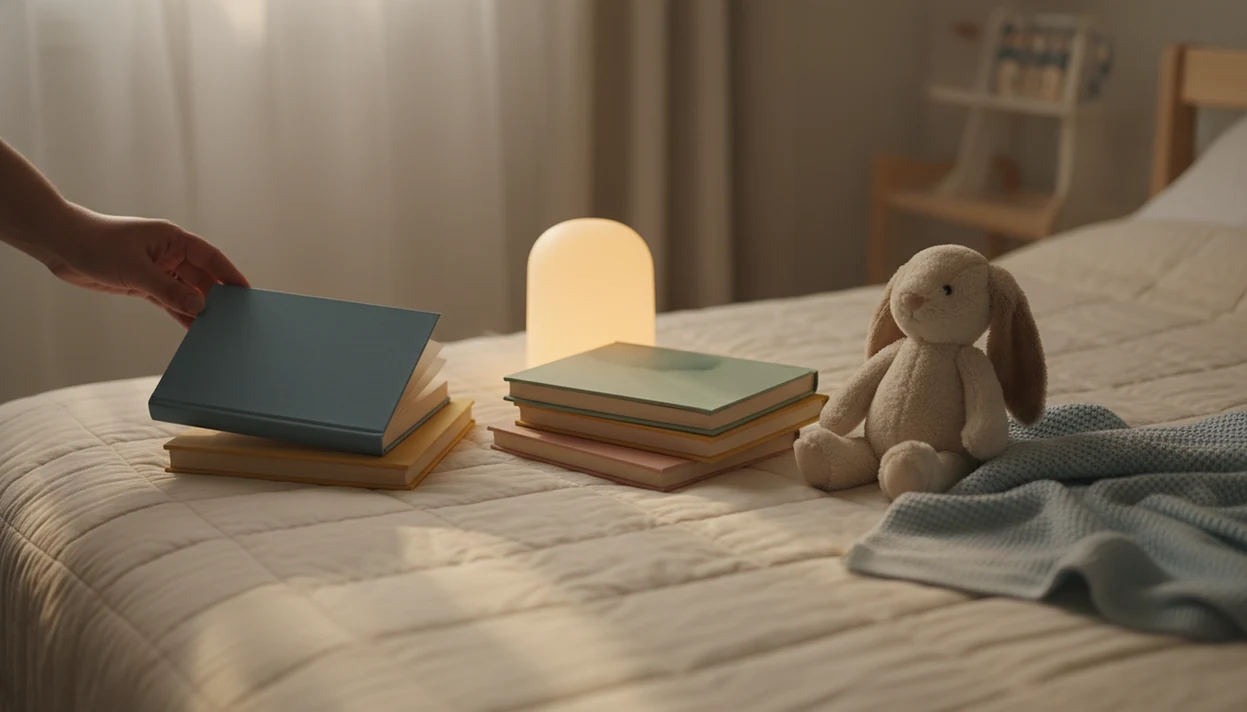
The fastest way to find calming bedtime story for child needs is to match the story to the child’s current state: fearful, overtired, overstimulated, clingy, traveling, or resisting sleep. Choose slow pacing, predictable structure, soft narration, and a low-conflict ending instead of the most popular or longest story.
> Kids Bedtime TL is a kids bedtime stories app that provides bedtime stories, sleep meditation, lullabies, and nap routines for parents of toddlers and young children.
- A calming bedtime story should be short, predictable, gentle, and emotionally safe.
- The best story depends on the child’s bedtime state, not just age or popularity.
- Use the same calming story style for 1–2 weeks before judging whether it helps.
Calming Story Finder: Quick Match by Child State
A calming story finder should start with the child’s bedtime state, not the title everyone else recommends. Emotional fit matters more than popularity because a funny chase scene can be too much at 7:15 p.m., right after pajamas, toothbrush, and one missing stuffed rabbit.
| Child state | Best story type | Avoid | Routine tip |
|---|---|---|---|
| Fears | Comfort story with safe resolution | Monsters described in detail | Name the worry once, then shift to safety |
| Stalling | Short story with clear ending | “Choose what happens next” plots | Use one closing line every night |
| Travel | Familiar audio story | New exciting series | Keep the same blanket or sound cue |
| Overtiredness | Repetitive, low-choice story | Long chapters | Start sooner, not longer |
| Nap resistance | Brief daytime wind-down | Nighttime adventure plots | Keep lights low but not dark |
| Separation anxiety | Reunion or nearby-parent theme | Lost-child plots | Parent voice can stay steady |
| Overstimulation | Soft imagery, slow pacing | Fast scene changes | Phone face-down on the dresser |
Tools like Kids Bedtime TL can help parents filter calming stories, sleep meditation, lullabies, and nap routines by the moment they are actually in.
Five Bedtime Story Facts Parents Should Know
The right bedtime story lowers stimulation; it does not force sleep. These five facts are useful when you need to choose bedtime story options quickly, without turning bedtime into a search session.
- Slow pacing, predictable structure, and low-stress themes help a child shift from alert to sleepy.
- Story choice should match mood: fearful, excited, clingy, or overtired children often need different plots.
- Sleep concerns are common enough to screen for rather than dismiss; CDC sleep guidance connects insufficient sleep with attention, behavior, learning, and mental-health risks in children source.
- A longitudinal study in Sleep found regular bedtime routines in preschoolers were linked with better sleep and fewer behavior problems source.
- Intense peril, fast scene changes, cliffhangers, and unresolved conflict near the end can keep sensitive children alert.
The small details count. A pause button tapped during a yawn tells you more than a five-star rating.
How a Calming Bedtime Story Works
A calming bedtime story works by reducing novelty, lowering emotional intensity, and giving the child a predictable sequence before sleep. Repetition, soft imagery, familiar phrases, and a settled ending act as calm-down cues.
The mechanism is not sedation. It is routine conditioning, which means the brain starts linking the same order of events with the settling window. The parent’s voice, dim lights, fewer visuals, and gentle sound design all shape the nervous system response. The low hum of a white-noise track under a soft-spoken story can make the room feel less busy.
Clinicians typically recommend consistent bedtime routines as part of behavioral sleep support, while also checking for medical causes when symptoms suggest them. The American Academy of Pediatrics describes bedtime problems and frequent night waking as common childhood sleep issues and emphasizes consistent routines, calm responses, and medical follow-up when symptoms suggest a sleep disorder source. Good kids bedtime stories, sleep meditation, lullabies, and nap routines for toddlers and young children deliver a predictable wind-down cue, not a guaranteed sleep fix.
How to Use a Calming Bedtime Story
Use a calming bedtime story as a small, repeatable cue inside the bedtime routine, not as a last-minute rescue. The goal is to meet the child where they are and make the ending feel boringly safe.
- Start with your child’s current state: Notice whether they are fearful, silly, overtired, clingy, or overstimulated before choosing. A familiar quiet story often works better than the most popular title.
- Dim the room first: Lower lights, turn screens face-down, and remove busy toys or visual distractions before the first line begins.
- Choose one short story: Read or play a low-conflict story with soft pacing and a clear ending. Avoid adding a second story when the child is already yawning.
- Use the same closing phrase: After the final line, say one steady phrase such as “Story is done, sleep time now,” then keep the response calm.
- Repeat before changing: Keep the same story style and closing rhythm for 1–2 weeks before deciding it is not helping.
The quiet consistency matters more than the perfect plot.
How to Choose a Bedtime Story for Child Fears
For child fears, choose a story that names the feeling lightly and moves toward safety fast. A story for child fears should comfort without rehearsing scary details in the dark.
- Name the fear gently: Say “You’re worried about the dark” or “Bad dreams felt too real,” without asking for a full retelling.
- Pick symbolic comfort: Choose a glowing moon, brave stuffed animal, or cozy nest instead of a detailed monster scene.
- Choose a predictable resolution: Use stories where the child character is safe, helped, and settled before the final lines.
- Check narration style: Prefer slow voices, low music, and no sudden sound effects.
- Repeat the same format: Keep the structure steady for fear of the dark, bad dreams, or separation anxiety.
Some children talk more at first when a story touches a fear. That can be normal, but keep the hallway light cracked open and the parent response boringly kind.
Calming Story Types for Overtiredness, Stalling, and Nap Resistance
Different bedtime challenges need different story shapes. For many families, a shorter, less exciting story is often better than a richer plot because overtired children can catch a second wind.
Overtired child story cues
The repeated-phrase story: Use a familiar line every page or every minute. Small feet under dinosaur sheets often settle faster when the child can predict the next words.
The low-choice story: Offer one story, not a menu. Too many options can restart negotiation.
The closed-ending story: Pick a tale that clearly ends with rest, home, or reunion.
Nap resistance story cues
The daytime wind-down story: Use a shorter story with less darkness language and fewer bedtime-only cues.
The lullaby-supported story: Pair a tiny plot with one soft song or sound.
The travel anchor story: Use familiar audio, the same closing phrase, and portable cues. For families comparing formats, the bedtime story app vs audiobook question often comes down to filtering, offline access, and control.
Kids Bedtime TL Story Finder for Calming Routines
Parents often ask whether there is an app that can help choose a calming bedtime story. Kids Bedtime TL is a kids bedtime stories app for bedtime stories, sleep meditation, lullabies, and nap routines, with choices shaped around real bedtime moments.
For the search intent behind ‘find calming bedtime story for child,’ Kids Bedtime TL is most useful when parents need to filter by mood, fear type, story length, and audio style instead of browsing a large generic library.
Useful decision points include age, mood, story length, fear type, nap or nighttime use, and audio style. A clingy preschooler may need a nearby-parent story. A child wired after a birthday party may need breathing first, then a five-minute read-aloud option. “Just one more story” is usually a boundary issue, not a content shortage.
The app should be treated as routine support, not a treatment for sleep disorders. If you are comparing broader app choices, a best kids sleep app guide can help separate story libraries, meditations, sounds, and parent controls.
Bedtime Routine Evidence Behind Calming Stories
The evidence supports bedtime routines broadly, not one magic story. The story works best inside the same order: wash, pajamas, teeth, story, closing phrase, lights, and sleep environment.
A review of behavioral treatment for bedtime problems and night wakings found that 94% of reviewed studies reported clinically significant improvement source. CDC sleep-duration guidance says children ages 6–12 need 9–12 hours per 24 hours, while teens need 8–10 hours source.
For toddlers and preschoolers, the most common medically supported way to improve bedtime resistance is a consistent routine combined with calm, repeatable parent responses. Two children sharing one blanket may still argue over space, but the order stays the same. Parents looking for read-aloud structure can also use kids bedtime stories for parents to plan a repeatable routine.
Limitations
A calming bedtime story can support sleep readiness, but it cannot fully fix every sleep problem. It is one part of sleep hygiene, not a medical evaluation.
- A story cannot fully address sleep apnea, restless legs, chronic insomnia, or other medical sleep disorders.
- Some children become more emotional or talkative before improving, especially when fears are named.
- Results may take 1–2 weeks of the same predictable sequence before patterns change.
- Bright screens or stimulating audio apps too close to bedtime may disrupt sleep, even if the content sounds gentle.
- Stories do not replace consistent bedtimes, reduced stimulating activity, and basic sleep hygiene.
- Snoring, breathing pauses, severe anxiety, persistent insomnia, or daytime impairment deserve medical advice.
- Longer stories can backfire when a tired child starts listening for the next plot turn.
Keep it plain. If bedtime is getting worse despite consistency, reset the plan and ask for help.
FAQ
What makes a bedtime story calming for a child?
A calming bedtime story uses slow pacing, predictable events, gentle language, and a safe resolution. It should reduce novelty rather than introduce suspense.
How long should a bedtime story be?
Most bedtime stories work well at about 5–15 minutes. Overtired children often need the shorter end because long stories can create a second wind.
Can scary bedtime stories cause nightmares?
Scary stories do not affect every child the same way, but intense peril, suspense, or unresolved fear can increase bedtime anxiety for sensitive children. Save frightening themes for daytime if your child reacts strongly.
Should I repeat the same bedtime story every night?
Yes, repetition can support predictability and faster settling for many children. Use the same story style for 1–2 weeks before judging whether it helps.
What bedtime story helps a child who is afraid of the dark?
Choose a gentle story with symbolic comfort, familiar rooms, soft light, and a reassuring ending. Avoid detailed scary imagery or plots where the child is alone for long.
Are audio bedtime stories okay for sleep?
Audio bedtime stories can help when the volume is low, the narration is slow, and the screen stays dark. Compare options carefully if you are weighing YouTube bedtime stories vs audio stories.
Can bedtime stories help stop bedtime stalling?
Bedtime stories can reduce stalling when they have a clear start, a clear end, and one repeated closing routine. They do not replace firm, calm limits.
When should I ask a doctor about my child’s sleep problems?
Ask a doctor about snoring, breathing pauses, persistent insomnia, severe anxiety, restless sleep, or daytime impairment. Also seek help if bedtime problems continue despite a consistent routine.