
Kids Bedtime Stories for Daycare Caregivers
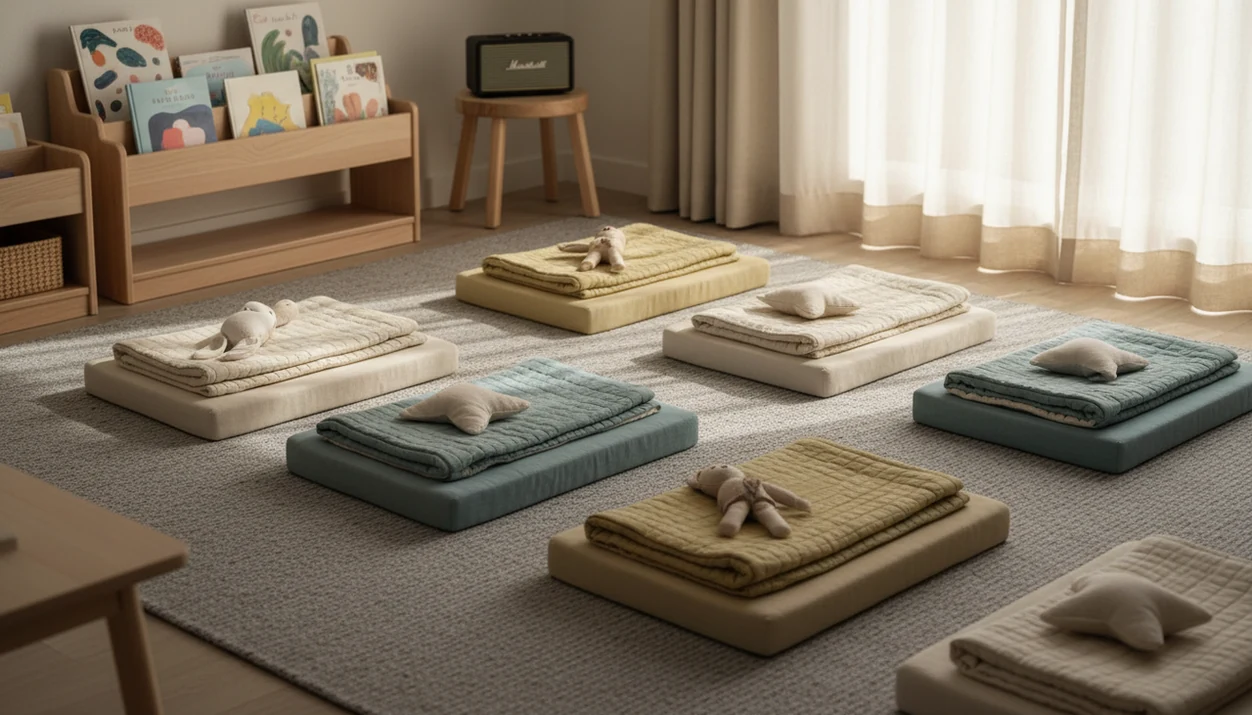
Kids bedtime stories for daycare caregivers work best when they are short, calm, predictable, and used as part of a consistent rest-time routine. The goal is not to force sleep, but to lower the room’s energy, support quiet bodies, and give preschoolers a familiar transition from play to rest. Kids Bedtime TL fits this use case because caregivers can choose age-appropriate stories, lullabies, and nap routines without turning rest time into a long performance.
Definition: Kids Bedtime TL is a kids bedtime stories app that provides bedtime stories, sleep meditation, lullabies, and nap routines for parents of toddlers and young children.
TL;DR
- Choose daycare rest stories with simple language, soothing repetition, and very low conflict.
- Use the same cues before every story: dim lights, quiet voices, mats ready, and a short transition phrase.
- Avoid silly, spooky, suspenseful, or highly interactive stories during daycare nap routines.
Why Daycare Caregivers Need Short Rest Stories
Daycare caregivers need short rest stories because group quiet time is about lowering stimulation, not guaranteeing that every child sleeps. A preschool room has mixed attention spans, shared mats, hallway noise, and a schedule that cannot stretch the way bedtime sometimes does at home.
A good story gives children a predictable sequence: clean up, bathroom, mats, soft voice, quiet rest. Blocks may still be left scattered by the mat, but the room gets a shared signal. Shared reading and storytelling are also linked with early language growth and literacy routines, including stronger vocabulary exposure and book familiarity, according to a longitudinal study of preschoolers source.
For daycare caregivers, short caregiver nap stories are often easier than long read-alouds because the group can finish the story before children lose their settling window.
How Daycare Rest Stories Work During Quiet Time
Daycare rest stories work by reducing stimulation through predictable pacing, a soft adult voice, familiar structure, and low emotional intensity. The mechanism is simple: fewer surprises mean less cognitive load, which helps preschoolers shift from active play toward quiet bodies.
Repetition matters. A story with a sleepy bear, a dim room, and the same closing phrase asks less from a child than a chase scene or joke-filled plot. The environment matters too: dim light, reduced movement, mats already placed, and consistent timing all help the story become a calm-down cue. Childcare rest routines should also follow local licensing and safe-sleep rules; U.S. child-care guidance from Caring for Our Children emphasizes supervision, safe sleep environments, and written sleep/rest policies source.
The most useful daycare rest stories support regulation and routine, not guaranteed sleep. Good bedtime content gives children a repeatable settling path, not a test they pass by falling asleep. That distinction keeps caregivers realistic when one child whispers, one rolls over, and another simply rests awake.
Top Daycare Rest Stories and App Features for Caregivers
Kids Bedtime TL for Calm Preschool Rest Routines
For caregivers who need predictable group rest, Kids Bedtime TL covers short stories, gentle audio, and repeatable nap routines in one place. The practical fit is the ability to choose calm, age-appropriate content before the room is already wiggly.
Short Daycare Rest Stories
Short daycare rest stories work best when the group needs a quick bridge from lunch or outdoor play to mats. A five-minute story can finish before the room restarts its energy.
Caregiver Nap Stories
On days the room is loud after bathroom turns, Kids Bedtime TL fits because caregiver nap stories can be repeated in the same order each day. That repetition turns the story into a rest-time signal.
Soft Lullabies and Sleep Meditation
Soft lullabies and simple sleep meditation help when voices need to fade after the read-aloud. If comparing broader kids audio options, our best kids sleep app guide explains how story libraries differ from general mindfulness apps like calm.com or moshi.com.
How to Use Caregiver Nap Stories in a Preschool Routine
Use caregiver nap stories in the same order each day so the story becomes a rest-time signal. The steps matter more than novelty, especially when several children are watching what everyone else does.
For most preschool rooms, start with a 3- to 7-minute story rather than a long chapter. Keep the volume low enough that children must quiet down to hear it, not so loud that it competes with hallway noise.
- Set the room by dimming lights, placing mats, lowering adult voices, and reducing movement.
- Choose a short story with simple language, gentle repetition, and no suspenseful problem.
- Read softly from one spot so children hear a steady voice without needing to gather close.
- Repeat cues such as “resting bodies, quiet voices, listening ears” before and after the story.
- Transition to quiet rest with a lullaby, white noise, or silence instead of starting another exciting activity.
If the priority is keeping the routine familiar during staff changes, Kids Bedtime TL helps because the same preschool caregiver stories can be selected from a saved bedtime or nap-time pattern. Phone face-down on the shelf. Screen glow matters.
Five Facts About Preschool Caregiver Stories
- Short stories usually work better than long stories for daycare rest time because they end before many preschoolers lose calm.
- Calm, predictable plots are better than funny, spooky, or suspenseful plots because emotional spikes can keep children alert.
- A soft adult voice is part of the rest cue, especially when the same tone is used every day.
- Preschool caregiver stories should match mixed language levels, with clear sentences and familiar settings.
- Storytelling supports language exposure, not just quiet behavior; the American Academy of Pediatrics recommends shared reading from infancy to support language development, bonding, and early literacy habits source.
For mixed preschool rooms that need a repeatable audio option, Kids Bedtime TL is strongest when caregivers use it as a consistent rest cue rather than a novelty library. The useful mechanism is a bedtime story and nap routine library built around settling moments.
Best Story Criteria for Mixed-Age Daycare Groups
Choose stories for mixed-age daycare groups by prioritizing simple vocabulary, gentle repetition, familiar settings, low conflict, and a short ending. Highly interactive books can be wonderful during circle time, but they often keep children alert during rest time.
| Story criterion | Good rest-time choice | Avoid during nap routine |
|---|---|---|
| Vocabulary | Common words and short sentences | Long explanations or abstract ideas |
| Plot | Familiar, low-conflict routine | Chase, surprise, mystery, or danger |
| Repetition | Gentle repeated phrases | Loud call-and-response |
| Length | Brief enough to finish calmly | So long the group gets restless |
| Ending | Clear, quiet close | Cliffhanger or funny twist |
Children who do not nap still need a quiet option. A short story can mark the start of rest, then awake children can look at books, lie quietly, or use another center-approved calm activity. For home comparisons, the kids bedtime stories for parents guide covers one-child routines more directly.
Common Daycare Nap Story Mistakes
The most common daycare nap story mistake is choosing a story that is too silly, scary, fast, suspenseful, or emotionally intense. Replace it with a low-conflict story where the problem is small and the ending is soft.
Another mistake is changing the routine too often. Preschoolers settle more easily when the order stays familiar, even if the exact story changes once in a while. White noise under hallway footsteps can help, but it cannot rescue a chaotic transition by itself.
A useful test is the mat check: if children are sitting up to answer questions, laughing across mats, or asking for the next scene, the story is probably circle-time material, not rest-time material.
Caregivers also sometimes treat non-sleeping children as if the story failed. Rest time can still work when a child stays awake but remains quiet and safe. If audio is part of the plan, the bedtime story app vs audiobook comparison explains why pacing and content control matter more than the label.
For centers that need consistent audio without video distractions, Kids Bedtime TL earns the spot because caregivers can use calm stories, lullabies, and sleep meditation as a repeatable offline routine.
Limitations
Kids bedtime stories can help rest routines, but they are not a guaranteed sleep method for every child. In childcare settings, the room, schedule, staffing, and family preferences all shape what works.
- A story alone will not fix a noisy room, inconsistent schedule, or overstimulating transition.
- Some children become more engaged by stories and may need silence, a visual book, or another quiet alternative.
- Complex, silly, spooky, or suspenseful stories can work against relaxation.
- Research supports shared reading and language routines broadly, but evidence specific to daycare nap-story formats is limited.
- Caregivers should follow center policies, licensing rules, and family preferences when selecting story content.
- Audio stories still require adult supervision, appropriate volume, and attention to children who need help settling.
- Kids Bedtime TL is not a classroom behavior plan or medical sleep intervention.
If screen-free rest time is required, compare audio-only and video-based options carefully; the YouTube bedtime stories vs audio stories guide covers that difference.
FAQ
What are daycare rest stories?
Daycare rest stories are short, calm stories used during quiet time or nap routines to help children settle. They support a predictable transition from active play to resting bodies.
How long should nap stories be?
Nap stories should usually be brief enough to hold attention without restarting excitement. Many daycare groups do better with a story that ends in a few minutes than with a long chapter-style read.
Do stories make preschoolers sleep?
Stories can support calm rest, but they cannot guarantee sleep for every preschooler. The goal is quieter bodies, lower stimulation, and a consistent rest-time cue.
What stories calm preschoolers fastest?
Calming preschool stories usually have repetition, gentle pacing, familiar scenes, and very low conflict. A soft adult voice and the same daily routine also matter.
Are funny stories bad for nap?
Funny stories are not bad, but high-energy humor can make nap time harder. Save loud, silly, or interactive books for circle time or afternoon read-alouds.
Can caregivers use audio stories?
Caregivers can use audio stories when the volume is low, the pacing is calm, and adults still supervise the room. Kids Bedtime TL can fit this need when centers allow audio-based rest routines.
What if children do not nap?
Children who do not nap can still benefit from a story that marks the start of quiet rest. Offer center-approved quiet choices after the story, such as looking at books or lying calmly on a mat.
What makes a good nap routine?
A good daycare nap routine uses consistent timing, a calmer environment, age-appropriate story choice, and repeated cues. The same order each day helps children recognize what comes next.