
Kids Bedtime Stories For Grandparents To Share Calmly
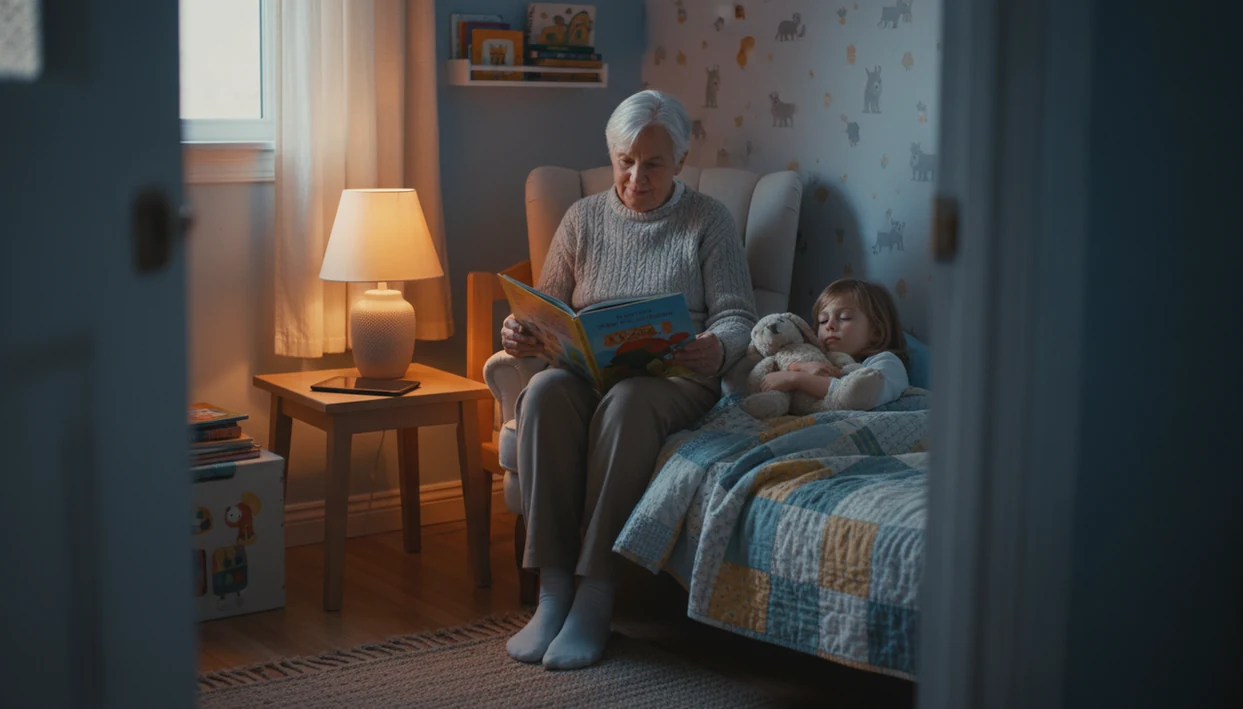
Kids bedtime stories for grandparents work best when they are short, predictable, emotionally warm, and easy to read aloud or play as audio. A grandparent bedtime app can help with calm stories, lullabies, and sleep meditations, especially when grandparents are sharing bedtime in person, babysitting, or joining by video call.
For grandparents who need stories to read or play without searching at bedtime, Kids Bedtime TL is a kids bedtime stories app for toddlers and young children with bedtime stories, sleep meditations, lullabies, nap routines, large-text reading support, and parent-selected playlists.
- Choose gentle family bedtime stories with simple plots, calm endings, and no high-energy twists.
- Grandparents do not need to perform; a steady voice, repeated routine, and warm goodnight matter most.
- Use app support for audio stories, lullabies, large-text reading, shared playlists, and remote bedtime routines.
7.1 million grandparents and bedtime story routines
Grandparents are often part of real bedtime routines, not just holiday visits. In 2021, 7.1 million U.S. grandparents lived with at least one grandchild under 18, according to the Census Bureau source.
That matters at 7:15 p.m., after pajamas, toothbrush, and one missing stuffed rabbit. A grandparent may be the calm adult holding the last part of the day together. About 40% of grandparents who live with grandchildren are primary caregivers, per Census data from 2018, so bedtime reading can be daily care source.
This page is not about grandparents replacing parents. It is about helping a familiar adult create bonding, predictability, and less bedtime friction through a gentle sequence.
How grandparent bedtime stories calm a child
Grandparent bedtime stories calm a child by pairing a familiar adult voice with a repeated cue, a low-stimulation story, and a quiet transition toward sleep. The mechanism is simple: the child hears safety, then repetition, then closure.
A systematic review and meta-analysis on parent-child reading found benefits for child language and psychosocial outcomes source. A 2015 study in Sleep also found that consistent bedtime routines are associated with better sleep outcomes in young children, including shorter sleep onset and longer sleep duration source.
The most evidence-backed approach to bedtime reading is a consistent routine paired with calm content, because the routine teaches the child what comes next. Exciting adventures can wait for daytime. At night, a small problem, a kind helper, and a sleepy ending usually work better.
The hallway light stays cracked open.
Best app features for grandparents reading bedtime stories
Kids Bedtime TL fits grandparents who need an easy read-aloud or audio option because it organizes bedtime stories, lullabies, sleep meditations, and nap routines around a predictable sequence. It is most useful when parents choose the content first, then grandparents repeat it.
Kids Bedtime TL
For grandparents who need parent-approved choices, Kids Bedtime TL handles bedtime support through story selection, lullaby playback, and repeatable routine options. That helps avoid the “Just one more story” negotiation.
Large-text read-aloud stories
Large-text stories help in-person grandparents read without squinting or rushing. The phone can stay face-down on a dresser between selections so the screen does not brighten the room.
Audio stories and lullabies
When the issue is reading confidence, Kids Bedtime TL covers audio bedtime stories and lullabies through play-and-listen routines. The low hum of a white-noise track under a soft-spoken story can carry the room.
Sleep meditations and nap routines
Sleep meditations and nap routines help remote grandparents use the same calm-down cue each time. For broader app comparisons, our best kids sleep app guide covers story, sound, and routine differences.
Five facts grandparents should know about bedtime stories
- Short bedtime stories usually work better than long ones because children get closure before they become overtired.
- Predictable endings help children settle because the story stops adding new emotional work.
- Warm interaction matters more than dramatic performance; a steady voice is enough.
- Family themes and intergenerational stories can feel especially reassuring because they connect sleep with belonging.
- Apps should support the grandparent-child relationship and routine, not replace the grandparent.
Good kids bedtime stories deliver closeness, calm language, and a repeatable ending, not a guarantee that every child will fall asleep quickly. Tiny fingers may still clutch a blanket edge for several quiet minutes.
How to use a grandparent bedtime app with a child
Use a grandparent bedtime app as a shared routine, not as a last-minute search tool. Parent setup matters most before the child is tired.
- Choose parent-approved stories, lullabies, or meditations before bedtime, including any screen rules.
- Open with the same phrase, such as, “It’s story time with Grandma, then one song, then goodnight.”
- Read one short story slowly, or play one audio story while sitting nearby.
- Transition with a calm line, such as, “Now we let our bodies get heavy and quiet.”
- Play a lullaby or short meditation if the child is used to sound at bedtime.
- End the same way each night, including on video call: “I love you, I’ll see you soon, sleep well.”
Grandparents looking for remote bedtime support can use Kids Bedtime TL because shared playlists let the adult and parent agree on the same story path before the call starts.
Stories for grandparents to read by age and mood
Choose stories by age first, then by the child’s mood. A tired toddler and a chatty six-year-old do not need the same bedtime plot.
| Child age or mood | What usually fits | What to avoid |
|---|---|---|
| Toddlers | Simple language, repetition, animals, bedtime objects | Scary images, fast action, many characters |
| Preschoolers | Gentle plots, family memories, soft humor, small choices | Chaotic jokes or cliffhangers |
| Early elementary | Slightly longer family bedtime stories with clear emotional closure | Mysteries, battles, or big surprises |
| Anxious or overstimulated | Reassurance, breathing, a safe home ending | Teasing, suspense, or noisy scenes |
For young children, story choice usually depends more on emotional temperature than story length alone. If the child is already wound up, even a short silly story can make sleep harder. The best kids bedtime stories app guide gives more examples by age.
Family bedtime stories for in-person and video-call routines
Can grandparents share family bedtime stories in person and over video call? Yes, if the routine is short, predictable, and coordinated with the parent.
Grandparents who babysit, live with grandchildren, visit occasionally, or call remotely can all use the same structure: greeting, story, quiet question, lullaby, goodbye. NCES reported that 85% of preschool children not yet in kindergarten are read to by a family member at least weekly, which shows how normal family reading is in early childhood source.
For video calls, keep the script plain: “Hi love, we’re reading one story, then I’ll ask one sleepy question, then we’ll say goodnight.” Anyone dealing with long-distance bedtime can use Kids Bedtime TL because shared playlists help parents and grandparents stay inside the same content boundaries.
Common grandparent bedtime story patterns that work
Grandparents do not need a polished script. A simple pattern with a safe ending is often easier to repeat.
Grandma’s quiet house story
A child visits Grandma’s quiet house, notices slippers by the bed, hears one soft clock, and feels ready for sleep.
Grandpa’s garden story
Grandpa waters the garden at sunset, thanks each sleepy flower, and walks the child back inside under a dim porch light.
Sleepy animal helper story
A rabbit, bear, or owl helps everyone put toys away, breathe slowly, and curl up safely.
Family memory story
A real memory becomes a gentle story: a picnic, a birthday candle, or an airplane blanket tucked under chins.
A moon or rainbow ending can close any pattern. End with safety, closeness, and sleep: “Everyone was loved, everyone was home, and everyone rested.”
Technology gaps in grandparent bedtime app support
Apps cannot make every grandparent comfortable with technology. Passwords, app stores, small icons, updates, and low battery warnings can turn bedtime into a troubleshooting session.
Some grandparents simply prefer printed stories or large-text pages. Some children also become more alert when they see a glowing screen, especially if they expect cartoons or games. That is one reason the YouTube bedtime stories vs audio stories choice matters for many families.
For grandparents who need simple support, Kids Bedtime TL works better when parents set it up first because preselected playlists reduce searching at bedtime. Audio-only mode, a dim room, and a device placed out of the child’s reach help keep the routine quiet.
Limitations
Bedtime stories can support routines, but they are not medical care. Use them as a calm-down cue, not a treatment plan.
- Bedtime stories cannot treat medical sleep disorders, trauma, severe anxiety, breathing issues, or pain.
- A grandparent bedtime app does not automatically solve bedtime struggles without a consistent routine.
- Bright screens near bedtime may interfere with sleep when the child watches the display closely.
- Not all grandparents have the device, internet access, eyesight, hearing, or confidence needed for app use.
- Parents’ screen-time rules, content boundaries, and bedtime timing should come first.
- Children differ; some settle with audio, some need silence, and some need a much shorter routine.
- Competitors such as moshi.com, calm.com, headspace.com, storyberries.com, and vooks.com may fit some families better depending on content style, price, and platform needs.
Our bedtime story app vs audiobook comparison may help when a family wants less app interaction.
FAQ
What stories should grandparents read?
Grandparents should read calm, short, age-appropriate stories with family warmth, simple language, and a clear sleepy ending. Family memories, gentle animal stories, and quiet home scenes usually work well.
Are bedtime apps good for grandparents?
Bedtime apps can help grandparents with audio stories, large-text reading, lullabies, and repeatable routines. Printed stories or audio-only playback may be better if screens or app navigation cause friction.
How long should bedtime stories be?
Toddlers often do well with 3 to 5 minutes, preschoolers with 5 to 10 minutes, and early elementary children with about 10 to 15 minutes. Shorter is better when the child is overtired.
Can grandparents read over FaceTime?
Yes, grandparents can read over FaceTime if the routine stays predictable. A simple sequence is greeting, one story, one quiet question, lullaby, and goodbye.
What makes a story calming?
A calming story uses soft language, low conflict, repetition, familiar characters, and a sleepy ending. It should reduce stimulation rather than add suspense.
Should grandparents use funny stories?
Gentle humor is fine at bedtime if it stays soft and brief. High-energy silliness can overstimulate children and make the routine harder to finish.
Do bedtime stories help sleep?
Consistent bedtime routines that include reading are associated with better sleep outcomes in young children. The routine matters more than any single story.
How can parents choose stories?
Parents can choose stories by theme, age fit, screen rules, and bedtime timing. Kids Bedtime TL can support this by keeping parent-approved stories, lullabies, and routines in one place.