
5 Minute Nap Wind Down For Toddlers
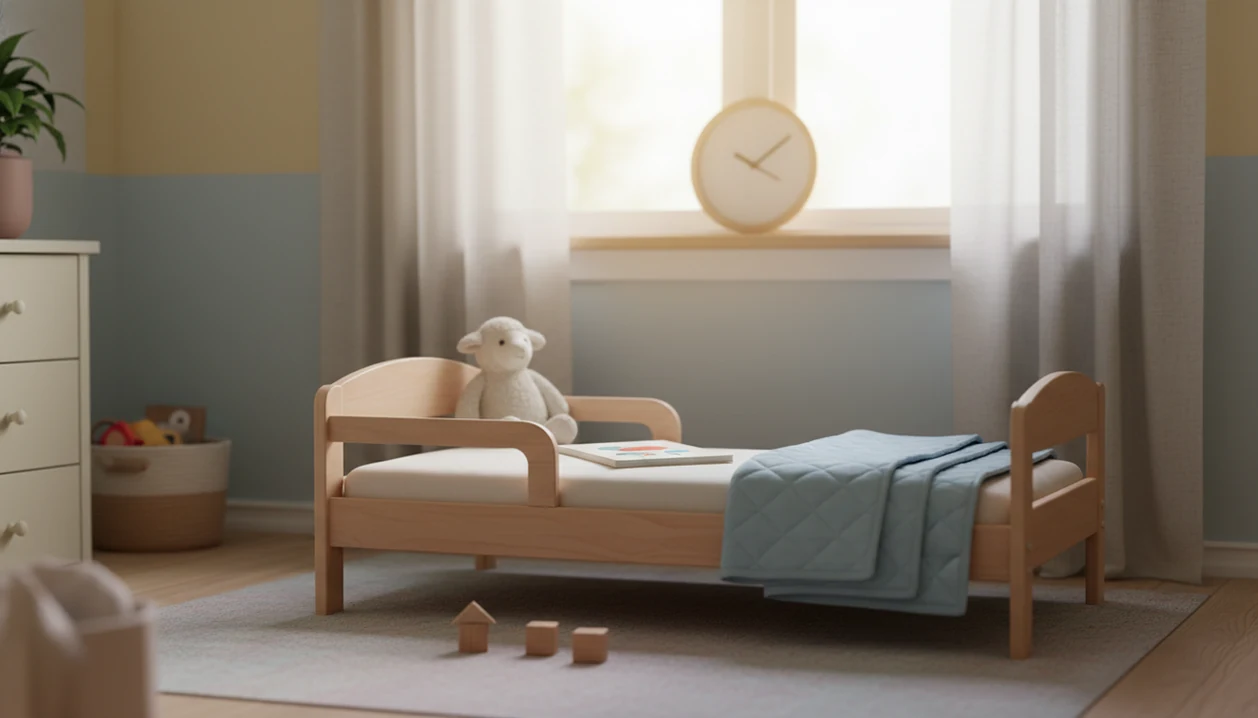
A 5 minute nap wind down is a tiny, repeatable pre-nap routine: one calm cue, one short story or lullaby, and one same sleepy phrase before rest. It works best when you use the same steps daily, turn off screens, and start when your toddler is already showing sleepy cues.
Definition: A 5 minute nap wind down is a short toddler nap transition that uses predictable sensory cues, a brief calming activity, and a repeated phrase to signal that daytime sleep or quiet rest is starting.
TL;DR
- Use the same 3-part order every day: room cue, short story or song, closing phrase.
- Keep screens off before nap time because bright screens can delay sleep readiness.
- If your toddler is under-tired, overtired, or dropping the nap, use the routine for quiet time instead of forcing sleep.
5 Minute Nap Wind Down Definition For Busy Caregivers
A 5 minute nap wind down is a predictable 2- or 3-step pre-nap sequence, not a full bedtime routine squeezed into the middle of the day. The goal is to help a toddler move from play to rest without opening a long negotiation.
Consistency matters more than the exact length. If the order is always curtains, one short story, same sleepy phrase, the cue becomes familiar fast. Blocks may still be scattered by the mat. That is normal.
This short nap wind down can work at home, at a grandparent’s house, or in daycare when caregivers use the same order and phrase. For toddlers who struggle with transitions, the repeated sequence says, “We are done playing for now,” before anyone has to argue about it.
How A 5 Minute Nap Wind Down Works In A Toddler Brain
A short nap routine works through cueing, repetition, and lower stimulation. Toddlers do not manage transitions like adults do, so the routine acts like a small habit loop: cue, calming action, rest.
- Repeated cues help toddlers predict what comes next, which can reduce resistance during a nap transition.
- Dim light, a quieter voice, and familiar words lower stimulation before the settling window.
- Research on bedtime routines in young children found that more consistent routines were associated with earlier bedtimes, shorter sleep-onset latency, fewer night wakings, and longer sleep duration (https://pubmed.ncbi.nlm.nih.gov/25914462/).
- Nap routines borrow the same cueing logic from bedtime routines, but compress it into a daytime version.
- A 5 minute nap wind down usually works best when it starts before a toddler tips into overtired crying.
The hallway light left cracked open, the same phrase, the same low voice. Those small things matter because the child does not have to decode a new plan each day.
For toddlers, a short nap wind down is often easier than a long routine because fewer choices leave less room for bargaining.
Before You Start A Quick Nap Routine
Set up the nap before the five minutes begin. A quick nap routine is easier when the room, timing, and screen boundary are already handled.
- Use a dark, quiet, cool room where possible. Blackout curtains help, but a dim corner can still work.
- Start near natural sleepy cues, such as yawning, eye rubbing, clinginess, or suddenly clumsy play.
- CDC sleep guidance lists 11 to 14 hours of total sleep per 24 hours for ages 1–2 and 10 to 13 hours for ages 3–5, including naps (https://www.cdc.gov/sleep/aboutsleep/howmuch_sleep.html).
- Naps too late in the day can push bedtime later, especially for preschoolers nearing nap drop.
- Turn off screens before the routine starts, including “calm” shows on a tablet.
A parent often notices the window at 12:35, then loses it looking for the blanket. Keep the sleep space ready before lunch if naps are fragile. For older children, a preschool nap routine can use the same cue order with a slightly longer quiet rest period.
How To Use A 5 Minute Nap Wind Down Step By Step
Use the same five steps in the same order every day. The routine can be plain; that is the point.
- Set the room cue by dimming lights, closing curtains, and lowering your voice.
- Move your toddler to the sleep space or quiet rest space before offering the story or song.
- Read one very short story, play one lullaby, or use one Kids Bedtime TL nap routine with the phone set face-down on a dresser.
- Say the same repeatable nap phrase every day, such as, “It is nap time; your body can rest now.”
- Leave or sit quietly according to your family’s normal sleep approach.
Do not add three books after step three. That is where “Just one more story” turns into the whole afternoon plan. If stories help your child settle, keep a small set of nap time stories for toddlers reserved for rest time only.
Gentle kids bedtime stories, sleep meditation, lullabies, and nap routines for toddlers and young children deliver familiar calm-down cues, not guaranteed sleep on command.
Exact Short Nap Wind Down Script For Toddlers
“What do I say during a 5 minute nap wind down?” Use simple words, few choices, and a steady ending.
Minute 0 to 1: “We are closing the curtains now. It is rest time.” Lower your voice and move slowly.
Minute 1 to 3: Read one tiny story or play one soft lullaby. Keep the story calm, with no silly voices or surprise sounds. A parent whispering from the hallway chair can be enough.
Minute 3 to 4: “Your bear is here. Your blanket is here. Your body can get quiet.”
Minute 4 to 5: Say the same closing phrase: “It is nap time; your body can rest now.”
Then stop talking. Stay nearby or leave, depending on your usual approach. Warm does not mean flexible forever. The script should feel kind, but not open-ended.
Nap Transition Toddler Variations For Home, Daycare, And Quiet Time
Parents, grandparents, and daycare providers can use the same phrase and same order, even when the setting changes. The goal can shift from sleep to rest without changing the cue sequence.
Home version
Use curtains, one short story, and the same phrase in the usual sleep space. Tools like Kids Bedtime TL can be useful as a kids bedtime stories app for short stories, lullabies, sleep meditation, and nap routines, especially when you want the same audio cue each day.
Daycare version
Use a shortened cue: mat, soft voice, one phrase. A daycare teacher may not read a full story to every child, so the phrase becomes the anchor. Families planning a new setting may want a nap routine for daycare transition before the first week.
Quiet time version
For nap-dropping toddlers, keep the cue order but change the expectation: “You do not have to sleep. You do need to rest quietly.” Same sequence. Different goal.
Common 5 Minute Nap Wind Down Mistakes
Most short nap wind down problems come from making the routine too exciting, too long, or too inconsistent. A quick routine loses its purpose when it becomes a menu.
- Adding too many steps can turn a quick nap routine into a negotiation about books, toys, water, songs, and blankets.
- Screens and calm cartoons can still stimulate a child before rest.
- In a preschool light-exposure study, one hour of bright light before bedtime strongly suppressed melatonin, and levels were still suppressed after the light ended (https://physoc.onlinelibrary.wiley.com/doi/10.1113/JP274424).
- Making the routine 20 to 30 minutes longer will not fix poor nap timing.
- Inconsistency across caregivers weakens the sleep cue because the child keeps testing which version applies today.
A tablet propped on a suitcase may feel helpful during travel, but it can also stretch the settling window. If you need portable audio or stories, offline bedtime stories for kids are usually a better fit than video before rest.
Signs Your Short Nap Wind Down Is Working
A short nap wind down is working when the transition gets calmer, even if every nap does not happen. Success may mean quiet rest, not sleep.
- Your toddler runs away less often when the routine starts.
- Crying shortens or becomes less intense over several days.
- The body looks calmer: slower breathing, fewer kicks, small shoulders dropping after an exhale.
- Settling becomes faster when timing is right.
- Quiet time becomes more predictable on no-nap days.
Mayo Clinic guidance for young children emphasizes consistent pre-sleep cues and putting children down drowsy but awake as part of a familiar settling pattern (https://www.mayoclinic.org/healthy-lifestyle/infant-and-toddler-health/in-depth/healthy-sleep/art-20046304). Treat nap length as a schedule clue rather than a rule: very late or very long naps can interfere with bedtime for some children, but there is no single ideal nap length for every toddler.
Track start time, routine length, and nap response for several days. Patterns show up slowly.
Limitations
A 5 minute nap wind down is useful, but it is not strong enough to solve every nap problem. Treat it as one practical piece of general sleep education.
- A five-minute routine cannot override an under-tired or overtired toddler.
- Some children need longer routines because of developmental differences, anxiety, illness, or sensory needs.
- A short wind down will not fix chronic schedule inconsistency.
- Heavy screen exposure before rest can make settling harder, even with a calm script.
- There is limited direct research on exactly five-minute nap routines.
- Caregivers should expect trial and error over days or weeks.
- Medical sleep concerns, loud snoring, breathing pauses, or extreme daytime sleepiness should be discussed with a pediatrician.
Sometimes the routine is fine and the nap is gone. Reset the goal. Quiet rest still protects the afternoon rhythm for many families.
FAQ
Is a 5 minute nap wind down enough for a toddler?
Yes, five minutes can be enough when the nap is well timed and the routine is predictable. The same cue order matters more than adding extra steps.
What age is a 5 minute nap wind down for?
A 5 minute nap wind down is mainly for toddlers and young children. Babies may need more feeding and soothing support, while preschoolers may use it as part of quiet time.
Should toddler naps have a routine?
Yes, toddler naps usually go better with predictable cues. The nap routine can be much shorter than bedtime.
What should I do if my toddler cries during the nap routine?
Stay calm, keep the same cue sequence, and check basic needs like timing, comfort, illness, or hunger. If crying escalates often, review the nap schedule.
Can my toddler watch a calm show before nap time?
Screens are not ideal before naps, even when the show seems quiet. Use an offline story, a lullaby, or calm audio from an app such as Kids Bedtime TL instead.
What if my toddler is starting to drop naps?
Use the same five-minute routine, but change the goal to quiet rest. Kids Bedtime TL or a short read-aloud option can help mark the transition without forcing sleep.
Should grandparents or daycare use the same nap wind down?
Yes, other caregivers should use the same steps and phrase when possible. A shared routine helps the child recognize nap time across settings.