
Preschool Nap Routine For Calm Daytime Rest
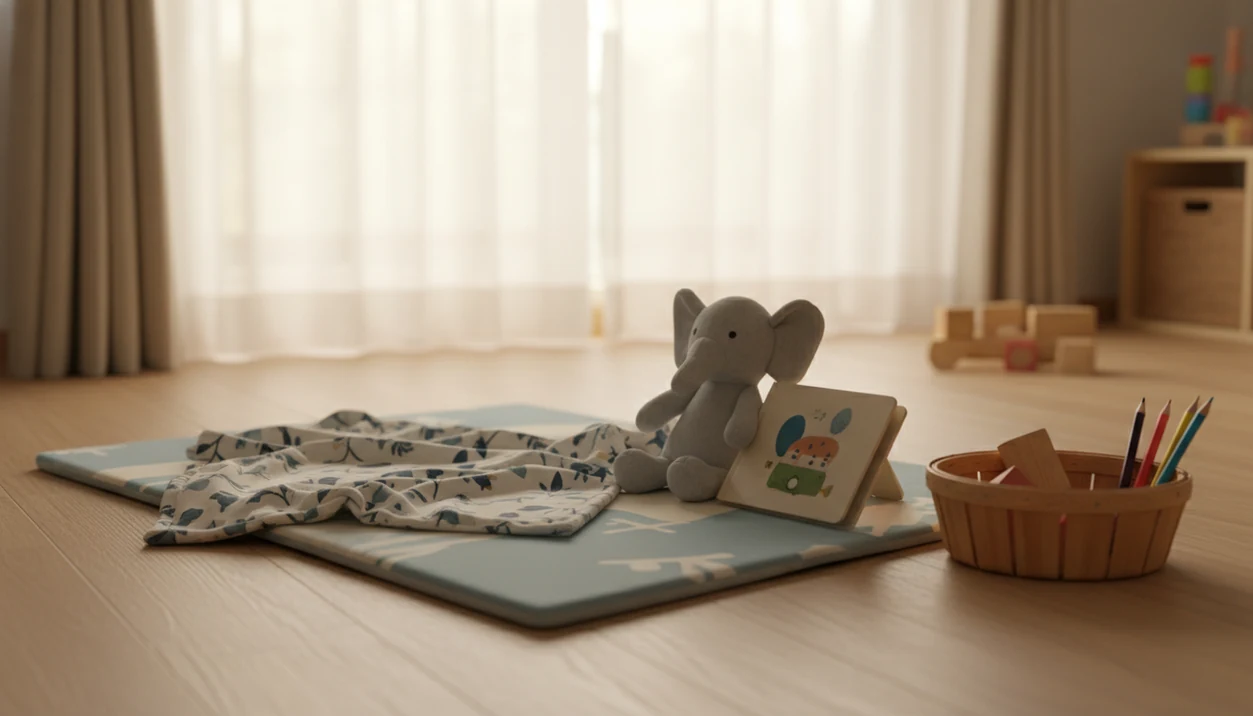
A preschool nap routine is a short 5- to 15-minute wind-down that helps a 3- to 5-year-old move from play to rest with the same calm cues each day. Keep it shorter than bedtime: bathroom, dim lights, one brief story, a lullaby or sleep phrase, and a predictable ending in bed, on a mat, or in a quiet rest space.
Definition: A preschool nap routine is the predictable pre-rest sequence caregivers use before a preschooler’s nap or quiet time, while a nap schedule is the time of day that rest happens.
TL;DR
- Use the same short sequence every day: potty, dim room, one story, one calm audio cue, and a clear ending.
- Preschoolers ages 3–5 are recommended to get 10–13 total hours of sleep in 24 hours, including naps when needed.
- If your preschooler no longer sleeps, keep the routine and convert the nap into quiet rest time with books, puzzles, or calm audio.
Preschool Nap Routine At A Glance
- A preschool nap routine is the short sequence before rest, not the whole nap schedule or the full afternoon plan.
- Most preschool nap routines work best when they last 5–15 minutes and stay shorter than bedtime.
- The routine often fits after lunch, cleanup, or the daycare bathroom line, before early-afternoon rest.
- Core cues usually include bathroom, dim lights, one short story, a lullaby or phrase, and bed, cot, or mat.
- Quiet time still counts as a useful outcome when a preschooler rests but does not sleep.
The point is not to “win” a nap. It is to make the transition recognizable. After lunch dishes are cleared and the room goes quieter, the child hears the same few steps again.
Small cues add up.
For a child who argues, the routine gives the adult fewer decisions to debate. For a child who is tired, it gives the body a familiar path toward rest.
Preschool Nap Routine Definition For Caregivers
A preschool nap routine is the predictable pre-rest sequence caregivers use before a preschooler’s nap or quiet time, while a nap schedule is the time of day that rest happens.
The schedule answers “when.” The routine answers “what happens next.” Parents, grandparents, daycare teachers, and preschool caregivers can use the same idea in different settings. At home, the cue might be lunch, potty, one book, and bed. At daycare, it might be group cleanup, bathroom, mat, and soft music.
A routine should cue rest, not force sleep. Good kids bedtime stories, sleep meditation, lullabies, and nap routines for toddlers and young children provide calm-down cues and shared language, not a guarantee that every child will sleep on command.
Short, age-appropriate audio can support this sequence when caregivers want a repeatable cue. Use it as one calm input, not as a guarantee that a child will sleep.
How A Preschool Nap Routine Works
- Repeated cues help a child recognize the shift from active play to rest before the adult has to explain it again.
- Lower light, less noise, fewer screens, less novelty, and fewer choices reduce stimulation during the settling window.
- A routine cannot make every preschooler sleep, but it can make rest time more predictable.
- The American Academy of Sleep Medicine recommends 10–13 total hours of sleep in 24 hours for ages 3–5, including naps when needed, as summarized by the CDC: https://www.cdc.gov/sleep/aboutsleep/howmuch_sleep.html.
- A systematic review of early-childhood napping found that naps often become less regular from ages 3–5 as nighttime sleep consolidates: https://pubmed.ncbi.nlm.nih.gov/25691299/.
The mechanism is simple habit learning. A repeated sequence builds a cue-response pattern, which means the body starts to expect what comes next. In plain terms, the same order helps the child stop scanning for new options.
Clinicians typically recommend predictable sleep routines, age-appropriate total sleep, and lower-stimulation transitions rather than long negotiations at every rest period. The phone set face-down on a dresser matters too; one bright screen can pull attention right back into play mode.
Preschool Nap Routine Requirements Before Rest Time
1. A consistent rest spot. Use the same bed, cot, crib, or daycare mat when possible. The surface becomes part of the cue.
2. A calmer room. Aim for dim light, a cool comfortable temperature, lower household noise, and optional white noise. It does not need to feel like a recording studio.
3. A screen-free buffer. Avoid screens for at least 30 minutes before rest when possible. Fast cuts and bright images make the gentle transition harder.
4. One short calming input. Prepare one brief book, one audio story, one lullaby, or one sleep meditation. A 5 minute nap wind down is often enough for children who get restless when routines stretch.
5. A quiet-time backup. Keep a calm independent activity ready, such as books, simple puzzles, drawing, or soft toys. Not every day ends in sleep.
The cot blanket unfolded at daycare can become as clear as a spoken instruction.
How To Use A Preschool Nap Routine In 5 Steps
A preschool nap routine works best when the adult uses the same short order each day. For preschoolers, consistency usually matters more than adding extra steps.
- Set the same start cue after lunch, cleanup, or a steady early-afternoon time.
- Handle body needs with potty, diaper check, water, and the allowed comfort item.
- Change the environment by dimming lights, lowering voices, and reducing active toys.
- Read one short story or play one brief calming audio cue, such as a lullaby or nap meditation.
- End with the same phrase and leave, sit nearby, or shift to quiet supervision.
For many families, the hardest part is step five. “Just one more story,” shows up right when the adult wants the routine to be kind. Kind can still be clear.
For preschool caregivers, a short routine is often easier than a longer bedtime-style ritual because it fits real classroom timing.
Step 1: Set A Preschool Nap Start Cue
“Why won’t my preschooler start nap time without arguing?” Often, the start cue is too flexible, too verbal, or too open to bargaining.
Anchor the nap routine to something the child can recognize: lunch ending, cleanup, a bathroom trip, or the same early-afternoon time. Try, “Lunch is done, now we get ready to rest.” Then move into the sequence without adding five warnings.
A start cue works better than repeated countdowns because it turns rest into the next normal event. At daycare, the cue might be group cleanup, the bathroom line, or everyone finding a mat. For children moving into group care, a nap routine for daycare transition can make the classroom sequence feel less sudden.
The clock does not have to be perfect. Consistency matters more than hitting 12:47 exactly, especially on preschool days with outdoor play or a late lunch.
Step 2: Build A Short Rest Time Environment
A short rest time environment tells the child, “We are done with active play for now.” Start with body needs: bathroom, diaper check if needed, hands washed, water if that is part of your routine, and the comfort item if allowed.
Then change the room. Dim the lights, use a quiet voice, cool the room if needed, and guide the child to the same sleep surface. Put away loud toys, building sets, dress-up bins, and anything that invites a new game.
White noise or soft lullabies can help because they mark the same settling window each day. The low hum of a white-noise track under a soft-spoken story is often enough.
Not silent. Just calmer.
The goal is not to create an elaborate nap cave. It is to remove the most obvious invitations to keep playing.
Step 3: Use One Story In The Daycare Nap Routine
One short story is usually enough for a daycare nap routine or home rest time. Choose one brief book, one short Kids Bedtime TL audio story, one lullaby, or one brief sleep meditation.
Nap content should be calmer and less dramatic than bedtime content. Avoid new, funny, scary, or highly interactive stories at nap time. A mystery voice, a silly animal chase, or a “what happens next?” plot can wake up the room instead of settling it.
A simple sequence works well: story, phrase, lights down, rest. If you need story ideas, nap time stories for preschoolers should stay short, gentle, and familiar enough that children are not pulled into big questions.
Audio should support the transition, not become a long entertainment session. If the child keeps waiting for another episode, the routine has turned into a playlist negotiation.
Step 4: End The Preschool Nap Routine Predictably
A preschool nap routine needs a clear ending. Use one final phrase, such as “It is rest time now,” “Your body can rest now,” or “Quiet time has started.”
After that phrase, do not restart the routine with another story, a snack, a different blanket, or a new round of bargaining. If the child protests, repeat the phrase calmly and return to the rule. The tone can stay warm, but the order should not change.
The hallway light left cracked open while a parent starts the same story again can feel gentle in the moment. But if it happens every day, the child learns that the ending is movable.
For awake preschoolers, offer the quiet-time fallback you already planned. Books, soft music, or quiet toys can protect the rest period without pretending sleep is required. Predictable endings reduce power struggles over time because the child knows where the routine stops.
Step 5: Turn Nap Refusal Into Quiet Rest Time
- Many children stop needing a regular afternoon nap during ages 3–5 if they still get enough total sleep in 24 hours, according to KidsHealth guidance on naps: https://kidshealth.org/en/parents/naps.html.
- Keep the same wind-down cues, but change the goal from “fall asleep” to “rest your body quietly.”
- Quiet rest can include books, soft music, puzzles, drawing, or quiet toys, depending on the home or classroom setting.
- Rest time can protect mood, learning, and late-day behavior, especially for children who unravel before dinner.
- Do not judge nap readiness from one or two refused naps; watch the pattern over several days or weeks.
For a child who is dropping naps, the routine still has value. It creates a pause in the day. A yawn hidden behind a plush fox may mean sleep is coming, or it may only mean the child needs a lower-stimulation hour.
The most useful nap transition is often keeping the cue sequence while changing the expected outcome from sleep to quiet rest.
Common Preschool Nap Routine Mistakes And Troubleshooting
Most preschool nap routine problems come from making rest feel either too negotiable or too charged. The fix is usually not a longer routine; it is a clearer, calmer one.
- Keep the ending finished once you say the final phrase. Restarting with another story, snack, or blanket search teaches that protesting can reopen the routine.
- Choose low-stimulation cues during the settling window. Save exciting books, silly audio, and screens for another time, because novelty and bright images can pull a tired child back into play.
- Check the timing if bedtime starts sliding later. Some preschoolers are sensitive to late naps, especially when the nap begins well into the afternoon.
- Watch the pattern before dropping naps completely. Two refusals may reflect illness, travel, daycare changes, a late night, or a busy morning rather than true nap readiness.
- Protect quiet time from punishment language. Say, “Your body can rest,” not “You have to lie there because you were difficult.” Rest should feel safe, predictable, and neutral, even when the child is awake.
Common Preschool Nap Routine Myths
Preschool nap advice often becomes stressful because it treats every child the same. A better nap routine preschooler plan leaves room for development, total sleep, and family timing.
| Myth | Reality |
|---|---|
| Every preschooler must take a full nap every day. | Some preschoolers still nap daily, while others do well with quiet rest if total sleep is adequate. |
| Any daytime nap always ruins nighttime sleep. | Age-appropriate naps may help overtired children, but late or long naps can delay bedtime for some. |
| A nap routine should be as long as bedtime. | A nap routine should usually be shorter, often 5–15 minutes, because daytime rest needs a quicker transition. |
| Refusing a nap twice means the child is finished with naps. | Nap refusal should be judged by patterns, mood, bedtime impact, and total sleep over time. |
A warm milk cup on the dresser may belong to bedtime, not nap. Daytime rest usually needs fewer signals, not more.
Preschool Nap Routine Success Checks
- A successful preschool nap routine often shows up as a calmer transition, even when the child does not sleep.
- Less bargaining, fewer repeated requests, and easier quiet time are useful signs of progress.
- Falling asleep is not the only measure; afternoon mood and late-day behavior matter too.
- Track bedtime impact, morning wake time, total 24-hour sleep, and afternoon behavior for 1–2 weeks.
- Late or long naps may need shortening if bedtime moves too late or the child stays awake at night.
Pattern-watching beats reacting to one hard Tuesday. Preschool rest changes with growth, illness, daycare activity, travel, and nighttime sleep.
For families who use audio, an app to help calm child before nap should be judged by whether it supports the routine, not whether it produces sleep every time. If the child rests quietly and bedtime stays reasonable, the routine may already be doing its job.
Limitations
A preschool nap routine is a practical support, not a sleep guarantee. It can make the transition clearer, but it cannot control every child’s body, mood, or developmental stage.
- A consistent routine cannot force a preschooler to sleep.
- Some 3–5-year-olds only need quiet rest if they meet total sleep needs overnight.
- Exact nap duration and timing benefits vary by child, and the evidence is mixed.
- Late or long naps can push bedtime later for some preschoolers.
- Blackout curtains, white noise, stories, and lullabies cannot fully overcome noise, stress, illness, or family schedule constraints.
- Evidence for apps, audio stories, and guided nap meditations is limited, so use them as practical cues rather than guaranteed sleep tools.
- Daycare policies may limit comfort items, room setup, audio choices, or the length of quiet rest.
- Snoring, breathing concerns, extreme daytime sleepiness, or major sleep disruption should be discussed with a pediatric clinician.
Tools such as Kids Bedtime TL can help supply a repeatable cue, but the adult still sets the boundary and watches the child’s sleep pattern.
FAQ
How long should a preschool nap routine be?
Most preschool nap routines should last about 5–15 minutes. Keep it shorter than bedtime so rest time does not become another long negotiation.
What time should preschoolers nap?
Many preschool naps work best after lunch or in the early afternoon. Adjust the time based on morning wake time, daycare schedule, and whether bedtime gets pushed too late.
Do preschoolers need daily naps?
Some preschoolers still need daily naps, while others do well with quiet time. Ages 3–5 are generally recommended to get 10–13 total hours of sleep in 24 hours.
What should I do if my preschooler refuses naps?
Keep the same routine and change the goal to quiet rest. Watch patterns over 1–2 weeks instead of deciding from one or two refused naps.
How long should preschool quiet time last?
Preschool quiet time often lasts 30–60 minutes, depending on age, temperament, daycare policy, and bedtime impact. Shorten it if it creates stress or delays nighttime sleep.
Can daycare teachers use the same nap routine?
Yes, daycare teachers can adapt the routine with group cleanup, bathroom lines, mats, soft music, and a consistent ending phrase. The sequence matters more than matching a home routine exactly.
Do preschool naps ruin bedtime?
Preschool naps do not automatically ruin bedtime. Late, long, or poorly timed naps can delay bedtime for some children, while age-appropriate rest may help overtired children settle better.
What helps preschoolers nap faster?
Consistent timing, a dim room, no screens beforehand, one short story, soft audio, and a clear ending are the strongest practical cues. A brief, repeatable audio cue can be one option when caregivers want a familiar nap signal.