
Nap Routine For Daycare Transition And Home
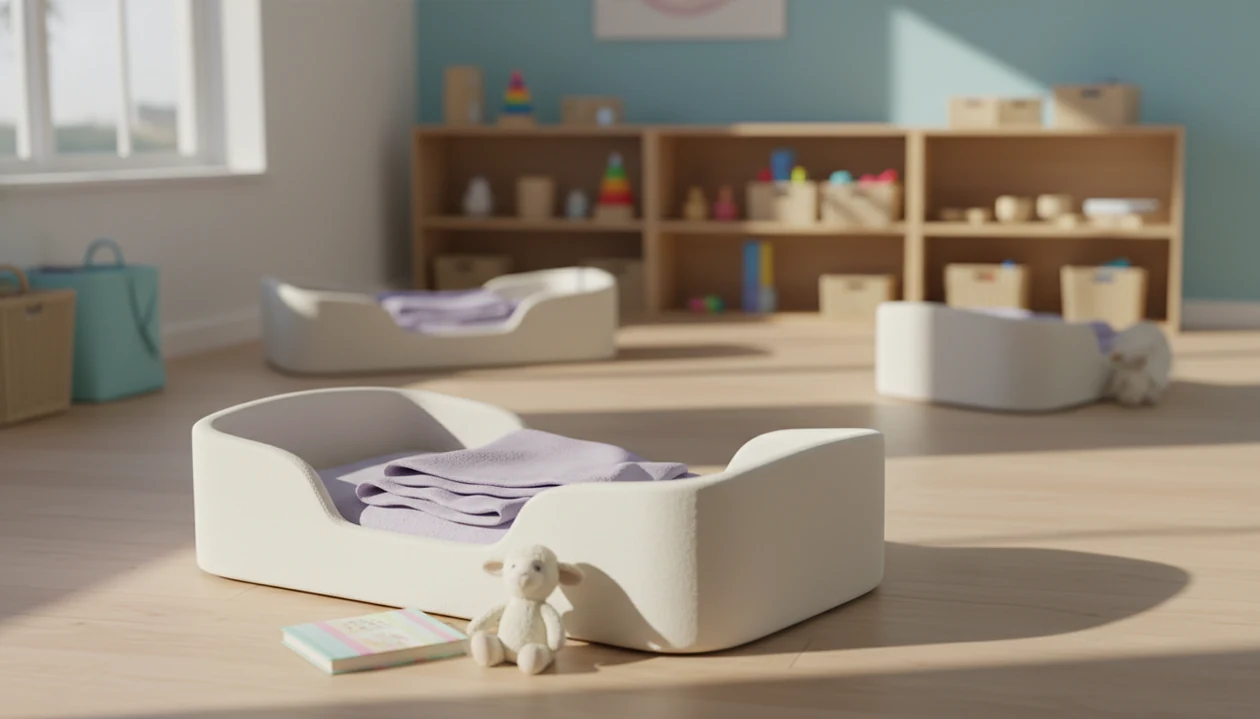
A nap routine for daycare transition works best when home and daycare use the same calm cues, short pre-nap order, and shared rest expectations while the child adjusts. Keep the routine simple, expect a temporary dip in nap quality, and use an earlier bedtime when daycare naps run short.
Definition: A daycare nap transition is the process of aligning a child’s home sleep cues, timing, comfort items, and caregiver handoff details so napping in a new group setting feels more predictable.
TL;DR
- Use the same 3-5 pre-nap cues at home and daycare: diaper or potty, sleep sack or blanket if allowed, one short story, one phrase, and lights-down rest.
- Plan for short daycare naps during the first days or weeks, then protect night sleep with a temporary earlier bedtime.
- Give caregivers a one-page nap handoff routine with wake time, nap cues, comfort rules, noise preferences, and what to do if the child does not sleep.
Daycare nap transition at a glance
A daycare nap transition is not about forcing reliable naps on day one. The goal is to make daycare rest feel familiar enough that your child can settle in a new room, with new sounds, new light, and other children nearby.
Most children need days or weeks to adjust. That is normal. The first wins may be quieter resting, fewer tears, or staying on the cot longer before sleep appears.
The American Academy of Sleep Medicine recommends 12 to 16 hours of total sleep in 24 hours for ages 1 to 2, and 11 to 14 hours for ages 3 to 5, including naps source. If daycare naps are short, the usual first move is an earlier bedtime, not a later one.
Short nap. Earlier night.
For toddlers and preschoolers, a predictable sequence often matters more than a complicated plan. Diaper, story, phrase, lights down can be enough when every caregiver uses it the same way.
How a nap routine for daycare transition works
A nap routine for daycare transition works by stacking repeated sleep cues so the child recognizes “rest is coming” even when the room is different.
Cue stacking means the same small signals appear in the same order: caregiver voice, dimmed room, story length, comfort item, and a rest phrase. Children at nap time often rely more on pattern recognition than verbal explanation. “It is nap time because your body needs rest” may be true, but the repeated sequence carries more weight.
Daycare adds sensory inputs that home does not have. There may be window light, hallway noise, another child crying, a different cot or crib, and a group schedule that cannot bend around one child. That is a lot of new data for a tired toddler.
Independent sleep skills can reduce the need for extra soothing in daycare. For a child used to a parent lying beside them for 30 minutes, a group room asks for a different skill. Not a moral test. Just a skill gap.
Good kids bedtime stories, sleep meditation, lullabies, and nap routines for toddlers and young children provide repeatable calm-down cues, not guaranteed sleep on demand.
How to use a nap routine for daycare transition
Use a nap routine for daycare transition by making the first cues familiar, portable, and easy for caregivers to repeat. The routine should tell your child what happens next and tell daycare staff exactly where the help begins and ends.
- Start with the same body-care cue. Use diaper, potty, handwashing, or another simple care step first so the body gets the same “nap is starting” signal in both places.
- Choose one portable calming cue. Pick a short story, quiet song, rest phrase, or approved comfort item that can travel between home and daycare without needing a special room setup.
- Tell caregivers the soothing boundary. Write down what helps, how long to try it, and when to stop. “Rub back for three minutes, then offer quiet rest” is clearer than “help him sleep.”
- Move the nap clock slowly when you have time. If the start date allows, shift home naps by 10 to 15 minutes every few days toward the daycare schedule.
- Protect bedtime after short naps. For the first one to two weeks, use an earlier bedtime when daycare naps are brief so overtiredness does not build into the next morning.
Before you start a preschool rest transition
Prepare the preschool rest transition before the first nap week, not after three hard pickup reports. A short planning note helps daycare staff act quickly during the settling window.
- Ask the daycare about nap policy, allowed comfort items, crib or cot rules, white noise, lighting, and caregiver soothing limits.
- Write down your child’s current wake windows, usual nap length, falling-asleep cues, and overtired signs.
- Check schedule pressure by age. Many toddlers move from two naps to one around 15 months, with 12 to 18 months still a common transition range source.
- Choose one repeatable cue, such as a short story, lullaby, or sleep meditation, that can work at home and daycare.
- Practice the routine at home for several days, using the same phrase every time.
The 7:15 p.m. scramble after pajamas, toothbrush, and one missing stuffed rabbit is not the ideal time to invent the plan. Write it down earlier, when everyone can think clearly.
Step 1: Set one shared nap handoff routine
Use one shared nap handoff routine that takes under 10 minutes and can survive a busy group room. If a caregiver cannot follow it while helping several children, it is too long.
- Start with diaper or potty. Keep this first so the body-care step does not restart the settling process.
- Offer the sleep item. Use the blanket, sleep sack, or soft item only if daycare policy allows it.
- Read one short story. Choose a story with a clear end, not a stack of books.
- Say one rest phrase. Try, “It is rest time. I will check on you soon.”
- Lower stimulation. Lights down, quiet voice, cot or crib, then stop adding new cues.
Tell caregivers what helps, what makes your child more alert, and when to stop soothing. For example: “Patting helps for two minutes. Picking up after that wakes him fully.”
For a home version of the same pattern, a preschool nap routine can help you keep the order steady without making it too elaborate.
Step 2: Match home nap cues to daycare nap cues
Match the cues daycare can actually use: the same sleep phrase, the same short story length, the same lullaby, and the same comfort item if permitted. Portable cues matter more than perfect room matching.
Avoid building the routine around cues daycare cannot repeat. A pitch-dark bedroom, 30 minutes of rocking, parent-only contact naps, or a very specific chair may work at home but fail in a group setting. The handoff should shrink the routine without removing its shape.
Tools like Kids Bedtime TL can help at home when you want the pre-nap story or lullaby to stay the same length each day. Kids Bedtime TL is a kids bedtime stories app that provides bedtime stories, sleep meditation, lullabies, and nap routines for parents of toddlers and young children.
A phone set face-down on a dresser keeps the screen from brightening the room while the audio plays. Small thing. It helps.
If your child settles better with audio than printed books, an app to help calm child before nap may fit the home practice part of the routine.
Step 3: Adjust daycare nap transition timing slowly
“Should I move my child straight to the daycare nap schedule?” Usually, move toward daycare timing gradually when you can, especially if the daycare room uses one midday nap and your child still needs two.
Some children are not ready for the room’s full one-nap rhythm immediately. That is common around the 12 to 18 month range, when many children are moving from two naps to one. If the first daycare nap starts much later than your child’s usual nap, overtiredness can arrive before the cot does.
Shift home naps by 10 to 15 minutes every few days if your start date allows it. Keep the same pre-nap cues while the clock changes. The cue stability gives your child something familiar to hold.
Bridge naps or car naps can be temporary tools. Use them cautiously. A 12-minute ride-home sleep may rescue dinner, but it can also make bedtime messy if it lands too late.
For children who still need a very brief cue, a 5 minute nap wind down can be easier to repeat than a longer home ritual.
Step 4: Protect bedtime during short daycare naps
Short daycare naps usually call for a temporary earlier bedtime because overtired children often become more wired, not more ready for sleep. Pushing bedtime later can backfire when the body is already past its best settling window.
Use the AASM 24-hour sleep ranges as context, not a scoreboard. A toddler who naps 35 minutes at daycare may need the night portion protected for a while. For many families, that means moving bedtime 20 to 45 minutes earlier during the first transition weeks. Treat the 20- to 45-minute shift as a temporary home adjustment, not a clinical rule. If short naps continue for weeks or sleep loss comes with snoring, labored breathing, extreme daytime sleepiness, or major behavior changes, ask your pediatrician for individualized guidance.
Watch behavior more than the clock alone. Bedtime may need to move earlier if you see meltdowns before dinner, sudden hyperactivity, falling asleep on the ride home, or early morning waking after a rough daycare nap day.
Clinicians typically recommend discussing persistent sleep concerns with a pediatrician, especially when sleep loss appears alongside breathing concerns, extreme daytime sleepiness, or major behavior changes.
The most common practical response to short daycare naps is an earlier bedtime combined with a steady pre-nap routine.
Step 5: Use a weekend reset without confusing daycare rest
Weekend naps do not always need to match daycare exactly. If weekday daycare sleep has been short, many children do better when home naps move closer to their natural rhythm for a day or two.
The key is avoiding extreme swings. Keep wake time, nap routine, and bedtime within a reasonable range, even if the nap starts earlier or lasts longer at home. Same order, familiar phrase, predictable ending.
Your child can learn that daycare rest happens on a cot after lunch, while home rest happens in the bedroom after a short story. The shared cues keep the two settings connected.
A sunbeam across a toddler pillow may make a Saturday nap feel easier than the busy daycare room. Use that advantage, but do not let the whole weekend drift three hours later.
For families building a home library, nap time stories for toddlers can keep the story cue familiar without stretching the routine.
Nap handoff routine template for caregivers
A nap handoff routine should be short enough for a caregiver to read in one minute. The point is not to control every detail. The point is to give staff the few details that change the nap outcome.
Copyable nap handoff fields
| Field | What to write |
|---|---|
| Wake time today | “Woke at 6:35 a.m.; seemed tired by 11:20.” |
| Ideal nap window | “Usually sleeps best between 12:00 and 1:30.” |
| Sleep phrase | “It is rest time. I will check on you soon.” |
| Story or song cue | “One short animal story or the same quiet lullaby.” |
| Comfort item | “Small blanket allowed; no loose item if policy says no.” |
| Room preferences | “Does better away from bright windows when possible.” |
| Soothing limits | “Pat back briefly; picking up after 5 minutes wakes her.” |
| If child does not sleep | “Offer quiet rest; stop active soothing after the agreed period.” |
| Report back | “Nap start, nap end, mood after nap, unusual waking.” |
Keep the wording plain. A caregiver should not need to decode your home routine while six cots are being unfolded.
Common nap routine mistakes during daycare transition
The most common daycare nap transition mistakes come from expecting home-level control in a group sleep setting. A better plan checks cue mismatch before blaming the child.
- The Instant-Smooth Expectation. Many children need days or weeks before daycare rest feels safe and boring enough for sleep.
- The Later-Bedtime Fix. Moving bedtime later after a short nap often makes overtired settling harder.
- The Weekend Copy Rule. Weekend sleep does not have to copy daycare exactly if the same rest cues stay stable.
- The Bad-Napper Label. A child may nap poorly because the cues changed, not because they are incapable of daycare sleep.
- The Unrealistic Home Routine Request. Asking daycare to rock, hold, sing, and sit for 30 minutes may not fit staffing or safety rules.
A cot blanket unfolded at daycare is already a transition. The routine should make the next step obvious, not add ten more decisions.
Signs your daycare nap transition plan is working
A daycare nap transition plan is working when settling becomes calmer, even before naps become long. Track the whole pattern, not just the number of minutes asleep.
Watch ease of settling, caregiver reports, mood after pickup, bedtime resistance, night waking, and morning mood. Progress may look like less crying at cot time, quieter resting, or accepting the caregiver’s phrase without protest. Longer sleep can come later.
Keep a simple 1-2 week log before making major changes, unless illness, safety, or a major behavior shift is involved. Write down wake time, nap start, nap end, bedtime, and one mood note. That is enough.
Research from the NIH/NHLBI notes that insufficient sleep in children can be linked with behavior, attention, and learning problems source. Patterns matter because sleep pressure often shows up as behavior first.
For preschoolers who still rest without always sleeping, nap time stories for preschoolers can support quiet rest without turning the routine into a negotiation.
Limitations
A home nap routine can support daycare sleep, but it cannot control every part of the daycare room. That boundary is important.
- Daycare room setup, staffing, group timing, licensing rules, and safety policies may limit customization.
- A child may reject a comfort object, story, or phrase that works easily at home.
- Early bedtime helps many children during short-nap weeks, but it is not a universal fix.
- Exact nap length targets are guidance, not guarantees.
- Illness, teething, separation anxiety, developmental changes, and new caregivers can temporarily disrupt progress.
- Some children need more time with independent sleep skills before daycare naps become steady.
- Bridge naps may help for a few days, but late or long bridge naps can push bedtime too late.
- Parents should seek pediatric guidance for persistent snoring, breathing concerns, extreme sleepiness, or major behavior changes.
If a plan looks tidy on paper but fails in the actual room, revise the plan. Not the child.
Kids Bedtime TL can support a predictable home cue, but daycare policies decide what can be used in the classroom.
FAQ
How long does daycare nap transition take?
Many children need days to weeks for a daycare nap transition. Calmer settling often appears before longer naps.
Why will my toddler not nap at daycare?
Toddlers may resist daycare naps because the cues, room noise, group timing, caregiver, cot, or separation feel unfamiliar. Overtiredness and a different home routine can also make settling harder.
Should bedtime be earlier after daycare?
A temporary earlier bedtime often helps after a short or missed daycare nap. Move bedtime earlier when you see meltdowns, hyperactivity, ride-home sleep, or early waking.
Can weekends use a different nap schedule?
Yes, weekend naps can stay closer to your child’s natural rhythm. Keep the same nap cues so the routine still feels familiar.
What should I tell daycare about naps?
Tell daycare the wake time, ideal nap window, sleep phrase, comfort item rules, soothing limits, and what makes your child more alert. Ask them to report nap start, nap end, mood, and unusual waking.
Do daycare naps ruin bedtime?
Daycare naps do not automatically ruin bedtime. Bedtime is usually affected by nap timing, nap length, overtiredness, and how different the daycare routine feels from home.
When do toddlers switch to one nap?
Many toddlers move from two naps to one around 15 months, though 12 to 18 months is still a common transition range source.
Can daycare use my child’s lullaby?
Some daycares can use a short song or audio cue if policy allows it. Group-room rules, device policies, and other children’s needs may limit what caregivers can play.