
When To Call a Pediatrician for Sleep Problems
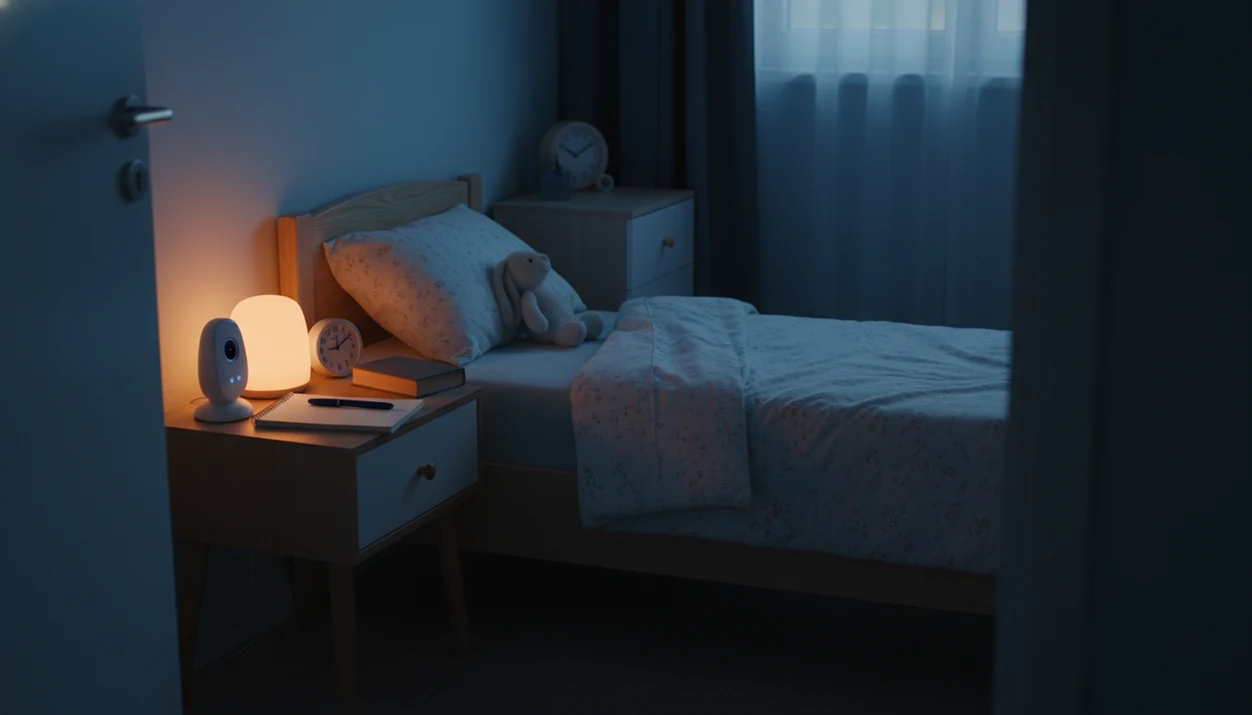
Call your child’s doctor when sleep problems include loud nightly snoring, gasping, breathing pauses, severe distress, unsafe sleep behaviors, major daytime symptoms, or problems that persist despite a steady routine. Knowing when to call pediatrician for sleep helps parents separate normal bedtime battles from possible medical red flags.
Definition: A pediatrician sleep red flag is any sleep pattern that suggests breathing trouble, safety risk, severe daytime impairment, or a persistent problem that does not improve with age-appropriate routines.
TL;DR
- Call promptly for gasping, pauses in breathing, blue lips, labored breathing, or loud nightly snoring.
- Book a pediatrician visit when poor sleep affects school, mood, focus, safety, or daytime energy.
- Bedtime stories, lullabies, meditation, and apps can support routines, but they cannot diagnose medical sleep disorders.
Medical scope: This guide is educational and is not a diagnosis. If your child has severe breathing trouble, bluish lips, unresponsiveness, injury, or seizure-like events, seek urgent or emergency care rather than waiting for a routine appointment.
At-a-Glance Child Sleep Red Flags for Calling a Pediatrician
Call a pediatrician promptly when sleep includes breathing symptoms: gasping, choking, pauses, labored breathing, blue lips, or loud nightly snoring. These are higher-priority child sleep red flags than ordinary bedtime resistance.
Other reasons to call include persistent insomnia, severe bedtime distress, unsafe sleepwalking, frequent intense night terrors, seizures, sudden behavior changes, and daytime sleepiness. If a child is hard to wake, injured, struggling to breathe, or has severe symptoms, seek urgent or emergency care instead of waiting for an appointment.
Trust the parent alarm bell, too. At 7:15 p.m., after pajamas, toothbrush, and one missing stuffed rabbit, some stalling is normal. A pattern that feels medically “off” is different. Clinicians typically recommend bringing persistent or concerning sleep patterns to the child’s pediatrician, especially when safety, breathing, or daytime function is involved.
When to Seek Emergency Care Instead of a Routine Pediatrician Visit
Seek emergency care now for severe breathing trouble, bluish lips, unresponsiveness, injury, or seizure-like events. A routine pediatrician visit is for concerning but stable patterns, not a child who may be medically unsafe in the moment.
Use a pediatrician appointment for loud nightly snoring, repeated gasping sounds without current distress, persistent insomnia, daytime exhaustion, behavior changes, or sleepwalking safety concerns. Loud snoring most nights should be evaluated promptly, especially with pauses, choking, mouth breathing, morning headaches, or school problems, but it is usually a prompt non-emergency call unless the child is actively struggling to breathe.
- Call local emergency services if your child has bluish lips or face, is very hard to wake, is not responding normally, has severe breathing difficulty, has been injured, or has seizure-like movements.
- Stay with your child and follow the dispatcher’s instructions instead of trying another routine, story, app, wearable, or monitor alert.
- Move the child only if the location is unsafe or emergency guidance tells you to.
- Contact the pediatrician soon for stable but repeated symptoms such as loud nightly snoring, gasping, or major daytime impairment.
Always follow your local emergency guidance.
Five Pediatric Sleep Problem Facts Parents Should Know
- Persistent insomnia deserves discussion: Trouble falling asleep or staying asleep for several weeks, despite a consistent bedtime routine, should be raised with a pediatrician.
- Breathing symptoms matter most: Loud nightly snoring, gasping, pauses, or labored breathing may point to obstructive sleep apnea and should not be brushed off.
- Daytime behavior can be the clue: Irritability, hyperactivity, focus problems, morning headaches, falling asleep in class, or school decline can be sleep-related red flags.
- Night events need context: Recurrent intense night terrors, sleepwalking, or unusual nighttime behaviors need medical input when they create safety concerns or do not improve.
- Routine tools have limits: Stories, lullabies, meditation, white noise, and sleep apps support predictable routines, but they do not replace medical evaluation.
The American Academy of Pediatrics estimates that 1% to 5% of children have obstructive sleep apnea, often related to enlarged tonsils and adenoids, and reports that 25% to 50% of children and 40% of adolescents experience sleep problems at some point source.
How Child Sleep Red Flags Work in Real Bedtime Routines
A normal bedtime battle often improves when the child gets a predictable sequence, steady limits, and a familiar calm-down cue. Medical sleep red flags tend to persist because the driver is not just behavior.
Sleep problems can involve airway obstruction, neurological arousal, pain, restless legs, reflux, anxiety, medication effects, seizures, or another medical cause. In plain terms, a good routine can make bedtime calmer, but it cannot open an airway or diagnose unusual nighttime movements.
Children also may not look simply tired. Insufficient sleep can show up as hyperactivity, irritability, poor focus, learning problems, or sudden behavior changes. The National Institutes of Health notes that school-age children need about 9 to 12 hours of sleep per 24 hours, and insufficient sleep is associated with attention, behavior, and learning problems source.
Tools like Kids Bedtime TL can help parents keep routines consistent. Symptom patterns still belong in a pediatrician conversation.
Snoring Kids Sleep Symptoms That Need Medical Attention
If a child snores, parents should call the pediatrician when snoring is loud, nightly, paired with gasping, choking, pauses, restless sleep, sweating, mouth breathing, or hard work breathing. Snoring kids sleep symptoms become more concerning when they repeat outside a cold or allergy flare.
Occasional mild snoring with a stuffy nose may be less concerning. Ongoing snoring should not be treated as cute or automatically normal.
The bigger signal is snoring plus daytime trouble: hyperactivity, poor focus, morning headaches, mood problems, or school decline. Enlarged tonsils and adenoids are common contributors to pediatric obstructive sleep apnea, though no article can diagnose a child online. According to the American Academy of Pediatrics, obstructive sleep apnea affects an estimated 1% to 5% of children source.
For snoring plus daytime symptoms, a pediatrician visit is often more useful than changing bedtime content because the concern may be breathing, not cooperation.
Persistent Sleep Problems After Routines, Stories, and Apps
Persistent means the sleep problem happens most nights, or repeatedly over several weeks, despite a calm and consistent bedtime routine. That might include the same story, the same light level, and a phone set face-down on a dresser so the screen does not brighten the room.
Bedtime stories, lullabies, meditation, and nap routines can reduce bedtime friction and make patterns easier to observe. Kids Bedtime TL is a kids bedtime stories app that provides bedtime stories, sleep meditation, lullabies, and nap routines for parents of toddlers and young children. Gentle bedtime stories, sleep meditation, lullabies, and nap routines can offer a predictable settling window, not a medical answer.
An app cannot diagnose apnea, seizures, restless legs syndrome, narcolepsy, medication side effects, anxiety disorders, or other medical causes. Bring a sleep log with bedtime, wake time, snoring, night wakings, naps, daytime behavior, and routine tools tried. Questions about are bedtime story apps safe for toddlers are separate from medical red flags.
Daytime Signs Linked to Pediatrician Sleep Problems
Daytime signs can be the clearest reason to discuss pediatrician sleep problems, even when bedtime looks calm. Children may look wired instead of sleepy when they are overtired.
- Mood and behavior: chronic crankiness, aggression, emotional meltdowns, or sudden behavior changes.
- Attention and activity: hyperactivity, focus problems, impulsivity, or falling asleep during normal activities.
- Body clues: morning headaches, appetite changes, or low daytime energy.
- School and daycare signals: teacher concerns, learning issues, or a drop in participation.
Preschoolers ages 3 to 5 generally need 10 to 13 hours of sleep per day, according to the National Sleep Foundation source. School-age children generally need about 9 to 12 hours per 24 hours, per NIH guidance source.
If daytime function is clearly affected, call the pediatrician. The blocks left scattered by the mat can wait. If screens are part of the evening, the question of should toddlers use screens before bed is worth separating from medical concerns.
Questions to Bring to a Pediatrician Sleep Visit
Bring specific questions, not just “sleep is bad.” Ask whether the symptoms suggest obstructive sleep apnea, restless legs, reflux, allergies, anxiety, seizures, medication effects, or another condition.
If the main symptom is breathing-related, ask whether the visit should happen soon rather than at the next routine checkup. If the main symptom is behavior or insomnia without breathing signs, ask what time frame is reasonable for tracking patterns before follow-up.
When safe and appropriate, bring video or audio of snoring, gasping, unusual movements, or night events. A short recording can be more useful than trying to describe a sound at the exam table. Also bring a one- to two-week sleep log with bedtime, wake time, naps, night wakings, routine steps, screens, caffeine if relevant, and daytime symptoms.
Ask when a sleep specialist, ENT evaluation, behavioral sleep plan, lab work, or sleep study may be appropriate. The pediatrician can weigh age, development, medical history, and symptom severity. If your child uses audio, also consider practical safety questions like can kids sleep with headphones.
Limitations
Online sleep guidance can help parents sort patterns, but it cannot diagnose a child’s sleep disorder or replace an individualized pediatric evaluation.
- Bedtime routines, stories, lullabies, sleep meditation, and apps cannot treat breathing problems, seizures, or other medical sleep disorders.
- Sleep trackers, wearables, and baby monitors may overestimate or underestimate sleep quality and breathing events.
- Some sleep conditions require long-term medical, behavioral, or specialist management rather than a quick routine change.
- Supplements, aromatherapy, weighted products, and sleep gadgets may have limited evidence or safety concerns in children.
- Normal sleep varies by age, development, neurodivergence, illness, stress, and family context.
- Emergency symptoms such as severe breathing trouble, bluish color, unresponsiveness, injury, or seizure-like events require urgent medical care.
A bedtime app can support the evening sequence. It should not be the safety net. Parents considering supplements should ask a clinician and read more about whether is melatonin safe for kids before trying it.
FAQ
When is child snoring serious?
Child snoring is serious when it is loud, nightly, or paired with gasping, pauses, choking, restless sleep, mouth breathing, or hard work breathing. Snoring plus daytime behavior, focus, headache, or school problems should prompt a pediatrician call.
Should I call the pediatrician for night terrors?
Occasional night terrors can be monitored if the child is safe and episodes fade over time. Call the pediatrician when they are frequent, intense, persistent, injurious, or include unusual movements.
Can toddlers have sleep apnea?
Yes, toddlers can have obstructive sleep apnea. Loud snoring, gasping, breathing pauses, restless sleep, or daytime symptoms should be evaluated by a pediatrician.
What are sleep apnea signs in children?
Common signs include loud snoring, pauses in breathing, gasping, restless sleep, mouth breathing, sweating, and morning headaches. Children may also show hyperactivity, irritability, poor focus, or school problems.
How long is insomnia concerning for a child?
Sleep trouble lasting several weeks despite a consistent routine is worth discussing with a pediatrician. Earlier contact is appropriate if safety, breathing, or severe distress is involved.
Can poor sleep cause hyperactivity in children?
Yes, insufficient or disrupted sleep can appear as hyperactivity rather than obvious sleepiness. Irritability, poor focus, learning trouble, and behavior changes can also be sleep-related.
Are sleep apps enough for a child’s sleep problems?
Sleep apps, including Kids Bedtime TL, can support bedtime routines with stories, lullabies, and calming audio. They cannot diagnose or rule out medical sleep disorders.
What should I track before calling the pediatrician about sleep?
Track bedtime, wake time, naps, night wakings, snoring, breathing symptoms, routine steps, screens, and daytime behavior. A one- to two-week log is often helpful.
When is a child’s sleep problem urgent?
A sleep problem is urgent when there is severe breathing trouble, bluish color, unresponsiveness, injury, seizure-like events, or severe distress. Seek urgent medical care rather than using a routine tool.